THE CLASSIC COLLECTION✦Angel Unawares: A Story of Christmas EveCLASSIC FREE BOOKS
Angel Unawares: A Story of Christmas Eve
C. N. (Charles Norris) Williamson & A. M. (Alice Muriel) Williamson
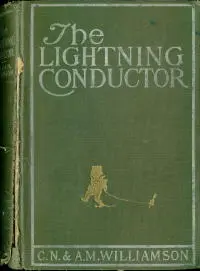
THE CLASSIC COLLECTION · 1903
"The Lightning Conductor: The Strange Adventures of a Motor-Car" by C. N. Williamson et al. is a novel written in the early 20th century. This light-hearted yet adventurous narrative follows the spirited American woman Molly Randolph, who purchases a distinctive motor-car while traveling in England. Accompanied by her aunt Mary and a notably gloomy chauffeur named Rattray, Molly embarks on her exciting journey across Europe, signaling a departure from conventional travel and inviting various encounters along the way. At the start of the story, we are introduced to Molly Randolph, who shares her exhilarating experience of buying a motor-car. She details the exchanges with a charming gentleman, Mr. Reginald Cecil-Lanstown, who sells her the vehicle and offers a ride to cement the deal. As her travels begin, Molly’s enthusiasm is palpable, but challenges arise when Rattray, the chauffeur, proves to be less than competent. Throughout this opening portion, anecdotes of the car’s mechanics and charming observations about the English countryside fill Molly's letters to her father, setting the stage for her impending adventures and mishaps in a spirited exploration of independence and travel during a fascinating period of automotive history.
Introduction adapted from the source catalogue; source summaries may be automatically generated.
Free to read · English · 95,478 words · No account needed
MAKE TIME FOR A GOOD BOOK
On by default. Untick to stop anonymous reading totals. Each page counts after 10 seconds in view. How this works.
Anonymous counting is on unless you have switched it off.
Palermo wasn't so bad. I never saw so many young men in my life, all very dark, with enormous eyes, and little moustaches and canes, both of which they twirled a good deal when they looked at anyone they admired. But Syracuse was awful. I daresay it was nice enough when you could be a tyrant and cut off your enemies' heads, and build gold statues to yourself; but tyrants are out of their job now, and things have been allowed to go down a good deal since their day. I nearly cried when I saw what sort of hole it was, but our invitation to Sir Evelyn Haines' (which we found waiting for us) wasn't for that day, but the next. It was settled that we should go on by the first train in the morning, when a telegram arrived for Lady B. She was in a twitter, and gave it to Pa to read, and say what he thought. It was sent from Naples by a perfect stranger to her, who signed his name James Van Wyck Payne; and as nearly as I can remember, it said, "Beg that you will receive me at Syracuse. Have travelled on from Rome on purpose immediately on learning your address. Have news of vital importance to give you about your son."
Lady B. couldn't think what it all meant; but she was anxious, and we were curious. She and Pa calculated times, and discovered that if we went away by the first train we would miss the mysterious Mr. Payne, so it was decided that we must wait till the next, and a telegram was sent to an address in Naples to that effect.
In the morning, as early as he could, he arrived. I was on the verandah of the hotel, watching, dressed in my travelling frock, so as to be ready to get off by the next train. When a stranger came running up the steps asking for Lady Brighthelmston, you can believe I kept my eyes open, though I pretended to be reading an awfully exciting book of Guy Boothby's--really great! He was young, and evidently American, but very handsome, and the best of form; blond, tall, and smooth-faced, with such a clever expression, and unfathomable eyes. He was shown in; but as Lady B.'s sitting-room had a window opening on the verandah, with the blinds only half shut, I could presently hear from where I sat a murmur of voices which I knew to be hers and his. Just as Pa had joined me, and was asking whether the gentleman had turned up yet, there came a stifled shriek from Lady B.'s room. We jumped up, rushed to the window, and met her there as she was running out to call us, crying, with Mr. Payne at her back. We went in, and she made him tell his story, which was very complicated. However, we soon understood that the Honourable Mr. Winston's chauffeur had stolen his motor-car, and his watch (which Mr. Payne had got out of pawn and shown to Lady B.) and his clothes, and probably murdered him. Lady B. hadn't had any letter for ages; she had supposed that was because she was travelling about so much lately and had missed them, but now she saw that anything might easily have happened to her son. Everything was frightfully confused and exciting, and while Pa tried to soothe Lady B., Mr. Payne and I stepped out on the verandah to talk things over quietly, as I had kept my head. He showed wonderful detective gifts, and from some details he told me about the girl and a middle-aged American lady, friends of his, whom the chauffeur had deceived, I began to think it might be the party I had seen in Blois, only with a different car; but that, as I said to Mr. Payne, must have been before any tragedy had taken place. He thought I was probably right about the identity; and to make sure, I went upstairs to one of my boxes which wasn't locked yet, and rooted out the negative of that snapshot I sent you from Blois. We looked at the film together, each holding it with one hand to keep it from curling, and Mr. Payne exclaimed, "That's the man! that's the scoundrel!" I had thought the face awfully good-looking, but it didn't seem the same to me then, and I had to admit it might be that of a murderer. I proposed showing it to Lady B., but she was frightfully upset already; and Mr. Payne said he didn't see that it would do any good to harrow up her feelings still more now, and perhaps if we did she wouldn't be able to undertake a journey. If he'd known in time that we were going on to Taormina, he wouldn't have kept us at Syracuse, but would have joined us at Taormina; for he had news that Miss Randolph, that stuck-up American girl, and her aunt had just arrived there the night before, with poor Mr. Winston's stolen car, which the wicked chauffeur was driving. He--Mr. Payne, I mean--had written from Rome to the girl's father in New York, that she was in the power of an abandoned ruffian, and the father had started off to the rescue the very day after receiving the letter. He had cabled to Mr. Payne in Rome, and the message had been forwarded to Naples, but in that way they had missed each other, and Mr. Payne only knew that the old man had been following the girl about from pillar to post; that he'd heard in Naples that she'd gone to Palermo, and had proceeded there himself. Probably, when he found that she had left, if the hotel people could tell him where she was likely to be by this time, he wouldn't wait for an ordinary train, but would take a special. Mr. Payne said he was that kind of man; and if Lady B. would go on now by the next train to Taormina, everybody might confront the chauffeur and denounce him at once. By everybody he meant himself, Lady B., and this Mr. Randolph, of New York. I was very much interested, of course, and naturally wanted to be in at the death, which Mr. Payne seemed quite pleased to have me do, for we had by this time made up great friends; we seemed so congenial in many ways, and he knows such quantities of swell people everywhere. The Duke of Burford is a great chum of his, and so is that handsome Lord Lane that you were wild to meet last year and couldn't get to know. But perhaps you shall yet, dear. Who can tell?
Your reading position is saved on this browser. Take it to another device with a library code. Reading pages adapt to text, rather than matching a printed edition.
C. N. (Charles Norris) Williamson & A. M. (Alice Muriel) Williamson
C. N. (Charles Norris) Williamson & A. M. (Alice Muriel) Williamson
C. N. (Charles Norris) Williamson & A. M. (Alice Muriel) Williamson
A. M. (Alice Muriel) Williamson & C. N. (Charles Norris) Williamson
BEHIND THE BOOK
This eBook is for the use of anyone anywhere in the United States and most other parts of the world at no cost and with almost no restrictions whatsoever. You may copy it, give it away or re-use it under the terms of the Project Gutenberg License included with this eBook or online at www.gutenberg.org. If you are not located in the United States, you will have to check the laws of the country where you are located before using this eBook. Read the source licence.
The original source file, including credits and licence, is retained by this library. Request an original-format copy at no charge. Please include the book title and Project Gutenberg identifier #33845.
KEEP YOUR CURIOSITY GOING
Wilfrid Scawen Blunt
Wilfrid Scawen Blunt

E. W. (Edgar Watson) Howe
Coulson Kernahan

Maurice Baring
Frances Wright