The Life and Love of the Insect
Jean-Henri Fabre
THE CLASSIC COLLECTION · 1919
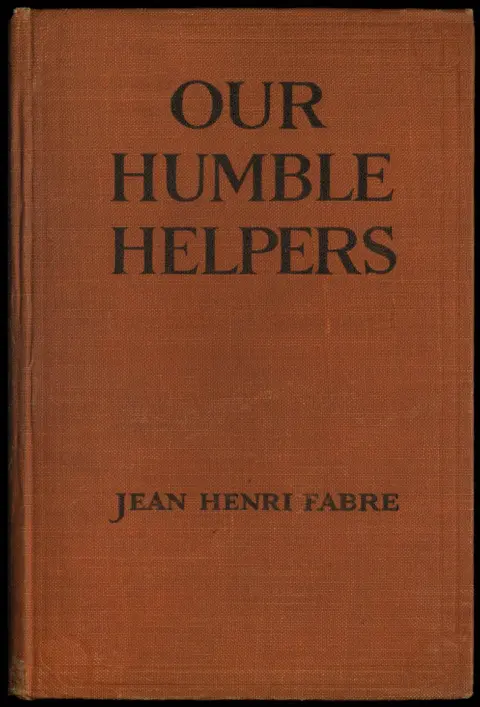
"The Life of the Weevil" by Jean-Henri Fabre and Alexander Teixeira de Mattos is a scientific publication written in the late 19th century. The book is an exploration of various species of weevils, detailing their biology, behavior, and interplay with their environments. It specifically focuses on Fabre's meticulous observations, illustrated across different chapters, inviting readers into the intricate lives of these insects. The opening of the book sets a reflective tone, as Fabre discusses his passion for numismatics and fossil records, drawing parallels between the history engraved in coins and the stories told through the study of insects. He introduces his exploration of weevils within a geological context, emphasizing how they, along with their surroundings, speak volumes about past ecosystems. The beginning illustrates the intertwined lives of weevils and their plants, particularly highlighting the relationship between various species of thistles and weevils like the Spotted Larinus. Fabre’s detailed observations promise a wealth of insight into the natural world, making this a captivating read for those interested in entomology and the beauty of small wonders.
Introduction adapted from the source catalogue; source summaries may be automatically generated.
Free to read · English · 64,822 words · No account needed
MAKE TIME FOR A GOOD BOOK
On by default. Untick to stop anonymous reading totals. Each page counts after 10 seconds in view. How this works.
Anonymous counting is on unless you have switched it off.
[14] Gastropods with an elongated, turreted shell.—Translator’s Note.
[15] Or Mitre-shells. Gastropods with a fusiform shell suggesting a bishop’s mitre.—Translator’s Note.
[16] Or Ground-beetle. Cf. The Glow-worm and Other Beetles, by J. Henri Fabre, translated by Alexander Teixeira de Mattos: chap. xiii.—Translator’s Note.
[17] Cf. The Sacred Beetle and Others, by J. Henri Fabre, translated by Alexander Teixeira de Mattos: passim.—Translator’s Note.
[18] Cf. The Glow-worm and Other Beetles: chap. viii.—Translator’s
Note.
[19] The Great Water-beetle. Cf. The Glow-worm and Other Beetles: chap. x.—Translator’s Note.
[20] The Whirligig Beetle. Cf. The Life of the Fly, by J. Henri Fabre, translated by Alexander Teixeira de Mattos: chap. vii.—Translator’s Note.
[21] A carnivorous Water-beetle. Cf. idem: chaps. vii. and
viii.—Translator’s Note.
[22] Cf. The Life of the Grasshopper, by J. Henri Fabre, translated by Alexander Teixeira de Mattos: chapters i. to v.—Translator’s Note.
[23] Cf. idem: chapter xiv. and passim.—Translator’s Note.
[24] Cf. The Life of the Fly: chapter iii.—Translator’s Note.
[25] Cf. The Life of the Caterpillar, by J. Henri Fabre, translated by Alexander Teixeira de Mattos: chapter xiv., in which the activities of one of the Ichneumon-flies, Microgaster glomeratus are described.—Translator’s Note.
[26] Marcus Vitruvius Pollio (fl. 1st century B.C.), the Roman architect and engineer, author of De Architectura.—Translator’s Note.
[27] For the Onitis and Onthophagus Dung-beetles, cf. The Sacred Beetle and Others: chapters xi. and xiv. to xviii.—Translator’s Note.
[28] Rose-chafers. Cf. More Hunting Wasps: chap. iv.—Translator’s Note.
[29] ·585 by ·39 inch.—Translator’s Note.
[30] ·585 inch.—Translator’s Note.
[31] Cf. The Sacred Beetle and Others: chaps. ix., x. and
xvi.—Translator’s Note.
[32] Or Burying-beetle. Cf. The Glow-worm and Other Beetles: chaps. xi. and xii.—Translator’s Note.
[33] Cf. The Hunting Wasps: chaps. iv. to x.—Translator’s Note.
[34] The Large White, or Cabbage, Butterfly. Cf. The Life of the Caterpillar: chap. xiv.—Translator’s Note.
[35] A genus of very decorative Butterflies, including such well-known species as the Red Admiral, the Painted Lady, the Camberwell Beauty, the Tortoiseshell Butterfly and the Peacock Butterfly.—Translator’s Note.
[36] Cf. The Hunting Wasps: chaps. i. to iii.—Translator’s Note.
[37] The nearest mountain to the author’s village. Cf. The Hunting Wasps: chap. xi.—Translator’s Note.
[38] From the Latin balanus, an acorn.—Translator’s Note.
[39] The Life of the Grasshopper: chap. xiv.—Translator’s Note.
[40] The Mason-bee. Cf. The Mason-bees: passim.—Translator’s Note.
[41] Jean de La Fontaine (1621–1695).—Translator’s Note.
[42] Cf. The Hunting Wasps: passim; also More Hunting Wasps, by J. Henri Fabre, translated by Alexander Teixeira de Mattos: passim.—Translator’s Note.
[43] The Silk-worm Moth.—Translator’s Note.
Your reading position is saved on this browser. Take it to another device with a library code. Reading pages adapt to text, rather than matching a printed edition.
Jean-Henri Fabre
Jean-Henri Fabre
Jean-Henri Fabre
Jean-Henri Fabre
BEHIND THE BOOK
This eBook is for the use of anyone anywhere in the United States and most other parts of the world at no cost and with almost no restrictions whatsoever. You may copy it, give it away or re-use it under the terms of the Project Gutenberg License included with this eBook or online at www.gutenberg.org. If you are not located in the United States, you will have to check the laws of the country where you are located before using this eBook. Read the source licence.
The original source file, including credits and licence, is retained by this library. Request an original-format copy at no charge. Please include the book title and Project Gutenberg identifier #66844.
KEEP YOUR CURIOSITY GOING

John Muir

Asa Gray
Asa Gray

Florence Nightingale
Elizabeth Robins Pennell
Denison Olmsted