THE CLASSIC COLLECTION✦The romance of the Oxford collegesCLASSIC FREE BOOKS
The romance of the Oxford colleges
Francis Henry Gribble
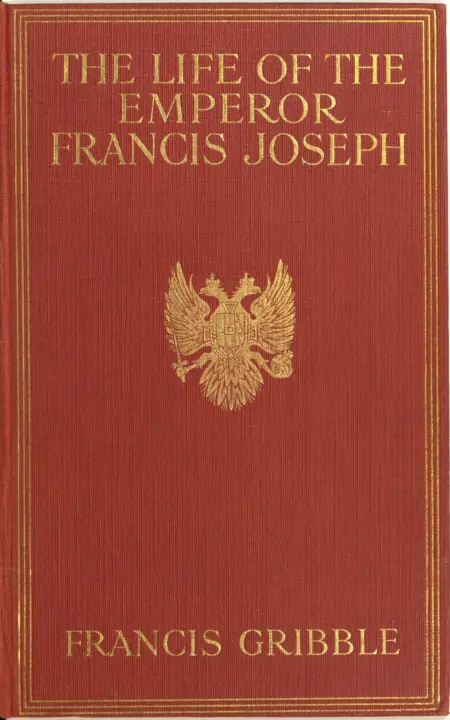
THE CLASSIC COLLECTION · 1914
"The Life of the Emperor Francis Joseph" by Francis Henry Gribble is a historical account written in the early 20th century. The book explores the life and reign of Emperor Francis Joseph I of Austria, focusing on the intricate interplay between his personal experiences and the broader political landscape of the Austro-Hungarian Empire. Gribble delves into the challenges faced by Francis Joseph amidst a backdrop of social upheaval, nationalistic movements, and the decline of imperial authority. The opening of the biography sets the stage by discussing the collapse of the Holy Roman Empire and the subsequent challenges that emerged in the Austrian Empire. Gribble outlines that the ideas of nationality and liberalism were gaining traction, creating a tumultuous environment that Francis Joseph would navigate upon ascending the throne. The narrative highlights the contrast between the Emperor's youthful optimism and the grim realities of governing a diverse empire characterized by tension and conflict. It paints a picture of a ruler whose reign began amid revolutionary fervor, setting the tone for the complex and often precarious political landscape he would face throughout his life.
Introduction adapted from the source catalogue; source summaries may be automatically generated.
Free to read · English · 93,240 words · No account needed
MAKE TIME FOR A GOOD BOOK
On by default. Untick to stop anonymous reading totals. Each page counts after 10 seconds in view. How this works.
Anonymous counting is on unless you have switched it off.
summons Sardinia to disarm, 124; took part himself in the war, 128, 129; his sullenness over the terms of peace, 129, 130; Italian hatred of him, 131; refuses Italy’s offer to buy Venetia, 133; Offers to cede Venetia if Italy will leave him free to deal with Prussia—has to surrender it as result of the defeat at Sadowa, 134; his treatment of General Benedek, 135-141; sends for Deák, 144; and comes to terms with Hungary, 144, 145; his coronation at Buda-Pesth, 145, 146; he was stronger after Sadowa than before, 146; in negotiation with Napoleon on the Triple Alliance, 149; and with Victor Emmanuel, 150; in public affairs has the luck which saves him from his blunders, 160; in private is spared no sorrows, 161-163; his attitude as head of the family to Maximilian’s acceptance of the throne of Mexico, 167-171; helpless to aid Maximilian, 180; he might excuse himself had he taken no steps to aid him, 183, 184; but he did all he could without avail, 184-186; rumour that he was father of Mary Vetsera, 229; his reception of the news of the Meyerling tragedy, 230; his displeasure with Archduke John Salvator, 236, 242, 243; his last communication with him, 248; sends a cruiser to search the coast of Chili for John Orth, 254; sometimes visited the Empress at Cap Martin, 264; his reception of the news of the Empress’s death, 269-271; his varying attitude to morganatic marriages, and marriages between the Habsburgs and commoners, 286-293; permits the marriage of Princess Stéphanie to Count Lonyay, 294-296; and of her daughter Elizabeth to Otto von Windischgraetz, 297-299; his anxiety for his nephew, Francis Ferdinand to marry, 303; he
sanctions the marriage with Countess Sophie Chotek as morganatic—his speech to the Privy Council, 307, 308; he retains more mediæval ideas than any ruler of to-day, 309, 310; his interview with Archduke Leopold Ferdinand, 328; his long reign and great age, 341; his unique reign, 350
Francis Joseph I., His Life and Times, see Mahaffy, R. P.
Francois Joseph Intime, see Weindel, H. de
Franco-Prussian War, 148-157
Frederick, Archduke, 303, 305
Frederick IV., Emperor, 23
Frederick August, King of Saxony, 319
Frederick the Great, 21, 32, 57
Frederick, Landgrave of Furstenberg, 48
“Fried Fish,” see Bratfisch
Frossard, General, 153, 169
Fugger, Countess, 337
Gabrielle, Archduchess, 303, 304
Galippe, Dr., L’hérédité des Stigmates de Dégénérescence, 10, 12, 13
Geneva, 60, 267
Georgei, 54
German Federation, the, 3, 132, 134
Giornale d’Italia, Victor Emmanuel’s letter to Napoleon in, 150
Giron, M., 322, 332-334, 336
Gisela, Archduchess, daughter of Francis Joseph, 101, 102, 107, 286, 292
Gladstone, W. E., 126, 160
Gödöllo, 90
Graber, Captain, 56
Graetz, 98, 138, 140
Gramont, Duc de, 154, 155
Greece, Isles of, 119
Grunne, Count, 48
Guizot, F. P. G., 35, 36, 40
Habsburg, House of, its characteristics essential to the understanding of Austrian history, vi, vii; the eccentricities of its members, viii; marriage of a daughter of, to Napoleon, 2; eugenist’s opinions of, 10-13;
Your reading position is saved on this browser. Take it to another device with a library code. Reading pages adapt to text, rather than matching a printed edition.
Francis Henry Gribble
Francis Henry Gribble
BEHIND THE BOOK
This eBook is for the use of anyone anywhere in the United States and most other parts of the world at no cost and with almost no restrictions whatsoever. You may copy it, give it away or re-use it under the terms of the Project Gutenberg License included with this eBook or online at www.gutenberg.org. If you are not located in the United States, you will have to check the laws of the country where you are located before using this eBook. Read the source licence.
The original source file, including credits and licence, is retained by this library. Request an original-format copy at no charge. Please include the book title and Project Gutenberg identifier #74682.
KEEP YOUR CURIOSITY GOING
Cécile Tormay

Moritz Busch
John L. Ransom
Frances Wright
Cécile Tormay

Mabel Potter Daggett