THE CLASSIC COLLECTION✦The romance of the Oxford collegesCLASSIC FREE BOOKS
The romance of the Oxford colleges
Francis Henry Gribble
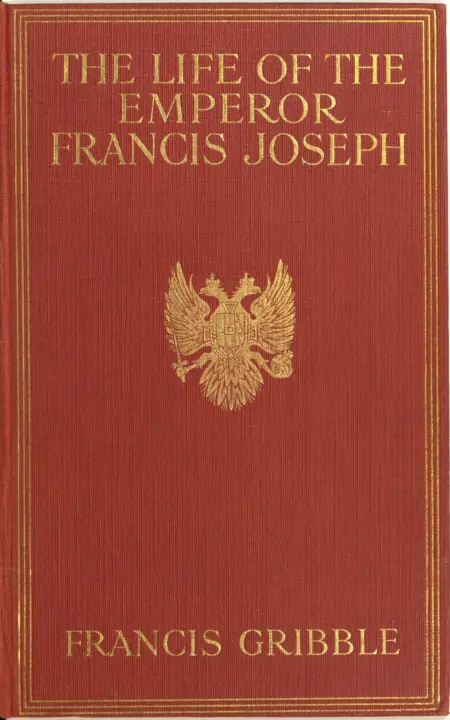
THE CLASSIC COLLECTION · 1914
"The Life of the Emperor Francis Joseph" by Francis Henry Gribble is a historical account written in the early 20th century. The book explores the life and reign of Emperor Francis Joseph I of Austria, focusing on the intricate interplay between his personal experiences and the broader political landscape of the Austro-Hungarian Empire. Gribble delves into the challenges faced by Francis Joseph amidst a backdrop of social upheaval, nationalistic movements, and the decline of imperial authority. The opening of the biography sets the stage by discussing the collapse of the Holy Roman Empire and the subsequent challenges that emerged in the Austrian Empire. Gribble outlines that the ideas of nationality and liberalism were gaining traction, creating a tumultuous environment that Francis Joseph would navigate upon ascending the throne. The narrative highlights the contrast between the Emperor's youthful optimism and the grim realities of governing a diverse empire characterized by tension and conflict. It paints a picture of a ruler whose reign began amid revolutionary fervor, setting the tone for the complex and often precarious political landscape he would face throughout his life.
Introduction adapted from the source catalogue; source summaries may be automatically generated.
Free to read · English · 93,240 words · No account needed
MAKE TIME FOR A GOOD BOOK
On by default. Untick to stop anonymous reading totals. Each page counts after 10 seconds in view. How this works.
Anonymous counting is on unless you have switched it off.
Esterhazy, 93; her own experiences allegorised in a fairy-tale, 94, 95; her roving disposition, her melancholy and cynicism, 96; her attention to the toilette, and daring horsemanship, 97; the insanity in her family, 97, 98; The Martyrdom of an Empress, an untrustworthy life of her, 99-105; never used a gun—yachting in the Ionian Islands, 101; not at all musical—never rode alone, 102; introduces Frau Schratt to the Emperor, 104, 105, 109, 110; supposed reasons for her trip to Madeira, 116, 117; her indifference as to the training of the Crown Prince, 116; her constant wanderings and ceremonial appearances at Court, 116-119; specimens of her poetic pessimism, 119, 120; her popularity in Hungary helped the settlement, 143, 144; her murder, 162; refuses to believe her brother Ludwig mad—suggests a plan for his escape, 190; did not believe him dead, 191; said to have written reminiscences, 260; her outlook on life and her religious beliefs, 261, 262; M. Paoli’s account of her when in France, 263-265; omens preceding her assassination, 265-267; stabbed at Geneva, 268
Elizabeth of Hungary, Saint, 83
Elizabeth, Princess, granddaughter of the Emperor, 292-293
Elizabeth, Princess, of Bavaria, see Elizabeth, Empress
Ernest, Archduke, 239
Escobedo, 182
Essays and Reviews, 259
Esterhazy, Félicie, 41
Esterhazy, Count Nicholas, 93, 120, 143
Esterhazy, Valentine, 70
Eugéne, Archduke, 278, 279, 283
Eugénie, Empress, 118, 152, 178, 264
Faucigny-Lucinge, Mme., 240, 241
Faye, M. Jacques La, his life of the Empress, 99
Federal Assembly, the, 3
Ferdinand, Emperor, uncle of Francis Joseph, 22;
his character, 42, 46;
his abdication, 47-51
Ferdinand, King of Bulgaria, 318
Ferdinand, Grand Duke of Tuscany, 220, 221, 323
Ferdinand VI. of Spain, 24
Ferdinand Charles, Archduke, 288-291, 301
Ferdinand of Este, Archduke, 47, 48
Ferenzy, Mdlle., 103
France, war with, 123-130
Francis I. of France, 26
Francis II., Emperor, grandfather of Francis Joseph, 21, 22
Francis II., King of Naples, 6, 125
Francis Charles, Archduke, father of Francis Joseph, 22, 29, 48, 49, 69
Francis Ferdinand, Archduke, 269, 288, 293, 300; nephew to the Emperor—delicate boy and grew up delicate, 301; educated amongst Jesuits—medical treatment has its effect on him, 302; is expected to marry Archduchess Gabrielle, 303; but was courting a lady-in-waiting, Countess Sophie Chotek, 303-305; Archduchess Isabella’s discovery of their affection, 305, 306; the Emperor sanctions the marriage as a morganatic one, 305; the Archduke’s oath, 309; possible ways of evading it, 311-313; his plan for settlement of Balkan troubles, 344-346; his morganatic marriage stands in the way of the natural succession after him, 348, 349
Your reading position is saved on this browser. Take it to another device with a library code. Reading pages adapt to text, rather than matching a printed edition.
Francis Henry Gribble
Francis Henry Gribble
BEHIND THE BOOK
This eBook is for the use of anyone anywhere in the United States and most other parts of the world at no cost and with almost no restrictions whatsoever. You may copy it, give it away or re-use it under the terms of the Project Gutenberg License included with this eBook or online at www.gutenberg.org. If you are not located in the United States, you will have to check the laws of the country where you are located before using this eBook. Read the source licence.
The original source file, including credits and licence, is retained by this library. Request an original-format copy at no charge. Please include the book title and Project Gutenberg identifier #74682.
KEEP YOUR CURIOSITY GOING
Cécile Tormay

Moritz Busch
John L. Ransom
Frances Wright
Cécile Tormay

Mabel Potter Daggett