THE CLASSIC COLLECTION✦The romance of the Oxford collegesCLASSIC FREE BOOKS
The romance of the Oxford colleges
Francis Henry Gribble
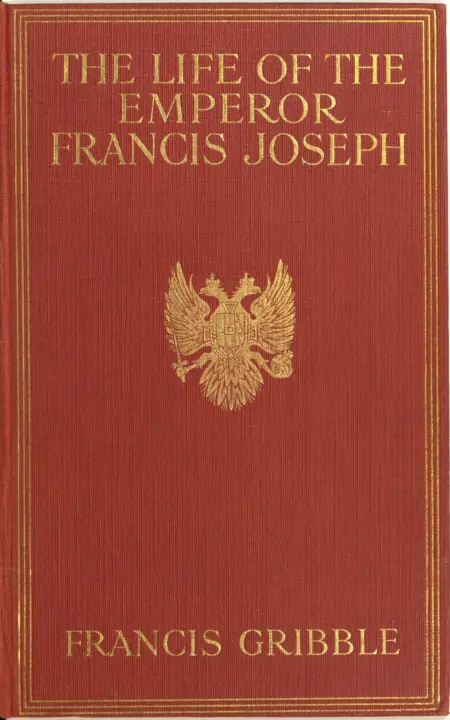
THE CLASSIC COLLECTION · 1914
"The Life of the Emperor Francis Joseph" by Francis Henry Gribble is a historical account written in the early 20th century. The book explores the life and reign of Emperor Francis Joseph I of Austria, focusing on the intricate interplay between his personal experiences and the broader political landscape of the Austro-Hungarian Empire. Gribble delves into the challenges faced by Francis Joseph amidst a backdrop of social upheaval, nationalistic movements, and the decline of imperial authority. The opening of the biography sets the stage by discussing the collapse of the Holy Roman Empire and the subsequent challenges that emerged in the Austrian Empire. Gribble outlines that the ideas of nationality and liberalism were gaining traction, creating a tumultuous environment that Francis Joseph would navigate upon ascending the throne. The narrative highlights the contrast between the Emperor's youthful optimism and the grim realities of governing a diverse empire characterized by tension and conflict. It paints a picture of a ruler whose reign began amid revolutionary fervor, setting the tone for the complex and often precarious political landscape he would face throughout his life.
Introduction adapted from the source catalogue; source summaries may be automatically generated.
Free to read · English · 93,240 words · No account needed
MAKE TIME FOR A GOOD BOOK
On by default. Untick to stop anonymous reading totals. Each page counts after 10 seconds in view. How this works.
Anonymous counting is on unless you have switched it off.
It is, however, precisely because of its gradual approach to such problems as these that one finds the reign of Francis Joseph such an intensely interesting period of history. It is interesting from the personal point of view as the story of Nemesis overtaking the oppressor; the story which we have presented symbolically as the story of the fulfilment of Countess Karolyi’s curse. Philosophically it is interesting as the age of transition from mediæval to modern ideas: the age in which both nationalities and individuals have stormily asserted their right to live their own lives in their own way. In both these matters we see, in Austria more clearly than anywhere else, the hungry generations treading down the past.
It is seldom that so complete an evolution of outlook is co-extensive with the life of a single sovereign; perhaps, indeed, Francis Joseph’s reign has been unique in that respect. In any case, he has witnessed all these changes, and lived through all these intellectual and emotional experiences. His rôle, while doing so, has been to keep up appearances; but, if we could penetrate to the realities behind the appearances, we should assuredly find that he had not himself been unaffected by the transformations going on around him. That is the true moral of the story of his affection for Frau Schratt, and of the rumour of his desire to give that lady his left hand in marriage. He felt what the other Habsburgs felt, though he controlled his feelings better. Seeing what the other Habsburgs were doing, he had the impulse to be “in the movement,” though he resisted it. He, like the rest, has sometimes had the intuition that happiness lay in living one’s own life rather than the corporate life of one’s country; and there are moments when his biographer feels that, in spite of all the pomp and glory which have attended his public career, the day of days for him must have been the day on which he met Frau Schratt, who, after twenty-eight years of mutual devotion, now totters down the hill with him at the journey’s end.
Daily, for a little while, when health permits, he sits with her and wonders.... We will leave him wondering.
Adamovics, Fräulein Wilhelmina, viii, 107, 322, 326, 327, 329
Albert, Archduke, 134, 136, 138-140, 149, 152-155, 162, 192, 234, 242
Albert, Prince Consort, 135
Alençon, Sophie, Duchesse d’, under restraint at Graetz, 98, 169; affianced to Ludwig II. of Bavaria, 161, 188; photographed with Count Holnstein, 188; the engagement broken off—married to Duc d’Alençon, 189; her death, 161, 191
Alexander I., Czar of Russia, 2, 32, 57, 70
Ambert, General, Cinq Epées, 37
Amsterdam, 119
Andrassy, Count Julius, 146, 156, 210, 247
Andrews, Mrs. Clarence, 224
Anjou, Charles of, 20
Aroyo, Don Agostino, 253
Arragon, Ferdinand of, 23
Your reading position is saved on this browser. Take it to another device with a library code. Reading pages adapt to text, rather than matching a printed edition.
Francis Henry Gribble
Francis Henry Gribble
BEHIND THE BOOK
This eBook is for the use of anyone anywhere in the United States and most other parts of the world at no cost and with almost no restrictions whatsoever. You may copy it, give it away or re-use it under the terms of the Project Gutenberg License included with this eBook or online at www.gutenberg.org. If you are not located in the United States, you will have to check the laws of the country where you are located before using this eBook. Read the source licence.
The original source file, including credits and licence, is retained by this library. Request an original-format copy at no charge. Please include the book title and Project Gutenberg identifier #74682.
KEEP YOUR CURIOSITY GOING
Cécile Tormay

Moritz Busch
John L. Ransom
Frances Wright
Cécile Tormay

Mabel Potter Daggett