THE CLASSIC COLLECTION✦The romance of the Oxford collegesCLASSIC FREE BOOKS
The romance of the Oxford colleges
Francis Henry Gribble
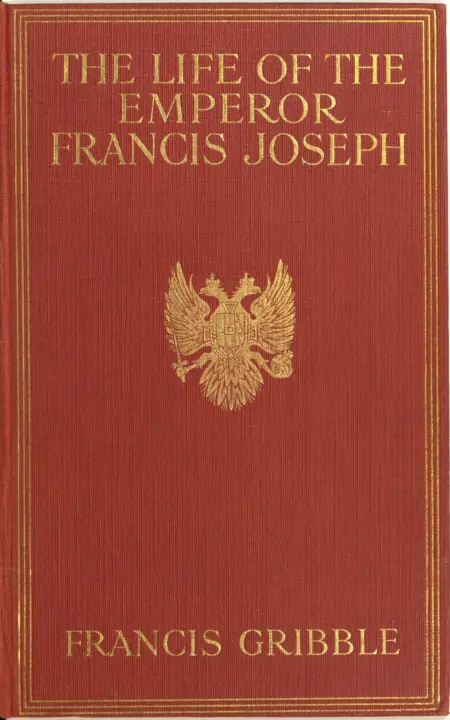
THE CLASSIC COLLECTION · 1914
"The Life of the Emperor Francis Joseph" by Francis Henry Gribble is a historical account written in the early 20th century. The book explores the life and reign of Emperor Francis Joseph I of Austria, focusing on the intricate interplay between his personal experiences and the broader political landscape of the Austro-Hungarian Empire. Gribble delves into the challenges faced by Francis Joseph amidst a backdrop of social upheaval, nationalistic movements, and the decline of imperial authority. The opening of the biography sets the stage by discussing the collapse of the Holy Roman Empire and the subsequent challenges that emerged in the Austrian Empire. Gribble outlines that the ideas of nationality and liberalism were gaining traction, creating a tumultuous environment that Francis Joseph would navigate upon ascending the throne. The narrative highlights the contrast between the Emperor's youthful optimism and the grim realities of governing a diverse empire characterized by tension and conflict. It paints a picture of a ruler whose reign began amid revolutionary fervor, setting the tone for the complex and often precarious political landscape he would face throughout his life.
Introduction adapted from the source catalogue; source summaries may be automatically generated.
Free to read · English · 93,240 words · No account needed
MAKE TIME FOR A GOOD BOOK
On by default. Untick to stop anonymous reading totals. Each page counts after 10 seconds in view. How this works.
Anonymous counting is on unless you have switched it off.
AUTHOR: “All her love became centred upon little Archduchess Gisela, who had made her appearance in the world in 1856.”
COMMENTATOR: “She never looked at the baby, and Archduchess Sophia
took care of it.”
AUTHOR: “A very unpalatable adventure of which her husband was the hero ... broke the last restraint upon her indignation, and, without informing anybody of her intentions, she hurriedly left the imperial palace of Vienna for Trieste, and set sail for the Ionian Islands on board her yacht, fully resolved never to allow her husband to approach her or to speak to her again.”
COMMENTATOR: “She had no yacht of her own at that time, and travelled with the consent of the Emperor. Her brother accompanied her to Trieste.”
AUTHOR: “In the summer following Baby Valérie’s birth, the Empress spent several months with the Crown Prince and his two sisters.”
COMMENTATOR: “Baby Valérie was quite separated from the others, the Empress being very jealous about Valérie. Gisela and Rudolph were mostly kept in Laxenburg.”
AUTHOR: “Elizabeth walked over to a large harmonium which stood near the open window. She sat down before it, and after striking a few chords which echoed through the stillness of the chamber, she sang Schubert’s ‘Serenade.’ She was a great musician.”
COMMENTATOR: “The Empress never touched a harmonium nor a piano. She was not a bit musical, and never sang.”
AUTHOR: “‘Rudi,’ who was watching them, said suddenly——”
COMMENTATOR: “The Crown Prince was never called ‘Rudi,’ always ‘Rudolph.’ His pet name was ‘Nazi.’”
AUTHOR: “‘Mutzerl,’ as Baby Valérie was called——”
COMMENTATOR: “Valérie was never called ‘Mutzerl,’ but ‘Shedvesen,’ by her mother. It means ‘darling.’”
AUTHOR: “Valérie ... swam like an otter, rode almost as well as her mother, fenced and shot with great skill.”
COMMENTATOR: “Valérie never learnt to ride, as the Empress would not allow it, and never fenced or shot.”
AUTHOR: “She was riding alone on that day.”
COMMENTATOR: “The Empress never went out riding alone.”
AUTHOR: “‘My poor boy! my poor boy!’ she kept repeating. ‘I am afraid you do not realise what misery such a marriage as that which you are about to make can bring about!’”
COMMENTATOR: “To me the Empress said, ‘Let him marry whom he likes. I don’t mix myself up in Rudolph’s affairs.’”
AUTHOR: “That Rudolph met Marie Vetsera and her mother in London and called upon them several times is quite certain.”
COMMENTATOR: “Rudolph never met the Vetseras in London.”
AUTHOR: “Mademoiselle Ferenzy read to her from English, French, and
Hungarian books.”
COMMENTATOR: “Mademoiselle Ferenzy could only read Hungarian.”
Your reading position is saved on this browser. Take it to another device with a library code. Reading pages adapt to text, rather than matching a printed edition.
Francis Henry Gribble
Francis Henry Gribble
BEHIND THE BOOK
This eBook is for the use of anyone anywhere in the United States and most other parts of the world at no cost and with almost no restrictions whatsoever. You may copy it, give it away or re-use it under the terms of the Project Gutenberg License included with this eBook or online at www.gutenberg.org. If you are not located in the United States, you will have to check the laws of the country where you are located before using this eBook. Read the source licence.
The original source file, including credits and licence, is retained by this library. Request an original-format copy at no charge. Please include the book title and Project Gutenberg identifier #74682.
KEEP YOUR CURIOSITY GOING
Cécile Tormay

Moritz Busch
John L. Ransom
Frances Wright
Cécile Tormay

Mabel Potter Daggett