THE CLASSIC COLLECTION✦An outlaw’s diary: the CommuneCLASSIC FREE BOOKS
An outlaw’s diary: the Commune
Cécile Tormay
THE CLASSIC COLLECTION · 1802
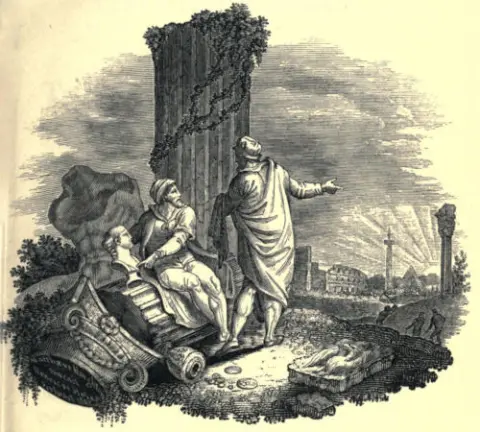
"The Life of Poggio Bracciolini" by William Shepherd is a historical account written in the early 19th century. This biography explores the life and contributions of Poggio Bracciolini, a pivotal figure in the Renaissance known for his role in the revival of literature and humanism. The narrative likely covers Bracciolini's education, professional career, and interactions with notable contemporaries within the context of the political and cultural landscape of 14th and 15th century Italy. At the start of the work, the author provides a preface explaining the motivation behind the biography, highlighting the inadequacies of previous accounts of Poggio's life. Shepherd mentions his preliminary research and the challenges he faced in compiling a coherent narrative. The opening chapters introduce Poggio’s birth and formative years, emphasizing his education in Florence and subsequent move to Rome, where he began his career in the Papal Chancery. The narrative sets the stage for an exploration of his personal relationships, scholarly achievements, and the tumultuous historical events he navigated, including various political factions and the Western Schism.
Introduction adapted from the source catalogue; source summaries may be automatically generated.
Free to read · English · 121,680 words · No account needed
MAKE TIME FOR A GOOD BOOK
On by default. Untick to stop anonymous reading totals. Each page counts after 10 seconds in view. How this works.
Anonymous counting is on unless you have switched it off.
The exhibition of a few specimens of the virulence which distinguished the hostility of these learned gladiators is perhaps necessary to give a true idea of the character of the combatants, and of the times in which they lived. It may also be subservient to another useful purpose. The odious nature of vice, as well as the beauty of virtue, is most strikingly demonstrated by examples; and perhaps nothing will tend more to convince men of the folly of evil speaking, lying, and slandering, than the perusal of the invectives of Poggio, and the satires of Filelfo.
Poggio did not, however, waste the whole of the leisure time which he enjoyed in the retirement of his Tuscan villa, in the disgraceful occupation of bestowing a literary garb on the grossest abuse. At the commencement of the year 1440 he published his dialogue on Nobility, a work which greatly increased his reputation by the luminousness of its method, the elegance of its diction, and the learned references with which it was interspersed. In a short prefatory address, by which he dedicated this dialogue to Gerardo Landriani, bishop of Como, he observed, that it was a remarkable circumstance, that this subject, which opened so wide a field for discussion, had been in a manner neglected by the learned. He professed his conviction of his own inability to do justice to it, but expressed his hopes that his example might induce scholars of more brilliant talents to correct his errors, and to supply his deficiencies.
The interlocutors of this dialogue are Niccolo Niccoli and Lorenzo de’ Medici, the brother of Cosmo. The scene of the conversation is laid in the villa of Poggio, which these lovers of the fine arts had visited for the purpose of inspecting some ancient statues which had been lately conveyed thither from Rome. The sight of these statues arranged in the garden of Poggio’s rural retreat reminds Lorenzo of the manners of the ancient Romans, who, he observes, were accustomed to adorn the halls of their palaces with the effigies of their ancestors, the lustre of whose nobility they imagined reflected honour on themselves. This remark draws from Niccolo a declaration of his opinion, that in founding their fame on the glory of their progenitors, they were greatly deceived, as the seat of true nobility is the mind. Lorenzo, granting the position, that virtue is a source of nobility, affirms that this honour may also be acquired by the ornaments of wealth and dignity. In proof of his assertion, he enlarges on the meaning of the word nobilis, shewing, by various quotations from Latin authors, that it is used to signify in general the quality of being remarkable, without any reference to the cause of notoriety. He moreover observes, that the common opinion of men attaches the idea of nobility to eminence of station, splendour of birth, and other adventitious circumstances of a similar nature. Niccolo, replying to this observation, that if the opinion of the vulgar is to be regarded, their ideas are so various upon the subject, that no certain criterion can be derived from them, is desired to enumerate the characteristics of nobility which occur in different countries. In compliance with this request, he thus describes the nobles of his native land. “To begin with the Italians, who have disseminated amongst other nations the arts which adorn human life, what a difference there subsists between the nobility of Naples, of Venice, and of Rome. The Neapolitans, who pride themselves on their patrician dignity, seem to imagine, that nobility consists in the indulgence of idleness and sloth; for they enter into no active pursuits, but live in indolence upon the revenues of their estates. They deem it unbecoming a nobleman to attend to agriculture, or to take any cognizance of the state of his affairs. They spend their time in loitering in the halls of their palaces, or in equestrian exercises. However bad a man’s moral character may be, or however mean his talents, if he be descended from an ancient family, he a ranks amongst the nobility. As to merchandize, they regard it with contempt; and so ridiculous is their pride, that though they be reduced to the most abject state of poverty, they would rather starve than suffer any branch of their family to form a matrimonial alliance with the most opulent tradesman. Nay, so great is their dislike of traffic, that they deem it more honourable to support themselves by robbery, than to gain a livelihood by engaging in any species of commerce. I know a Neapolitan of a most illustrious family, who was regarded by his brother patricians in so degrading a light, because he had exposed to sale a quantity of wine, the produce of his estates, that he experienced the utmost difficulty in marrying his daughter, though he was able to bestow upon her a very large fortune.
Your reading position is saved on this browser. Take it to another device with a library code. Reading pages adapt to text, rather than matching a printed edition.
BEHIND THE BOOK
This eBook is for the use of anyone anywhere in the United States and most other parts of the world at no cost and with almost no restrictions whatsoever. You may copy it, give it away or re-use it under the terms of the Project Gutenberg License included with this eBook or online at www.gutenberg.org. If you are not located in the United States, you will have to check the laws of the country where you are located before using this eBook. Read the source licence.
The original source file, including credits and licence, is retained by this library. Request an original-format copy at no charge. Please include the book title and Project Gutenberg identifier #72437.
KEEP YOUR CURIOSITY GOING
Cécile Tormay

Moritz Busch
John L. Ransom
Frances Wright
Cécile Tormay

Mabel Potter Daggett