THE CLASSIC COLLECTION✦An outlaw’s diary: the CommuneCLASSIC FREE BOOKS
An outlaw’s diary: the Commune
Cécile Tormay
THE CLASSIC COLLECTION · 1903
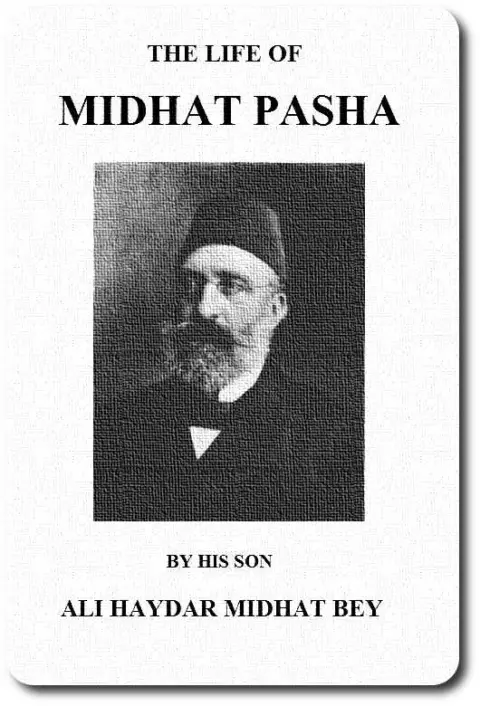
"The Life of Midhat Pasha: A Record of His Services, Political Reforms, Banishment, and Judicial Murder" by Ali Haydar Midhat Bey is a historical account written in the early 20th century. The book presents a detailed examination of the life and political reforms implemented by Midhat Pasha, a significant figure in the Ottoman Empire, emphasizing his contributions and eventual downfall amidst the turbulent dynamics of Turkish politics during his time. The opening of the book provides a preface by Midhat's son, Ali Haydar, explaining the impetus behind writing this account. He shares his personal experiences as Midhat Pasha's son, detailing the hardships he faced in exile and his desire to reveal the true story of his father's career and death. Midhat's influence in reforming the Ottoman political structure during a period marked by despotism is highlighted, indicating that his initiatives were often met with resistance from established powers. Ali Haydar underscores the oppressive environment of Sultan Abdul Hamid II's regime that ultimately led to his father's banishment and execution, setting the stage for an exploration of the broader historical context surrounding Midhat Pasha's legacy in the subsequent chapters.
Introduction adapted from the source catalogue; source summaries may be automatically generated.
Free to read · English · 99,680 words · No account needed
MAKE TIME FOR A GOOD BOOK
On by default. Untick to stop anonymous reading totals. Each page counts after 10 seconds in view. How this works.
Anonymous counting is on unless you have switched it off.
“1. That the death of the ex‐Sultan Abdul Aziz was caused by the loss of blood produced by the wounds of the blood‐vessels at the joints of the arms.
“2. That the instrument shown to us could certainly produce such
wounds.
“3. That the direction and nature of the wounds, together with the instrument which is said to have produced them, lead us to conclude that suicide had been committed.
“In witness whereof we have accordingly drawn up and signed the present minute of proceedings at the guard‐house of Tcheragan on the day, month and year aforesaid.
“Signed:
“Dr Marco, Nouri, A. Sotto, Physician attached to the Imperial and Royal Embassy of Austria‐Hungary; Dr Spagnolo, Marc Markel, Jatropoulo, Abdinour, Servet, J. de Castro, A. Marroin, Julius Millingen, C. Caratheodori; E. D. Dickson, Physician of the British Embassy; Dr O. Vitalis, Physician of the Sanitary Board; Dr E. Spadare, J. Nouridjian, Miltiadi Bey, Mustafa, Mehmed.”
The body was transferred to Top‐Kapou and buried in the mausoleum of
Sultan Mahmoud.
Ten days after the tragedy at the Palace of Tcheragan the news of which had deeply affected Sultan Murad, another quickly followed, in some respects of a still more startling character, and calculated to prostrate still further a mind already unhinged.
A Circassian captain, formerly aide‐de‐camp of the Sultan Abdul Aziz, one Hassan by name, on whom certain suspicion of violent intentions rested, had been ordered to Bagdad, and on his showing signs of recalcitrancy, he was imprisoned for insubordination by orders of Hussein Avni, the Minister of War. Feigning submission, he was released after two days’ detention. On the 15th June, during a Cabinet Council which was being held at the house of Midhat Pasha, and at which all the Ministers were present, Tcherkess Hassan, armed with no less than six revolvers, forcing the consigne without much difficulty, managed to penetrate into the room where the Council was sitting, and advancing straight up to Hussein Avni, discharged a barrel of a revolver at him, and turning sharply on Reshid Pasha, the Minister of Foreign Affairs, shot him dead on the spot. The Minister of Marine, Kaisserli Ahmed, threw himself on the assassin and tried to disarm him, but he was immediately stabbed with a poniard that Hassan carried in his left hand. Hussein Avni, although severely wounded, managed to make his way to the staircase, but Hassan, following him, struck at him furiously in the neck with his dagger and despatched him. Returning to the Council room he discharged his revolvers promiscuously all around him, smashing the chandelier suspended in the middle of the room, and consequently plunging the room into darkness. It was this that probably saved the lives of the remaining Ministers, for Kaisserli Ahmed, though wounded, and Mehemet Rushdi, and Halid succeeded in escaping into an adjoining boudoir, where they barricaded the door against their furious assailant, who, having despatched the War Minister, seemed chiefly bent on wreaking vengeance on the Minister of Marine. Midhat escaped by a miracle, and by slipping off his coat, the sleeve of which he left in the hand of Hassan who had seized it in the darkness. One of Midhat’s servants, Ahmed Aga, on hearing the firing, had rushed into the room and tried to seize the assassin from behind, but Hassan turned sharply on him and shot him dead. The same fate attended Chukri Bey, the aide‐de‐camp of the Minister of Marine, who also rushed in to the rescue. At last a guard of gendarmerie appeared on the scene, and a regular fusillade ensued between the Circassian at bay and the gendarmes reinforced by a picket of soldiers; it was only then, after a regular pitched battle, that this determined criminal was at length overpowered and seized.
Your reading position is saved on this browser. Take it to another device with a library code. Reading pages adapt to text, rather than matching a printed edition.
BEHIND THE BOOK
This eBook is for the use of anyone anywhere in the United States and most other parts of the world at no cost and with almost no restrictions whatsoever. You may copy it, give it away or re-use it under the terms of the Project Gutenberg License included with this eBook or online at www.gutenberg.org. If you are not located in the United States, you will have to check the laws of the country where you are located before using this eBook. Read the source licence.
The original source file, including credits and licence, is retained by this library. Request an original-format copy at no charge. Please include the book title and Project Gutenberg identifier #51243.
KEEP YOUR CURIOSITY GOING
Cécile Tormay

Moritz Busch
John L. Ransom
Frances Wright
Cécile Tormay

Mabel Potter Daggett