THE CLASSIC COLLECTION✦An outlaw’s diary: the CommuneCLASSIC FREE BOOKS
An outlaw’s diary: the Commune
Cécile Tormay
THE CLASSIC COLLECTION · 1903
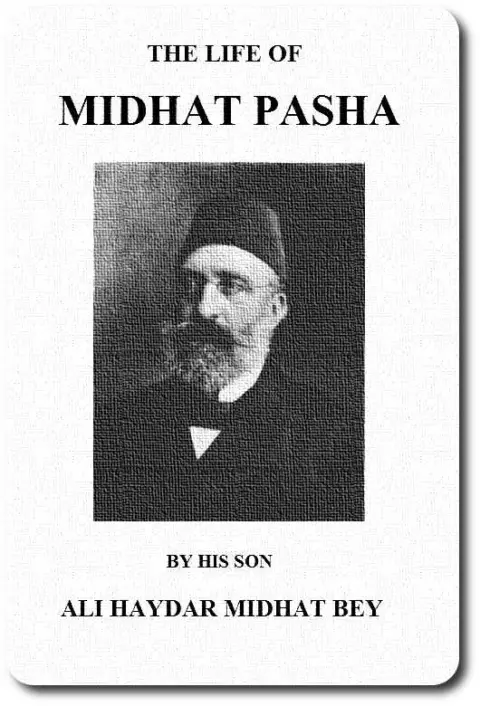
"The Life of Midhat Pasha: A Record of His Services, Political Reforms, Banishment, and Judicial Murder" by Ali Haydar Midhat Bey is a historical account written in the early 20th century. The book presents a detailed examination of the life and political reforms implemented by Midhat Pasha, a significant figure in the Ottoman Empire, emphasizing his contributions and eventual downfall amidst the turbulent dynamics of Turkish politics during his time. The opening of the book provides a preface by Midhat's son, Ali Haydar, explaining the impetus behind writing this account. He shares his personal experiences as Midhat Pasha's son, detailing the hardships he faced in exile and his desire to reveal the true story of his father's career and death. Midhat's influence in reforming the Ottoman political structure during a period marked by despotism is highlighted, indicating that his initiatives were often met with resistance from established powers. Ali Haydar underscores the oppressive environment of Sultan Abdul Hamid II's regime that ultimately led to his father's banishment and execution, setting the stage for an exploration of the broader historical context surrounding Midhat Pasha's legacy in the subsequent chapters.
Introduction adapted from the source catalogue; source summaries may be automatically generated.
Free to read · English · 99,680 words · No account needed
MAKE TIME FOR A GOOD BOOK
On by default. Untick to stop anonymous reading totals. Each page counts after 10 seconds in view. How this works.
Anonymous counting is on unless you have switched it off.
Mahmoud Nedim had now succeeded Essad Pasha as Grand Vizier (1875), and as no effective measures were taken to suppress the rising, it went on spreading from village to village and district to district till the contagion was caught in Bulgaria. There, in the beginning of 1874, a commencement of unrest showed itself in the districts of Drenova, Kazanlik, and Zagra; but the local authorities (warned by what had taken place in the Herzegovina through the neglect of initial precautions) had all the leaders of the movement arrested. Thereupon General Ignatieff made such energetic representations to the Porte, that orders arrived not only for the release of the imprisoned malcontents, but for the dismissal of all the functionaries concerned in their arrest.[6]
The effect of this novel and original mode of dealing with an insurrection was soon apparent in the effervescence and excitement it caused among the Mussulman population throughout the province. They saw rebel bands, the leaders of which were patronised and supported by foreign consuls and diplomatists, being organised without disguise and approaching their own hearths, whereas all defensive measures on the part of their own natural leaders were discountenanced and punished. They thereupon resolved to take the matter into their own hands, and formed vigilance committees and organised local bands under the command of retired zaptiés throughout the province.
In such psychological conditions an explosion of popular passions was certain sooner or later to take place. The occasion for this was furnished by an incident that occurred at Salonica on the 5th May 1875. This incident was, with the Bulgarian insurrection and the Berlin Note, one of the external difficulties that confronted the Government, and placed it in a very critical position. A young Bulgarian girl had come by rail to Salonica from a neighbouring village on the evening of the 5th May, accompanied by a hoadja, with a view to making a declaration of conversion to Mahomedanism before the Grand Council of Salonica—a formality required by the law, as a preliminary to her being married to a young Mahomedan of her village. On her arrival at the station she was met by a mob of Greeks and Bulgarians who pulled off her yashmak and feradje (mantle and veil), and forcing her into a carriage, in spite of the efforts of four zaptiés who came up in the middle of the disturbance, drove her at a gallop to the American Consulate, where the brother of the Vice‐Consul (a Bulgarian), who had arranged the abduction, concealed her during the night. The next day he had her removed to the house of a friend, so that all trace of the girl should be lost. But early next morning a Mussulman mob, comprising (as in such occurrences is certain to be the case) the worst and most violent sections of the population, had assembled at the Konak and loudly demanded the restoration of the girl and her appearance before the Grand Council. As their demands were not complied with, they retired to the Saatli Mosque, adjacent to the Governor’s Konak, where they reiterated their demands for the restoration of the girl. Unfortunately, by some fatality which was never satisfactorily explained, the German and French Consuls found their way into the mosque in the very midst of excited Mussulmans. Whether they went there of their own accord to remonstrate and argue with the people, or approaching the scene of the demonstration were hustled into the mosque, was never cleared up. But once they appeared there, the frenzy of the mob burst all bounds, and the most violent amongst them, pursuing the Consuls into one of the apartments of the Muderris (Academy) in connection with the mosque, fell on them with iron bars hastily snatched from the windows of the mosque, and murdered them on the spot. The English Consul, Mr Blunt, accompanied by his cavass, seems to have been the only one who kept his head on this occasion and acted with presence of mind and sagacity; for, at the risk of his own life, he forced his way to the Konak, and when he found that the Governor could not effect the restoration of the girl, which was the only way to calm the mob and rescue the Consuls, he sent to the American Vice‐Consulate to apprize Mr Lazaro, who was the cause of the whole disturbance, of the perilous situation of his colleagues, the French and German Consuls, and to implore him to restore the girl. Unfortunately, Mr Lazaro at first procrastinated and pretended that he did not know where the girl was, and so precious time was lost; and when subsequently, on a further appeal from Mr Consul Blunt, he delivered up the girl, it was too late, for the crime against the foreign Consuls who had intervened had been accomplished.
Your reading position is saved on this browser. Take it to another device with a library code. Reading pages adapt to text, rather than matching a printed edition.
BEHIND THE BOOK
This eBook is for the use of anyone anywhere in the United States and most other parts of the world at no cost and with almost no restrictions whatsoever. You may copy it, give it away or re-use it under the terms of the Project Gutenberg License included with this eBook or online at www.gutenberg.org. If you are not located in the United States, you will have to check the laws of the country where you are located before using this eBook. Read the source licence.
The original source file, including credits and licence, is retained by this library. Request an original-format copy at no charge. Please include the book title and Project Gutenberg identifier #51243.
KEEP YOUR CURIOSITY GOING
Cécile Tormay

Moritz Busch
John L. Ransom
Frances Wright
Cécile Tormay

Mabel Potter Daggett