THE CLASSIC COLLECTION✦An outlaw’s diary: the CommuneCLASSIC FREE BOOKS
An outlaw’s diary: the Commune
Cécile Tormay
THE CLASSIC COLLECTION · 1903
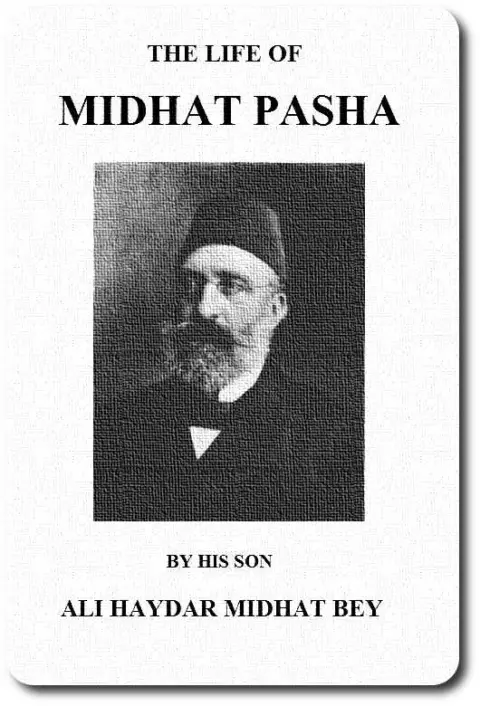
"The Life of Midhat Pasha: A Record of His Services, Political Reforms, Banishment, and Judicial Murder" by Ali Haydar Midhat Bey is a historical account written in the early 20th century. The book presents a detailed examination of the life and political reforms implemented by Midhat Pasha, a significant figure in the Ottoman Empire, emphasizing his contributions and eventual downfall amidst the turbulent dynamics of Turkish politics during his time. The opening of the book provides a preface by Midhat's son, Ali Haydar, explaining the impetus behind writing this account. He shares his personal experiences as Midhat Pasha's son, detailing the hardships he faced in exile and his desire to reveal the true story of his father's career and death. Midhat's influence in reforming the Ottoman political structure during a period marked by despotism is highlighted, indicating that his initiatives were often met with resistance from established powers. Ali Haydar underscores the oppressive environment of Sultan Abdul Hamid II's regime that ultimately led to his father's banishment and execution, setting the stage for an exploration of the broader historical context surrounding Midhat Pasha's legacy in the subsequent chapters.
Introduction adapted from the source catalogue; source summaries may be automatically generated.
Free to read · English · 99,680 words · No account needed
MAKE TIME FOR A GOOD BOOK
On by default. Untick to stop anonymous reading totals. Each page counts after 10 seconds in view. How this works.
Anonymous counting is on unless you have switched it off.
Another and most probable explanation of this astounding story was that what Canon Liddon and his friend really saw, “was a watchman who had mounted on his stake, probably to look at the steamer descending the Save.”[109] Anybody may be mistaken, even distinguished ecclesiastics; but what, in such quasi‐sacred persons was scarcely to be expected, was the tenacity with which they stuck to the impalement theory, after it was exploded in the minds of all impartial persons. Even high dignitaries of the Church don’t like being laughed at.
[1] “History of the Ottoman Empire,” vol. ii. p. 356.
[2] “La Motraye,” La Haye, 1727, vol. i. pp. 383, 462.
[3] See the “Relation du Baile Garzoni,” of 1586.
[4] See Gervinus’ “Insurrection et Régéneration de la Grèce,” vol. i.
p. 16.
[5] Pozzo di Borgo to Count Nesselrode, November 1828.
[6] “The First Dragoman of the Russian Embassy to Mahmoud Nedim.[A]
“MY DEAR HIGHNESS,—I have communicated the observations of your Highness to His Excellency the Ambassador, who has assured us in his reply that he will use his influence to arrest the Herzegovinian insurrection. No one desires more earnestly than ourselves the success of Your Highness’ projects.
“Your Highness may give the necessary assurances to whom they may
concern.” (1873).
[Taken from a pamphlet called “Ussi Inkillab,” which was published at the beginning of the reign of Abdul Hamid—an interesting document in proving this fact.]
[A] Nineteenth Century, January 1903.
[7] See Appendix.—“Bulgarian Atrocities.”
[8] See Appendix—“Bulgarian Atrocities.”
[9] See Appendix.
[10] Nineteenth Century, February 1888.
[11] Boat.
[12] Nineteenth Century, January 1903.
[13] “Blue Book,” Turkey, 2, No. 105.
[14] Nineteenth Century, February 1888, p. 279.
[15] Although a man of this description, unfit for Parliament, was quite fitted to represent his Sovereign at one of the most important Courts of Europe.—AUTHOR.
[16] The Director‐General of official and private correspondence between the Palace and the Sublime Porte.
[17] Blue Book, Turkey, 2, 1877, No. 152.
[18] Nineteenth Century, January 1903.
[19] Blue Book, Turkey, 1, 1877, No. 985.
[20] Times, 10th February 1877.
[21] Mr Blunt, H.B.M. Consul at Salonica, addressed the following
despatch to Lord Derby:—
“SALONICA, 10th February 1877.
“The leading men with whom I have conversed, and the people in general here, manifest much surprise and some irritation at the sudden dismissal of Midhat Pasha from the Grand Vizierate, in whom they had full confidence that he would carry out reforms.
“The prevailing impression here is, especially among the Turks, that the fall of this popular statesman has been prepared and effected by the Sultan’s immediate entourage.
“In case there is any demonstration at Constantinople, in favour of Midhat Pasha, the popular feeling at Salonica would, I think, coincide with it.[B]—I have, etc.,
[B] Blue Book, Turkey, 15, 1877, No. 171.
Your reading position is saved on this browser. Take it to another device with a library code. Reading pages adapt to text, rather than matching a printed edition.
BEHIND THE BOOK
This eBook is for the use of anyone anywhere in the United States and most other parts of the world at no cost and with almost no restrictions whatsoever. You may copy it, give it away or re-use it under the terms of the Project Gutenberg License included with this eBook or online at www.gutenberg.org. If you are not located in the United States, you will have to check the laws of the country where you are located before using this eBook. Read the source licence.
The original source file, including credits and licence, is retained by this library. Request an original-format copy at no charge. Please include the book title and Project Gutenberg identifier #51243.
KEEP YOUR CURIOSITY GOING
Cécile Tormay

Moritz Busch
John L. Ransom
Frances Wright
Cécile Tormay

Mabel Potter Daggett