THE CLASSIC COLLECTION✦An outlaw’s diary: the CommuneCLASSIC FREE BOOKS
An outlaw’s diary: the Commune
Cécile Tormay
THE CLASSIC COLLECTION · 1903
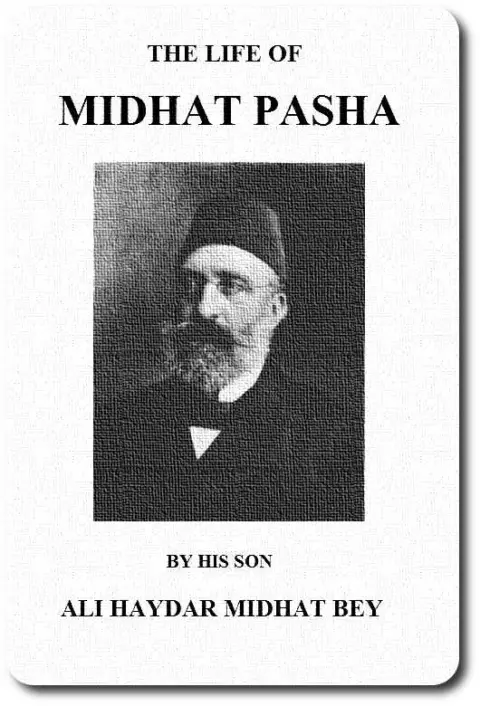
"The Life of Midhat Pasha: A Record of His Services, Political Reforms, Banishment, and Judicial Murder" by Ali Haydar Midhat Bey is a historical account written in the early 20th century. The book presents a detailed examination of the life and political reforms implemented by Midhat Pasha, a significant figure in the Ottoman Empire, emphasizing his contributions and eventual downfall amidst the turbulent dynamics of Turkish politics during his time. The opening of the book provides a preface by Midhat's son, Ali Haydar, explaining the impetus behind writing this account. He shares his personal experiences as Midhat Pasha's son, detailing the hardships he faced in exile and his desire to reveal the true story of his father's career and death. Midhat's influence in reforming the Ottoman political structure during a period marked by despotism is highlighted, indicating that his initiatives were often met with resistance from established powers. Ali Haydar underscores the oppressive environment of Sultan Abdul Hamid II's regime that ultimately led to his father's banishment and execution, setting the stage for an exploration of the broader historical context surrounding Midhat Pasha's legacy in the subsequent chapters.
Introduction adapted from the source catalogue; source summaries may be automatically generated.
Free to read · English · 99,680 words · No account needed
MAKE TIME FOR A GOOD BOOK
On by default. Untick to stop anonymous reading totals. Each page counts after 10 seconds in view. How this works.
Anonymous counting is on unless you have switched it off.
“I am now in a position to explain why the prosecution showed such anxiety to get Midhat condemned, and employed such unjustifiable means for this purpose. It may be remembered that some months ago the Sultan was greatly alarmed by a revolutionary propaganda, of which the chief instigator was believed to be the ex‐Khedive. A judicial functionary, who has since taken a prominent part in the trial, was ordered to make an inquiry, and came to the conclusion that Midhat was implicated in the propaganda. The conclusion was probably erroneous, but it made a strong impression on the Sultan’s mind, and from that moment Midhat’s fate was decided. As no legal proofs of his complicity in the seditious agitation could be produced, other means had to be employed for getting rid of him, and the regicide inquiry was used for this purpose.”
“Times,” 11th July 1881.—“Constantinople, 10th July.—During the last few days representations have been twice made to the Sultan by the British Ambassador concerning the State trial. It is believed at the Palace that Lord Dufferin acted on the first occasion spontaneously, and on the second occasion by the express orders of Lord Granville. The later communication is said to be couched in strong terms, urging His Majesty for his own sake to refrain from carrying out the sentence of the tribunal. The Sultan has received also a telegram from the Ottoman Embassy in London, in which Musurus Pasha describes the unfavourable impression produced by the trial in England, and implores His Majesty to prevent at least the capital punishment being inflicted.”
“Times,” 28th July 1881.—“Constantinople, 26th July.—Since the judgment was pronounced at the State trial considerable hesitation and embarrassment have harassed the Sultan and given rise to numberless exaggerated and contradictory rumours, which I have thought it undesirable to report at the time of their production, because they were in some cases manifestly without foundation and in others largely improbable. During the last few days, however, an attempt has been made on the part of the Sultan to lessen his responsibility in the matter, through the instrumentality of a Grand Council, comprising the highest dignitaries of the State both in and out of office. The Council contained twenty‐seven members, of whom five were ex‐Grand Viziers, fourteen were Ministers in and out of office, and eight were Ulemas. We now hear that in that solemn assembly, which sat at the Palace for three days, opinions were divided, and finally an important minority courageously voted against carrying out the extreme penalty of the law, especially in the case of those of the accused who had not confessed, and against whom no positive proof of guilt had been elicited at the trial. This minority is said to have included most of the more prominent members, viz.:—four Grand Viziers and the present Prime Minister, three Ministers in the Cabinet, one of the most influential high ecclesiastics, and one former Minister. The majority is said to have voted in the sense of a confirmation of the judgment given at the trial, subject, of course, to the exercise of the Imperial clemency. It included ten Ministers in office, most of them specially antagonistic to Midhat Pasha, and seven Ulemas. The Sultan has chosen to adopt the opinion of the minority and to decide that the accused shall be banished for life. It is not quite clear why, in the circumstances, His Majesty should have chosen this course; for it was supposed that the Council had been called together with a view to make it share the responsibility of the signature of the death‐warrants, which His Majesty hesitated to sign without the direct sanction of the great officers of State. The repugnance of the Sultan to have criminals executed is well known, and since his accession he is said never to have sanctioned a single capital sentence. While securing the removal of the criminals to some distant and safe locality, where they will be powerless to work harm, he avoids at the same time the issuing of the fatal decree, so repugnant to his feelings. Much must be attributed to the action of our own Government. Brilliant, indeed, has been the commencement of the mission of Lord Dufferin, who has already gained much favour in public opinion here both native and foreign. Considering the popularity and prominent personal value of at least one of the accused Pashas, the impression that his life has been saved through the intervention of the British Ambassador tends to remove much of the popular clamour which had lately become so loud against British influence, and it is a significant sign of the times that one of the semi‐official Turkish organs publishes to‐day an article advocating a close alliance between England and Turkey. A few months ago this same officially inspired print loudly proclaimed that England’s friendship was more hurtful to Turkey than the enmity of any other Power.”
Your reading position is saved on this browser. Take it to another device with a library code. Reading pages adapt to text, rather than matching a printed edition.
BEHIND THE BOOK
This eBook is for the use of anyone anywhere in the United States and most other parts of the world at no cost and with almost no restrictions whatsoever. You may copy it, give it away or re-use it under the terms of the Project Gutenberg License included with this eBook or online at www.gutenberg.org. If you are not located in the United States, you will have to check the laws of the country where you are located before using this eBook. Read the source licence.
The original source file, including credits and licence, is retained by this library. Request an original-format copy at no charge. Please include the book title and Project Gutenberg identifier #51243.
KEEP YOUR CURIOSITY GOING
Cécile Tormay

Moritz Busch
John L. Ransom
Frances Wright
Cécile Tormay

Mabel Potter Daggett