THE CLASSIC COLLECTION✦An outlaw’s diary: the CommuneCLASSIC FREE BOOKS
An outlaw’s diary: the Commune
Cécile Tormay
THE CLASSIC COLLECTION · 1903
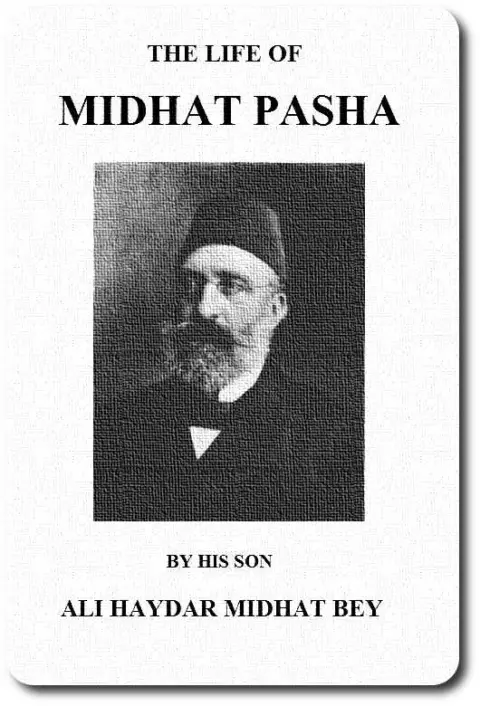
"The Life of Midhat Pasha: A Record of His Services, Political Reforms, Banishment, and Judicial Murder" by Ali Haydar Midhat Bey is a historical account written in the early 20th century. The book presents a detailed examination of the life and political reforms implemented by Midhat Pasha, a significant figure in the Ottoman Empire, emphasizing his contributions and eventual downfall amidst the turbulent dynamics of Turkish politics during his time. The opening of the book provides a preface by Midhat's son, Ali Haydar, explaining the impetus behind writing this account. He shares his personal experiences as Midhat Pasha's son, detailing the hardships he faced in exile and his desire to reveal the true story of his father's career and death. Midhat's influence in reforming the Ottoman political structure during a period marked by despotism is highlighted, indicating that his initiatives were often met with resistance from established powers. Ali Haydar underscores the oppressive environment of Sultan Abdul Hamid II's regime that ultimately led to his father's banishment and execution, setting the stage for an exploration of the broader historical context surrounding Midhat Pasha's legacy in the subsequent chapters.
Introduction adapted from the source catalogue; source summaries may be automatically generated.
Free to read · English · 99,680 words · No account needed
MAKE TIME FOR A GOOD BOOK
On by default. Untick to stop anonymous reading totals. Each page counts after 10 seconds in view. How this works.
Anonymous counting is on unless you have switched it off.
“The first formality was the proving of the prisoners’ identity, and immediately thereafter the indictment was read by three of the prosecutors, which may be briefly stated as follows:—A few days after the dethronement of Abdul Aziz, Mahmoud Damad, and Nouri Damad, engaged two professional wrestlers and a Palace watchman to assassinate their ex‐Sovereign, promising them £100 each and a monthly pension of three pounds, as appears from the accounts of the Civil Lists. The crime was committed with the assistance of the Chamberlain, Fahri Bey, while Ali and Nedjib Beys, who had introduced the assassins into the Palace, mounted guard with drawn swords at the door of the room. As there was at that time a Supreme Commission, composed of Mehmed Ruchdi, Midhat, Hussein Avni, the Sheik‐ul‐Islam, and Mahmoud Damad, and as no important orders could be given without the concurrence of this Commission, it may be assumed that all its members must have been cognizant of Mahmoud and Nouri’s criminal proceedings, and it is for this reason that Midhat is among the accused.
“When the indictment setting forth this theory had been read, the President, in a quiet and dignified manner, began to question the prisoners. The first called upon to state what he knew, was Mustapha, the wrestler, a man of ordinary size and not presenting any signs of abnormal muscular development. His face was of a common type and betrayed no symptoms of emotion as he related, in plain, unvarnished terms, how he had cut open the ex‐Sultan’s veins with a knife given to him for the purpose by Mahmoud Damad. His description, accompanied by slight and significant gestures, was brutally graphic, and made a strong impression on the spectators, more than one of the older men in the audience giving vent to their feelings of horror by audible exclamations. Mustapha’s account was fully confirmed by Hadji Mehmed Pasha, who declared that together with the Chamberlain Fahri Bey and Djezairli, he had hold of Abdul Aziz whilst the crime was being perpetrated. Djezairli, who had made a full confession in his preliminary examination, was then questioned, and retracted what he had previously said. Fahri Bey, a young man, with long fair moustache, delicately‐cut effeminate features, and of tall and slender build, was next examined, and denied the statements of the wrestler and his companion. In a tremulous tone, which gathered firmness as he proceeded, he described, from his personal observation, the mental condition of Abdul Aziz after his dethronement, and obstinately insisted that the dethroned monarch had committed suicide. The other prisoners, without endeavouring to explain how the Sultan’s death occurred, successively maintained their own innocence, and found more or less plausible answers for all the questions put to them by the judges. Mahmoud Damad Pasha, a tall stout man, with regular and handsome features and large dark eyes, found most difficulty in replying, and his deep gruff voice showed more than once signs of great emotion; but he denied emphatically and indignantly the accusations brought against him by the wrestlers and others. About two o’clock Midhat was introduced and took his seat by Mahmoud Damad’s side. His hair and beard had become much whiter since I last saw him, four years ago, and his complexion was still as morbidly florid as before, but he seemed well, and sought to conceal his emotion by stroking his beard, and arranging his notes, from which he was preparing to speak. Starting up suddenly and leaning on the back of his chair, he made a short speech, in which he declared himself happy to have been cited before the public tribunal, and he rendered justice to His Majesty’s sentiments of equity in causing the affair to be carefully examined. To all the questions about the Supreme Commission, of which he was a member, and which must have had cognizance of the intended assassination, he replied emphatically that such a Commission existed nowhere except in the imagination of his accusers, and that all matters of State were considered by the regular Council of Ministers. When reproached by the presiding judge for not having immediately ordered a searching inquiry, he admitted that he had been guilty of this sin of omission; but at the same time he maintained that all the other Ministers were in this respect equally guilty. On the subject of his having sought refuge in the French Consulate his answers, though extremely ingenious, were not so satisfactory. Unlike the other prisoners, Midhat withdrew from the Court as soon as he finished what he had to say, and after his departure a number of witnesses were called for the Prosecution. The chief of these were three young men who had seen the crime perpetrated in the way the wrestlers described, and the wife of a certain Ali Bey, who, being at that time one of the ladies of Abdul Aziz’ harem, had witnessed some of the incidents connected with the assassination. One of the most interesting witnesses was a frail, white‐bearded Mussulman, in an old‐fashioned costume, who related in a faltering voice, that he had washed the body of Abdul Aziz, and noticed a small wound in the region of the heart. The Court rose about half‐past seven o’clock without the witnesses having been cross‐examined. The proceedings will be continued, and possibly terminated, to‐day.”
Your reading position is saved on this browser. Take it to another device with a library code. Reading pages adapt to text, rather than matching a printed edition.
BEHIND THE BOOK
This eBook is for the use of anyone anywhere in the United States and most other parts of the world at no cost and with almost no restrictions whatsoever. You may copy it, give it away or re-use it under the terms of the Project Gutenberg License included with this eBook or online at www.gutenberg.org. If you are not located in the United States, you will have to check the laws of the country where you are located before using this eBook. Read the source licence.
The original source file, including credits and licence, is retained by this library. Request an original-format copy at no charge. Please include the book title and Project Gutenberg identifier #51243.
KEEP YOUR CURIOSITY GOING
Cécile Tormay

Moritz Busch
John L. Ransom
Frances Wright
Cécile Tormay

Mabel Potter Daggett