THE CLASSIC COLLECTION✦The Night ClubCLASSIC FREE BOOKS
The Night Club
Herbert George Jenkins
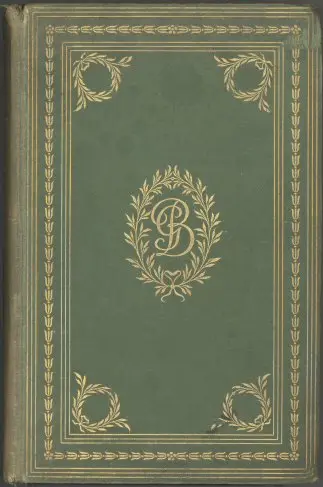
THE CLASSIC COLLECTION · 1912
"The Life of George Borrow" by Herbert George Jenkins is a biographical account written in the early 20th century. This work explores the life and career of George Borrow, with particular attention to his experiences between the late 18th century and early 19th century. The narrative emphasizes Borrow's development from a struggling writer to a significant figure known for his missionary work and literary contributions, especially within the context of his time in Spain. The opening of the book sets the stage for Borrow's intriguing life, starting with the background of his father, Thomas Borrow, and the family's circumstances that shaped George's early years. Jenkins paints a vivid picture of young Borrow's tumultuous upbringing amidst the backdrop of historical events, military life, and his striking duality as both an introverted child and a spirited student. The introduction examines key moments, such as his early combativeness and his burgeoning interest in languages, which foreshadow his later pursuits as a linguist and writer. It establishes that Borrow's life was not only defined by his literary ambitions but also by his complex personality and the societal expectations of his family, setting the stage for further explorations of his remarkable journey.
Introduction adapted from the source catalogue; source summaries may be automatically generated.
Free to read · English · 161,465 words · No account needed
MAKE TIME FOR A GOOD BOOK
On by default. Untick to stop anonymous reading totals. Each page counts after 10 seconds in view. How this works.
Anonymous counting is on unless you have switched it off.
{382} Memoirs of Eighty Years. By Dr Gordon Hake, 1892.
{383a} Memoirs of Eighty Years. By Dr Gordon Hake, 1892.
{383b} Memoirs of Eighty Years. By Dr Gordon Hake, 1892.
{384a} George Borrow in East Anglia. W. A. Dutt.
{384b} Memoirs of Eighty Years. By Dr Gordon Hake, 1892.
{385a} William Bodham Donne and His Friends. By Catherine B. Johnson.
{385b} William Whewell (1794–1866), Master of Trinity College, Cambridge, 1848–66; Vice-Chancellor of Cambridge University, 1843–56; secured in 1847 the election of the Prince Consort as Chancellor; enlarged the buildings of Trinity College and founded professorship and scholarships for international law. Published and edited many works on natural and mathematical science, philosophy, theology and sermons.
{386} Mr John Murray in Good Words.
{390} To John Murray; the letter is in Mrs Borrow’s hand but drafted by Borrow himself, 29th Jan. 1855.
{391a} 16th April 1845.
{391b} See post.
{393a} The Romany Rye, page 338.
{393b} Life of Frances Power Cable, by herself.
{393c} Borrow goes on to an anti-climax when he states that he “believes him [Scott] to have been by far the greatest [poet], with perhaps the exception of Mickiewicz, who only wrote for unfortunate Poland, that Europe has given birth to during the last hundred years.”
{393d} The Romany Rye, pages 344–5.
{393e} Romano Lavo-Lil, page 274.
{393f} The Romany Rye, page 134.
{394a} Letter from Borrow to Dr Usoz, 22nd Feb. 1839.
{394b} Macmillan’s Magazine, vol. 45.
{396} “Notes upon George Borrow” prefaced to an edition of Lavengro.
Ward, Lock & Co.
{398} Mr W. Elvin in the Athenæum, 6th Aug. 1881.
{399a} John Wilson Croker (1780–1857): Politician and Essayist; friend of Canning and Peel. At one time Temporary Chief Secretary for Ireland and later Secretary of the Admiralty. Supposed to have been the original of Rigby in Disraeli’s Coningsby.
{399b} Mr Theodore Watts-Dunton, “Notes upon George Borrow” prefaced to an edition of Lavengro. Ward, Lock & Co.
{400a} The Rt. Hon. Augustine Birrell in Obiter Dicta, and Series,
1887.
{400b} Francis Hindes Groome in Bookman, May 1899.
{404a} “Swimming is a noble exercise, but it certainly does not tend to mortify either the flesh or the spirit.”—The Bible in Spain, page 688.
{404b} Mr John Murray in Good Words.
{404c} In The Eastern Daily Press, 1st October 1892.
{405} Borrow’s reference is to the county motto, “One and All.”
{407a} The Life of George Borrow, by Dr Knapp, ii., 79–80.
{407b} George Borrow, by R. A. J. Walling.
{407c} George Borrow, by R. A. J. Walling.
{408} George Borrow, by R. A. J. Walling.
{409} The Life of George Borrow, by Dr Knapp.
{411} This is rather awkwardly phrased, as Mrs Borrow was alive at that
date.
Your reading position is saved on this browser. Take it to another device with a library code. Reading pages adapt to text, rather than matching a printed edition.
Herbert George Jenkins
Herbert George Jenkins
Herbert George Jenkins
Herbert George Jenkins
BEHIND THE BOOK
This eBook is for the use of anyone anywhere in the United States and most other parts of the world at no cost and with almost no restrictions whatsoever. You may copy it, give it away or re-use it under the terms of the Project Gutenberg License included with this eBook or online at www.gutenberg.org. If you are not located in the United States, you will have to check the laws of the country where you are located before using this eBook. Read the source licence.
The original source file, including credits and licence, is retained by this library. Request an original-format copy at no charge. Please include the book title and Project Gutenberg identifier #3481.
KEEP YOUR CURIOSITY GOING
John L. Ransom

Herman W. Mudgett

Harriet Monroe
Daniel Dulany Addison
Charles Lanman

Harold Rosher