THE CLASSIC COLLECTION✦The Night ClubCLASSIC FREE BOOKS
The Night Club
Herbert George Jenkins
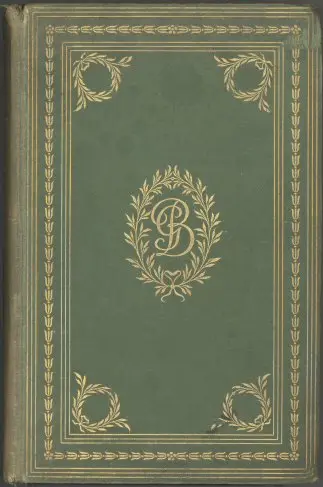
THE CLASSIC COLLECTION · 1912
"The Life of George Borrow" by Herbert George Jenkins is a biographical account written in the early 20th century. This work explores the life and career of George Borrow, with particular attention to his experiences between the late 18th century and early 19th century. The narrative emphasizes Borrow's development from a struggling writer to a significant figure known for his missionary work and literary contributions, especially within the context of his time in Spain. The opening of the book sets the stage for Borrow's intriguing life, starting with the background of his father, Thomas Borrow, and the family's circumstances that shaped George's early years. Jenkins paints a vivid picture of young Borrow's tumultuous upbringing amidst the backdrop of historical events, military life, and his striking duality as both an introverted child and a spirited student. The introduction examines key moments, such as his early combativeness and his burgeoning interest in languages, which foreshadow his later pursuits as a linguist and writer. It establishes that Borrow's life was not only defined by his literary ambitions but also by his complex personality and the societal expectations of his family, setting the stage for further explorations of his remarkable journey.
Introduction adapted from the source catalogue; source summaries may be automatically generated.
Free to read · English · 161,465 words · No account needed
MAKE TIME FOR A GOOD BOOK
On by default. Untick to stop anonymous reading totals. Each page counts after 10 seconds in view. How this works.
Anonymous counting is on unless you have switched it off.
{309} Letter to Rev. A. Brandram, 25th Nov. 1839.
{310} Letter to Rev. A. Brandram, 25th Nov. 1839.
{313} From the Public Record Office.
{315} Letter to Rev. A. Brandram, 25th Nov. 1839.
{316} Rev. Wentworth Webster in The Journal of the Gypsy Lore Society.
{317} The phrasing of the official translation has everywhere been
followed.
{319} The Official Translation among the Foreign Office Papers at the
Record Office.
{320} 28th Dec. 1839.
{321} Henrietta played “remarkably well on the guitar—not the trumpery German thing so-called—but the real Spanish guitar.”—Wild Wales, page 6.
{322} Wild Wales, page 6.
{323a} Letter to Rev. A. Brandram, 18th March 1840.
{323b} Ibid.
{328a} The Romany Rye, page 312.
{328b} Ibid., page 313.
{328c} Wild Wales, page 289.
{329a} Lavengro, page 261.
{329b} The Romany Rye, page 22.
{329c} The Journals of Caroline Fox.
{330a} The Letters of Richard Ford 1797–1858.—Edited, R. E. Prothero,
M.V.O., 1905.
{330b} Ibid.
{331a} The Gypsies of Spain, page xiv.
{331b} E[lizabeth] H[arvey] in The Eastern Daily Press, 1st Oct. 1892.
{331c} The Gypsies of Spain, page 238.
{332a} E[lizabeth] H[arvey] in The Eastern Daily Press, 1st Oct. 1892.
{332b} Ibid.
{332c} Ibid.
{332d} Ibid.
{333a} E[lizabeth] H[arvey] in The Eastern Daily Press, 1st Oct. 1892.
{333b} Ibid.
{333c} The Bible in Spain, page 41.
{334a} E[lizabeth] H[arvey] in The Eastern Daily Press, 1st Oct. 1892.
{334b} In The Eastern Daily Press, 1st Oct. 1892. She also tells how “at the Exhibition in 1851, whither we went with his step-daughter, he spoke to the different foreigners in their own languages, until his daughter saw some of them whispering together and looking as if they thought he was ‘uncanny,’ and she became alarmed, and drew him away.”
{334c} Ibid.
{334d} The Gypsies of Spain, page vii.
{335a} A Publisher and His Friends. Samuel Smiles.
{335b} Richard Ford, 1796–1858. Critic and author. Spent several years in touring about Spain on horseback. Published in 1845, Hand-Book for Travellers in Spain. Contributed to the Edinburgh, Quarterly, and Westminster Reviews from 1837.
{335c} The Letters of Richard Ford, 1797–1858. Ed. R. E. Prothero,
M.V.O., 1905.
{336a} Dr. Knapp points out that the title is inaccurate, there being no such word as “Zincali.” It should be “Zincalé.”
{336b} The Letters of Richard Ford, 1797–1858. Ed. R. E. Prothero,
M.V.O., 1905.
{337a} The Gypsies of Spain, page 1. As the current edition of The Zincali has been retitled The Gypsies of Spain, reference is made to it throughout this work under that title and to the latest edition.
{337b} The Gypsies of Spain, page 32.
{338a} The Gypsies of Spain, page 81.
{338b} Ibid., page 186.
{338c} Ibid., page 283.
{339} The Gypsies of Spain, page 274.
{340a} Introduction to Lavengro. The Little Library, Methuen, 2
vols., 1, xxiii.-xxiv. C. G. Leland expressed himself to the same
effect.
{340b} Academy, 13th July 1874.
Your reading position is saved on this browser. Take it to another device with a library code. Reading pages adapt to text, rather than matching a printed edition.
Herbert George Jenkins
Herbert George Jenkins
Herbert George Jenkins
Herbert George Jenkins
BEHIND THE BOOK
This eBook is for the use of anyone anywhere in the United States and most other parts of the world at no cost and with almost no restrictions whatsoever. You may copy it, give it away or re-use it under the terms of the Project Gutenberg License included with this eBook or online at www.gutenberg.org. If you are not located in the United States, you will have to check the laws of the country where you are located before using this eBook. Read the source licence.
The original source file, including credits and licence, is retained by this library. Request an original-format copy at no charge. Please include the book title and Project Gutenberg identifier #3481.
KEEP YOUR CURIOSITY GOING
John L. Ransom

Herman W. Mudgett

Harriet Monroe
Daniel Dulany Addison
Charles Lanman

Harold Rosher