THE CLASSIC COLLECTION✦The Night ClubCLASSIC FREE BOOKS
The Night Club
Herbert George Jenkins
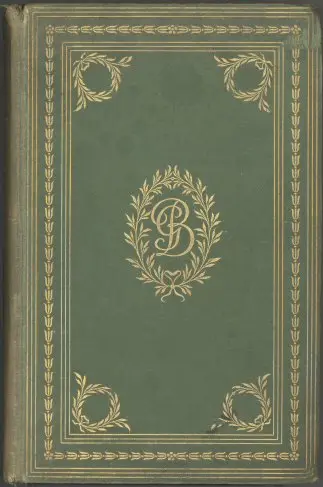
THE CLASSIC COLLECTION · 1912
"The Life of George Borrow" by Herbert George Jenkins is a biographical account written in the early 20th century. This work explores the life and career of George Borrow, with particular attention to his experiences between the late 18th century and early 19th century. The narrative emphasizes Borrow's development from a struggling writer to a significant figure known for his missionary work and literary contributions, especially within the context of his time in Spain. The opening of the book sets the stage for Borrow's intriguing life, starting with the background of his father, Thomas Borrow, and the family's circumstances that shaped George's early years. Jenkins paints a vivid picture of young Borrow's tumultuous upbringing amidst the backdrop of historical events, military life, and his striking duality as both an introverted child and a spirited student. The introduction examines key moments, such as his early combativeness and his burgeoning interest in languages, which foreshadow his later pursuits as a linguist and writer. It establishes that Borrow's life was not only defined by his literary ambitions but also by his complex personality and the societal expectations of his family, setting the stage for further explorations of his remarkable journey.
Introduction adapted from the source catalogue; source summaries may be automatically generated.
Free to read · English · 161,465 words · No account needed
MAKE TIME FOR A GOOD BOOK
On by default. Untick to stop anonymous reading totals. Each page counts after 10 seconds in view. How this works.
Anonymous counting is on unless you have switched it off.
{227c} The Marin episode is amazing. The object of distributing the Scriptures was to enlighten men’s minds and bring about conversion, and a priest was a distinct capture, more valuable by far than a peasant, and likely to influence others; yet when they had got him no one appears to have known exactly what to do, and all were anxious to get rid of him again.
{228a} The Bible in Spain, page 536.
{228b} Ibid.
{229a} Original Report, withdrawn.
{229b} Original Report, withdrawn.
{231} Sometimes this personage is referred to in official papers as the “Political Chief,” a too literal translation of Gefé Politico. In all cases it has been altered to Civil Governor to preserve uniformity. Many of the official translations of Foreign Office papers can only be described as grotesque.
{232a} This is the official translation among the Foreign Office papers
at the Record Office.
{232b} The Bible in Spain, page 539.
{233} There is an error in the dating of this letter. It should be 1st
May.
{234a} In a letter to Count Ofalia, Sir George Villiers states that “George Borrow, fearing violence, prudently abstained from going to his ordinary place of abode.”
{234b} Borrow pays a magnificent and well-deserved tribute to this queen among landladies. (The Bible in Spain, pages 256–7.) She was always his friend and frequently his counsellor, thinking nothing of the risk she ran in standing by him during periods of danger. She refused all inducements to betray him to his enemies, and, thoroughly deserved the eulogy that Borrow pronounced upon her.
{234c} It was subsequently stated that the arrest was ordered because Borrow had refused to recognise the Civil Governor’s authority and made use “of offensive expressions” towards his person. The Civil Governor had no authority over British subjects, and Borrow was right in his refusal to acknowledge his jurisdiction.
{235} The Bible in Spain, page 547.
{238a} Dispatch from Sir George Villiers to Viscount Palmerston, 5th
May.
{238b} Ibid.
{239a} Despatch from Sir George Villiers to Viscount Palmerston, 12th
May 1838.
{239b} Ibid.
{240a} Despatch from Sir George Villiers to Viscount Palmerston.
{240b} Letter to Rev. A. Brandram, 17th May 1838.
{241a} Despatch from Sir George Villiers to Viscount Palmerston, 5th May
1838.
{241b} In a letter to the Rev. A. Brandram, 17th May 1838.
{242a} The Official Translation among the Foreign Office Papers at the
Record Office.
{242b} Mr William Mark’s (the British Consul at Malaga) Official account of the occurrence, 16th May 1838.
{243a} Mr William Mark’s (the British Consul at Malaga) Official account of the occurrence, 16th May 1838.
{243b} Ibid.
{243c} Despatch to Viscount Palmerston, 12th May 1838.
{243d} Ibid.
{244a} Despatch to Viscount Palmerston, 12th May 1838.
{244b} Ibid.
Your reading position is saved on this browser. Take it to another device with a library code. Reading pages adapt to text, rather than matching a printed edition.
Herbert George Jenkins
Herbert George Jenkins
Herbert George Jenkins
Herbert George Jenkins
BEHIND THE BOOK
This eBook is for the use of anyone anywhere in the United States and most other parts of the world at no cost and with almost no restrictions whatsoever. You may copy it, give it away or re-use it under the terms of the Project Gutenberg License included with this eBook or online at www.gutenberg.org. If you are not located in the United States, you will have to check the laws of the country where you are located before using this eBook. Read the source licence.
The original source file, including credits and licence, is retained by this library. Request an original-format copy at no charge. Please include the book title and Project Gutenberg identifier #3481.
KEEP YOUR CURIOSITY GOING
John L. Ransom

Herman W. Mudgett

Harriet Monroe
Daniel Dulany Addison
Charles Lanman

Harold Rosher