THE CLASSIC COLLECTION✦The Night ClubCLASSIC FREE BOOKS
The Night Club
Herbert George Jenkins
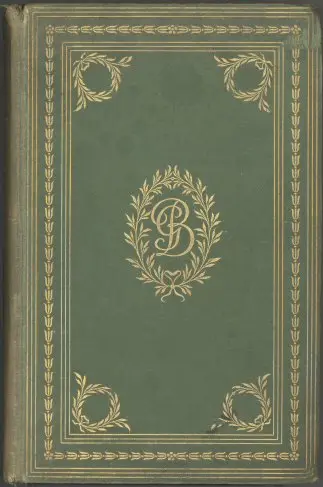
THE CLASSIC COLLECTION · 1912
"The Life of George Borrow" by Herbert George Jenkins is a biographical account written in the early 20th century. This work explores the life and career of George Borrow, with particular attention to his experiences between the late 18th century and early 19th century. The narrative emphasizes Borrow's development from a struggling writer to a significant figure known for his missionary work and literary contributions, especially within the context of his time in Spain. The opening of the book sets the stage for Borrow's intriguing life, starting with the background of his father, Thomas Borrow, and the family's circumstances that shaped George's early years. Jenkins paints a vivid picture of young Borrow's tumultuous upbringing amidst the backdrop of historical events, military life, and his striking duality as both an introverted child and a spirited student. The introduction examines key moments, such as his early combativeness and his burgeoning interest in languages, which foreshadow his later pursuits as a linguist and writer. It establishes that Borrow's life was not only defined by his literary ambitions but also by his complex personality and the societal expectations of his family, setting the stage for further explorations of his remarkable journey.
Introduction adapted from the source catalogue; source summaries may be automatically generated.
Free to read · English · 161,465 words · No account needed
MAKE TIME FOR A GOOD BOOK
On by default. Untick to stop anonymous reading totals. Each page counts after 10 seconds in view. How this works.
Anonymous counting is on unless you have switched it off.
{73} They appeared as Romantic Ballads, translated from the Danish, and Miscellaneous Pieces, by George Borrow. Norwich. S. Wilkin, 1826. Included in the volume were translations from the Kiæmpe Viser and from Oehlenschlæger.
{74} Correspondence and Table-Talk of B. R. Haydon. London, 1876. The position of the letter in the Haydon Journal is between November 1825 and January 1826; but it is more likely that it was written some months later. Unfortunately, Borrow’s portrait cannot be traced in any of Haydon’s pictures.
{75a} Lavengro, page 9.
{75b} There was a tradition that Borrow became a foreign correspondent for the Morning Herald, and it was in this capacity that he travelled on the Continent in 1826–7; but Dr Knapp clearly showed that such a theory was untenable.
{75c} The Gypsies of Spain, page 11.
{75d} The Bible in Spain, page 219.
{75e} Letter to his mother, August 1833.
{75f} The Bible in Spain, page 172.
{75g} The Gypsies of Spain, page 31.
{76a} The Bible in Spain, page 703.
{76b} The Bible in Spain, page 67.
{76c} The Gypsies of Spain, page 19.
{76d} Excursions Along the Shores of the Mediterranean, by Lt.-Col. E. H. D. E. Napier. London, 1842.
{76e} The Gypsies of Spain, pages 10–11.
{76f} Patteran, or Patrin; a gypsy method of indicating by means of grass, leaves, or a mark in the dust to those behind the direction taken by the main body.
{76g} The Gypsies of Spain, page 31.
{77a} If he went abroad, he certainly did so without obtaining a passport from the Foreign Office. The only passports issued to him between the years 1825–1840 were:
27th July 1833, to St Petersburg;
2nd November 1836 and 20th December 1838, to Spain,
as far as the F. O. Registers show.
{77b} Dr Knapp takes Borrow’s statement, made 29th March 1839, “I have been three times imprisoned and once on the point of being shot,” as indicating that he was imprisoned at Pamplona in 1826. The imprisonments were September 1837, Finisterre; May 1838, Madrid; and another unknown. The occasion on which he was nearly shot, which may be assumed to be connected with one of the imprisonments (otherwise he was more than “once nearly shot”), was at Finisterre, when he, with his guide, was seized as a Carlist spy “by the fishermen of the place, who determined at first on shooting us.” (Letter to Rev. A. Brandram, 15th September 1837.)
{78} The incident is given in Lavengro under date of 1818, when Marshland Shales was fifteen years old. It was not, however, until 1827 that he appeared at the Norwich Horse Fair and was put up for auction. “Such a horse as this we shall never see again; a pity that he is so old,” was the opinion of those who lifted their hats as a token of respect.
Your reading position is saved on this browser. Take it to another device with a library code. Reading pages adapt to text, rather than matching a printed edition.
Herbert George Jenkins
Herbert George Jenkins
Herbert George Jenkins
Herbert George Jenkins
BEHIND THE BOOK
This eBook is for the use of anyone anywhere in the United States and most other parts of the world at no cost and with almost no restrictions whatsoever. You may copy it, give it away or re-use it under the terms of the Project Gutenberg License included with this eBook or online at www.gutenberg.org. If you are not located in the United States, you will have to check the laws of the country where you are located before using this eBook. Read the source licence.
The original source file, including credits and licence, is retained by this library. Request an original-format copy at no charge. Please include the book title and Project Gutenberg identifier #3481.
KEEP YOUR CURIOSITY GOING
John L. Ransom

Herman W. Mudgett

Harriet Monroe
Daniel Dulany Addison
Charles Lanman

Harold Rosher