THE CLASSIC COLLECTION✦The Night ClubCLASSIC FREE BOOKS
The Night Club
Herbert George Jenkins
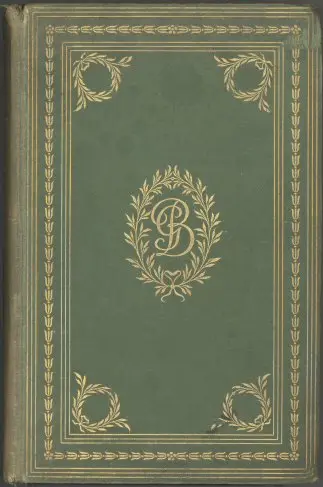
THE CLASSIC COLLECTION · 1912
"The Life of George Borrow" by Herbert George Jenkins is a biographical account written in the early 20th century. This work explores the life and career of George Borrow, with particular attention to his experiences between the late 18th century and early 19th century. The narrative emphasizes Borrow's development from a struggling writer to a significant figure known for his missionary work and literary contributions, especially within the context of his time in Spain. The opening of the book sets the stage for Borrow's intriguing life, starting with the background of his father, Thomas Borrow, and the family's circumstances that shaped George's early years. Jenkins paints a vivid picture of young Borrow's tumultuous upbringing amidst the backdrop of historical events, military life, and his striking duality as both an introverted child and a spirited student. The introduction examines key moments, such as his early combativeness and his burgeoning interest in languages, which foreshadow his later pursuits as a linguist and writer. It establishes that Borrow's life was not only defined by his literary ambitions but also by his complex personality and the societal expectations of his family, setting the stage for further explorations of his remarkable journey.
Introduction adapted from the source catalogue; source summaries may be automatically generated.
Free to read · English · 161,465 words · No account needed
MAKE TIME FOR A GOOD BOOK
On by default. Untick to stop anonymous reading totals. Each page counts after 10 seconds in view. How this works.
Anonymous counting is on unless you have switched it off.
{44a} Celebrated Trials and Remarkable Cases of Criminal Jurisprudence from the Earliest Records to the Year 1825, 6 vols., with plates. London, 1825.
{44b} Proximate Causes of the Material Phenomena of the Universe. By Sir Richard Phillips. London, 1821.
{45a} Dr Knapp identified the editor as “William Gifford, editor of The Quarterly Review from 1809 to September 1824.” (Life of George Borrow, i. 93.) The late Sir Leslie Stephen, however, cast very serious doubt upon this identification, himself concluding that the editor of The Universal Review was John Carey (1756–1826), whose name was actually associated with an edition of Quintilian published in 1822. Carey was a known contributor to two of Sir Richard Phillips’ magazines.
{45b} The Monthly Magazine, July 1824.
{46a} It appeared in six volumes.
{46b} The work when completed contained accounts of over 400 trials.
{46c} It appeared on 19th March following.
{46d} Lavengro, page 210.
{47} The picture was duly painted in the Heroic manner, the artist lending to the ex-mayor, for some reason or other, his own unheroically short legs. Haydon received his fee of a hundred guineas, and the picture now hangs in St Andrew’s Hall, Norwich.
{48a} Letter from Roger Kerrison to John Borrow, 28th May 1824.
{48b} Memoirs, C. G. Leland 1893.
{49a} Borrow himself gave the sum as “eighteen-pence a page.” The books themselves apparently did not become the property of the reviewer.—The Romany Rye, page 324.
{49b} Borrow says that he demanded lives of people who had never lived, and cancelled others that Borrow had prepared with great care, because be considered them as “drugs.”—Lavengro, pages 245–6.
{50a} “‘Sir,’ said he, ‘you know nothing of German; I have shown your translation of the first chapter of my Philosophy to several Germans: it is utterly unintelligible to them.’ ‘Did they see the Philosophy?’ I replied. ‘They did, sir, but they did not profess to understand English.’ ‘No more do I,’ I replied, ‘if the Philosophy be English.’”—Lavengro, page 254.
{50b} A German edition of the work appeared in Stuttgart in 1826.
{52a} This sentence is quoted in The Gypsies of Spain as a heading to the section “On Robber Language,” page 335.
{52b} Lavengro, pages 216–7.
{52c} Lavengro, page 271.
{53a} Faustus: His Life, Death and Descent into Hell. Translated from the German. London: W. Simpkin and R. Marshall, 1825, pages xxii., 251. Coloured Plate.
{53b} A letter from Borrow to the publishers, which Dr Knapp quotes, and dates 15th September 1825, but without giving his reasons, was written from Norwich, and runs:
Dear Sir,—
Your reading position is saved on this browser. Take it to another device with a library code. Reading pages adapt to text, rather than matching a printed edition.
Herbert George Jenkins
Herbert George Jenkins
Herbert George Jenkins
Herbert George Jenkins
BEHIND THE BOOK
This eBook is for the use of anyone anywhere in the United States and most other parts of the world at no cost and with almost no restrictions whatsoever. You may copy it, give it away or re-use it under the terms of the Project Gutenberg License included with this eBook or online at www.gutenberg.org. If you are not located in the United States, you will have to check the laws of the country where you are located before using this eBook. Read the source licence.
The original source file, including credits and licence, is retained by this library. Request an original-format copy at no charge. Please include the book title and Project Gutenberg identifier #3481.
KEEP YOUR CURIOSITY GOING
John L. Ransom

Herman W. Mudgett

Harriet Monroe
Daniel Dulany Addison
Charles Lanman

Harold Rosher