THE CLASSIC COLLECTION✦The Night ClubCLASSIC FREE BOOKS
The Night Club
Herbert George Jenkins
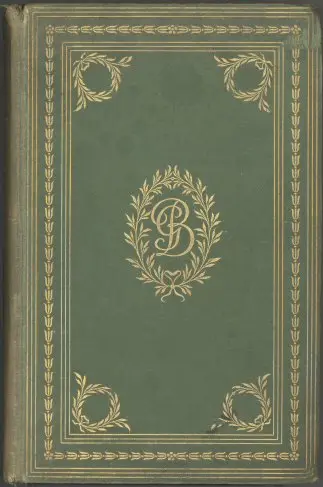
THE CLASSIC COLLECTION · 1912
"The Life of George Borrow" by Herbert George Jenkins is a biographical account written in the early 20th century. This work explores the life and career of George Borrow, with particular attention to his experiences between the late 18th century and early 19th century. The narrative emphasizes Borrow's development from a struggling writer to a significant figure known for his missionary work and literary contributions, especially within the context of his time in Spain. The opening of the book sets the stage for Borrow's intriguing life, starting with the background of his father, Thomas Borrow, and the family's circumstances that shaped George's early years. Jenkins paints a vivid picture of young Borrow's tumultuous upbringing amidst the backdrop of historical events, military life, and his striking duality as both an introverted child and a spirited student. The introduction examines key moments, such as his early combativeness and his burgeoning interest in languages, which foreshadow his later pursuits as a linguist and writer. It establishes that Borrow's life was not only defined by his literary ambitions but also by his complex personality and the societal expectations of his family, setting the stage for further explorations of his remarkable journey.
Introduction adapted from the source catalogue; source summaries may be automatically generated.
Free to read · English · 161,465 words · No account needed
MAKE TIME FOR A GOOD BOOK
On by default. Untick to stop anonymous reading totals. Each page counts after 10 seconds in view. How this works.
Anonymous counting is on unless you have switched it off.
{30a} There is no doubt that Borrow became possessed of a copy of Kiæmpe Viser, first collected by Anders Vedel, which may or may not have been given to him, with a handshake from the old farmer and a kiss from his wife, in recognition of the attention he had shown the pair in his official capacity. He refers to the volume repeatedly in Lavengro, and narrates how it was presented by some shipwrecked Danish mariners to the old couple in acknowledgment of their humanity and hospitality. It is, however, most likely that he was in error when he stated that “in less than a month” he was able “to read the book.”—Lavengro, pages 140–4.
{30b} Wild Wales, page 2.
{30c} Wild Wales, page 374.
{30d} Wild Wales, page 9. There is an interesting letter written to Borrow by the old lawyer’s son on the appearance of Lavengro, in which he says: “With tearful eyes, yet smiling lips, I have read and re-read your faithful portrait of my dear old father. I cannot mistake him—the creaking shoes, the florid face, the polished pate—all serve as marks of recognition to his youngest son!”
{31a} Wild Wales, page 374.
{31b} During the five years that he was articled to Simpson & Rackham, Borrow, according to Dr Knapp, studied Welsh, Danish, German, Hebrew, Arabic, Gaelic, and Armenian. He already had a knowledge of Latin, Greek, Irish, French, Italian, and Spanish.
{31c} Lavengro, page 235.
{32a} Benjamin Robert Haydon (1786–1846), the historical painter.
{32b} Lavengro, page 166.
{33a} William Taylor (1765–1836) was an admirer of German literature and a defender of the French Revolution. He is credited with having first inspired his friend Southey with a liking for poetry. He travelled much abroad, met Goethe, attended the National Assembly debates in 1790, translated from the German and contributed to a number of English periodicals.
{33b} Harriet Martineau’s Autobiography, 1877.
{33c} Harriet Martineau’s Autobiography, 1877.
{33d} Letter from “A School-fellow of Lavengro” in The Britannia, 26th
April 1851.
{34a} Memoir of Wm. Taylor, by J. W. Robberds.
{34b} Memoir of Wm. Taylor, by J. W. Robberds.
{34c} Letter from “A School-fellow of Lavengro” in The Britannia, 26th
April 1851.
{35a} The Rev. Whitwell Elwin, in a letter, 17th February 1887.
{35b} Harriet Martineau’s Autobiography, 1877.
{35c} Lavengro, page 355.
Your reading position is saved on this browser. Take it to another device with a library code. Reading pages adapt to text, rather than matching a printed edition.
Herbert George Jenkins
Herbert George Jenkins
Herbert George Jenkins
Herbert George Jenkins
BEHIND THE BOOK
This eBook is for the use of anyone anywhere in the United States and most other parts of the world at no cost and with almost no restrictions whatsoever. You may copy it, give it away or re-use it under the terms of the Project Gutenberg License included with this eBook or online at www.gutenberg.org. If you are not located in the United States, you will have to check the laws of the country where you are located before using this eBook. Read the source licence.
The original source file, including credits and licence, is retained by this library. Request an original-format copy at no charge. Please include the book title and Project Gutenberg identifier #3481.
KEEP YOUR CURIOSITY GOING
John L. Ransom

Herman W. Mudgett

Harriet Monroe
Daniel Dulany Addison
Charles Lanman

Harold Rosher