THE CLASSIC COLLECTION✦The Night ClubCLASSIC FREE BOOKS
The Night Club
Herbert George Jenkins
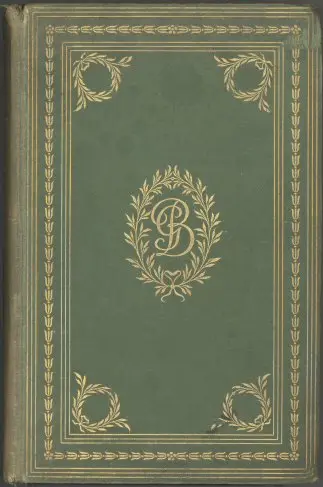
THE CLASSIC COLLECTION · 1912
"The Life of George Borrow" by Herbert George Jenkins is a biographical account written in the early 20th century. This work explores the life and career of George Borrow, with particular attention to his experiences between the late 18th century and early 19th century. The narrative emphasizes Borrow's development from a struggling writer to a significant figure known for his missionary work and literary contributions, especially within the context of his time in Spain. The opening of the book sets the stage for Borrow's intriguing life, starting with the background of his father, Thomas Borrow, and the family's circumstances that shaped George's early years. Jenkins paints a vivid picture of young Borrow's tumultuous upbringing amidst the backdrop of historical events, military life, and his striking duality as both an introverted child and a spirited student. The introduction examines key moments, such as his early combativeness and his burgeoning interest in languages, which foreshadow his later pursuits as a linguist and writer. It establishes that Borrow's life was not only defined by his literary ambitions but also by his complex personality and the societal expectations of his family, setting the stage for further explorations of his remarkable journey.
Introduction adapted from the source catalogue; source summaries may be automatically generated.
Free to read · English · 161,465 words · No account needed
MAKE TIME FOR A GOOD BOOK
On by default. Untick to stop anonymous reading totals. Each page counts after 10 seconds in view. How this works.
Anonymous counting is on unless you have switched it off.
{13b} The prisoners occupied much of their time in straw-plait making; but the quality of their work was so much superior to that of the English that it was forbidden, and consequently destroyed when found.
{13c} Lavengro, page 45.
{14} David Haggart, born 24th June 1801, was an instinctive criminal, who, at Leith Races, in 1813, enlisted, whilst drunk, as a drummer in the West Norfolks. Eventually he obtained his discharge and continued on his career of crime and prison-breaking, among other things murdering a policeman and a gaoler, until, on 18th July 1821, he was hanged at Edinburgh.
{15a} Lavengro, page 138.
{15b} John Crome (1768–1821), landscape painter. Apprenticed 1783 as sign-painter; introduced into Norwich the art of graining; founded the Norwich School of Painting; first exhibited at the Royal Academy 1806.
{17} Borrow was always a magnificent horseman. “Vaya! how you ride! It is dangerous to be in your way!” said the Archbishop of Toledo to him years later. In The Bible in Spain he wrote that he had “been accustomed from . . . childhood to ride without a saddle.” The Rev. Wentworth Webster states that in Madrid “he used to ride with a Russian skin for a saddle and without stirrups.”
{20} Letter from “A School-fellow of Lavengro” in The Britannia,
26th April 1851.
{21a} “It is probable, that had I been launched about this time into some agreeable career, that of arms, for example, for which, being the son of a soldier, I had, as was natural, a sort of penchant, I might have thought nothing more of the acquisition of tongues of any kind; but, having nothing to do, I followed the only course suited to my genius which appeared open to me.”—Lavengro, page 89.
{21b} The Rev. Thomas D’Eterville, M.A., “Poor Old Detterville,” as the Grammar School boys called him, of Caen University, who arrived at Norwich in 1793. He acquired a small fortune by teaching languages. There were rumours that he was engaged in the contraband trade, an occupation more likely to bring fortune than teaching languages.
{21c} Letter from “A School-fellow of Lavengro” in The Britannia,
26th April 1851.
{22} It was here, in 1827, that he saw the world’s greatest trotter, Marshland Shales, and in common with other lovers of horses lifted his hat to salute “the wondrous horse, the fast trotter, the best in mother England.” In Lavengro Borrow antedated this event by some nine years.
{23} Manuscript autobiographical notes supplied by Borrow to Mr John
Longe, 1862.
{24} Lavengro, page 134.
{25a} This account is taken from a letter by “A Schoolfellow of Lavengro” in The Britannia, 26th April 1851.
Your reading position is saved on this browser. Take it to another device with a library code. Reading pages adapt to text, rather than matching a printed edition.
Herbert George Jenkins
Herbert George Jenkins
Herbert George Jenkins
Herbert George Jenkins
BEHIND THE BOOK
This eBook is for the use of anyone anywhere in the United States and most other parts of the world at no cost and with almost no restrictions whatsoever. You may copy it, give it away or re-use it under the terms of the Project Gutenberg License included with this eBook or online at www.gutenberg.org. If you are not located in the United States, you will have to check the laws of the country where you are located before using this eBook. Read the source licence.
The original source file, including credits and licence, is retained by this library. Request an original-format copy at no charge. Please include the book title and Project Gutenberg identifier #3481.
KEEP YOUR CURIOSITY GOING
John L. Ransom

Herman W. Mudgett

Harriet Monroe
Daniel Dulany Addison
Charles Lanman

Harold Rosher