THE CLASSIC COLLECTION✦Andersonville diaryCLASSIC FREE BOOKS
Andersonville diary
John L. Ransom
THE CLASSIC COLLECTION · 1913
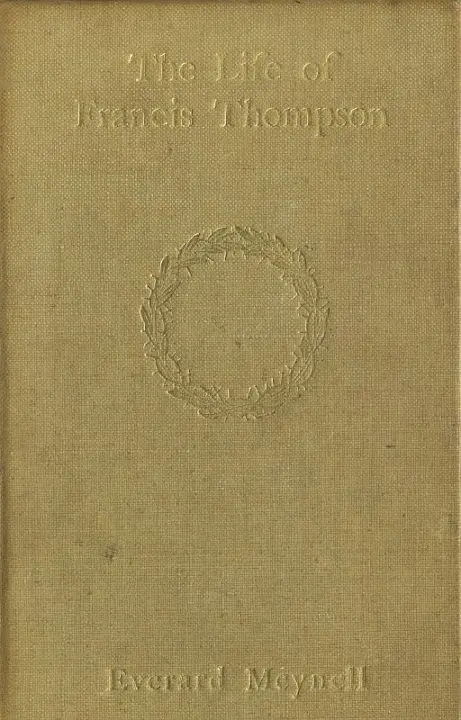
"The Life of Francis Thompson" by Everard Meynell is a biographical account written in the early 20th century. This work delves into the life of Francis Thompson, a Victorian poet best known for his poem "The Hound of Heaven." The biography details Thompson’s formative years, exploring his complex childhood and early influences, setting the stage for his later struggles as an artist in a challenging social landscape. At the start of the biography, we are introduced to the early life of Francis Thompson, born into a family with a rich history yet marked by emotional and social struggles. The narrative recounts his childhood in Preston, revealing a sensitive and introspective boy who grapples with the intricacies of love, loneliness, and imagination. Meynell provides a vivid depiction of Thompson’s upbringing, his relationship with literature, and the emotional undercurrents that shaped his poetic voice. This initial chapter sets an intimate tone, suggesting that Thompson's journey is as much about his internal landscapes as it is about his external circumstances.
Introduction adapted from the source catalogue; source summaries may be automatically generated.
Free to read · English · 114,803 words · No account needed
MAKE TIME FOR A GOOD BOOK
On by default. Untick to stop anonymous reading totals. Each page counts after 10 seconds in view. How this works.
Anonymous counting is on unless you have switched it off.
"Tancred, Francis" (pseudonym of F. T.), 106
Tate, Dr., President of Ushaw, 26, 32
Taylor, Jeremy, 156
Tennyson, 101, 120, 179 n., 230, 260
Terence, 299
Texts as stimulants, 32, 68, 325-6
Thames Embankment, 24, 64, 192, 278
Theresa, St., 146
Thomas à Kempis, 225-6, 243, 283
Thomas, Mr. Edward, 198
Thomas of Celano, 181
Thompson, Dr. Charles (F. T.'s father), 1, 2, 4, 36, 54-60, 71, 107 n., 127, 144, 185-6
Thompson, Edward Healy (F. T.'s uncle), 2, 3, 14 n., 46 n., 58-9, 61, 68, 85 n., 124
Thompson family, the, 1-5
THOMPSON, FRANCIS JOSEPH, birth, pedigree, parentage, 1-4;
his paternal uncles, 2, 3;
other relatives, 4, 5;
childhood, 6 seq.;
home-life, 7-14, 35, 54-5, 57-60, 74-5;
early reading, 6, 10-12;
at the seaside, 12, 13;
cricket, 13, 39-45;
at Ushaw, 15-21, 24-32;
intention of the priesthood abandoned, 32-4;
a medical student at Owens College, Manchester, 35-46;
visits to London (1879 and 1882), 46, 54;
illness, 46;
reading de Quincey, 46;
taking opium, 48-53, 56;
fails in his exams., 54-6;
love of music, 55;
enlists, 56-7;
flight from home, 57,
to Manchester, 58,
to London, 58, 61;
odd jobs, 62-3;
an outcast, 63-4;
lodging-houses and refuges, 64-5;
pieces of good-luck, 67-8;
roofless nights, 69-70;
with Mr. McMaster (the bootmaker), 70-75;
a Christmas at home, 74-5;
"in darkest London," 76-80;
his "brave, sad, lovingest, tender thing," 81-4, 92;
a meeting with the editor of Merry England, 85-90;
the Meynell household, 90-2;
contributes to Merry England, 92, 120-6;
sent to a private hospital, 94;
renunciation of opium, 94-5;
at Storrington, 95;
writing poetry, 95;
the essay on Shelley, 96-100;
return to London, 104;
"The Hound of Heaven" and "Sister Songs," 104;
article on General Booth's In Darkest England, 106-7;
interview with Cardinal Manning, 107-8;
journalism, 111-12, 117, 253-70;
visits to Crawley, 112-13, 344-6;
in Kensington Gardens, 114-15;
at Friston, in Suffolk, 118-19;
at Pantasaph, 128-33, 140, 143-48, 177, 180-97, 230-39;
Poems (1893), 128-48;
Sister Songs (1895), 141, 145, 149-50;
friendship with Coventry Patmore, 139, 146-9, 189-97, 220-4,
233-4;
his critics, 152-61;
his congeners, 161-70, 174;
his father's death, 185-186;
his mysticism, 191-232;
his attitude to Nature, 205-8;
his religion, 224-7;
his attitude to women, 227-32;
a love-affair, 230;
death of Patmore, 234-7;
New Poems, 198, 201, 203, 236-43;
return to London, 245;
meeting with Meredith, 245-7;
other friends, 247-52;
writes for The Academy, 253-70, 334-6;
criticisms on and meeting with W. E. Henley, 262-7;
his catholic appreciation of modern literature, 265-6, 268-9;
but preference for the older writers, 270-271;
as a Londoner, 272-81, 284, 288;
his poverty, 284-7;
his loneliness, 291;
bereft of song, 301-4, 306-7;
was he happy or unhappy? 304-5, 329-33;
his personal appearance, 327-8;
writes for The Athenæum, 336;
a return to opium, 342;
visits to Sussex, 344-49;
returns to London, and goes into hospital, 349;
death, 350
Your reading position is saved on this browser. Take it to another device with a library code. Reading pages adapt to text, rather than matching a printed edition.
BEHIND THE BOOK
This eBook is for the use of anyone anywhere in the United States and most other parts of the world at no cost and with almost no restrictions whatsoever. You may copy it, give it away or re-use it under the terms of the Project Gutenberg License included with this eBook or online at www.gutenberg.org. If you are not located in the United States, you will have to check the laws of the country where you are located before using this eBook. Read the source licence.
The original source file, including credits and licence, is retained by this library. Request an original-format copy at no charge. Please include the book title and Project Gutenberg identifier #45106.
KEEP YOUR CURIOSITY GOING
John L. Ransom

Herman W. Mudgett

Harriet Monroe
Daniel Dulany Addison
Charles Lanman

Harold Rosher