THE CLASSIC COLLECTION✦An outlaw’s diary: the CommuneCLASSIC FREE BOOKS
An outlaw’s diary: the Commune
Cécile Tormay
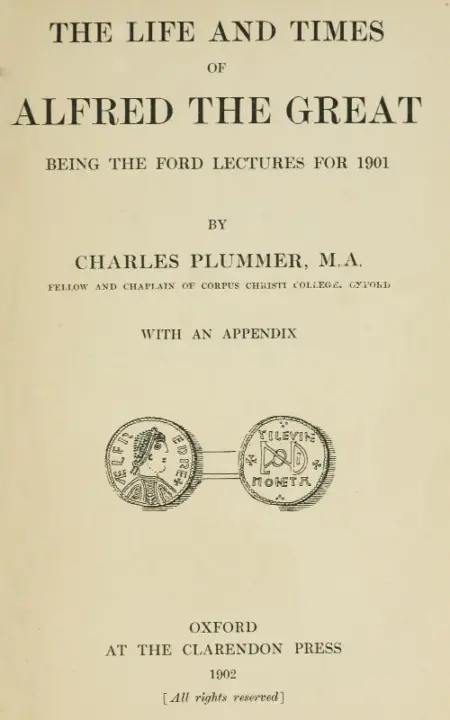
THE CLASSIC COLLECTION · 1902
"The Life and Times of Alfred the Great" by Charles Plummer is a historical account written in the early 20th century. This work presents a detailed examination of the life and legacy of King Alfred the Great, highlighting his contributions as a military leader, administrator, and promoter of education in a time of Viking invasions. Plummer’s account aims to clarify misconceptions about Alfred's character and actions while presenting a comprehensive view of his historical context. At the start of the text, the author introduces the lectures and expresses gratitude to historical figures who influenced his work. Plummer outlines his goal to address the existing confusions and oversimplifications surrounding King Alfred by critically surveying the sources available. He emphasizes the challenges historians face when interpreting the limited and often incomplete historical records about Alfred and remarks on the importance of a careful and nuanced understanding of this pivotal figure in English history. Through a methodical approach, Plummer sets the stage for a deep dive into Alfred's campaigns, governance, cultural contributions, and lasting impact on England.
Introduction adapted from the source catalogue; source summaries may be automatically generated.
Free to read · English · 77,156 words · No account needed
MAKE TIME FOR A GOOD BOOK
On by default. Untick to stop anonymous reading totals. Each page counts after 10 seconds in view. How this works.
Anonymous counting is on unless you have switched it off.
Lupus, abbot of Ferrières, corresponds with Æthelwulf and Felix, 17,
18 n., 71 n.;
previously at Faremoûtier, 18 n.
Lymne, R., Kent, Danes enter mouth of, 112.
Macbeth, one of three ‘Scots’ who come to Alfred, 131.
Maelduin, the Voyage of, 132.
Maelinmain, one of three ‘Scots’ who came to Alfred, 131.
Malmesbury, Wilts., William of, see William.
Marcus Aurelius, Roman Emperor, comparison of, with Alfred, 200.
Marinus, Pope, St. Neot said to have visited, 56-8; grants privileges to English School at Rome, 58; said to have sent a fragment of the True Cross to Alfred, 58.
Martia, legendary British Queen, 63.
Marton, Wilts., battle of, 92, 93, 95.
Mercia, Witenagemóts of, 13, 14;
division of, by the Danes, 24, 102;
not included in Saxonia, 38;
Alfred acquires part of, 39;
relation of, to Wessex, 85;
Danes invade, 88, 99, 100;
Welsh invade, 99;
western part of, cleared of the Danes, 104;
shire system introduced into, 121;
supplies Alfred with teachers, 136, cf. 139 n., 169;
kings of, see Æthelbald, Beornred, Berhtwulf, Burgred, Ceolwulf,
Offa, Penda;
lady of, see Æthelflæd;
ealdorman of, see Æthelred.
Meretun, see Marton.
Mersea, Essex, Danes retire to, 117.
Milton (King’s), Kent, Danes fortify themselves at, 113; negotiations of Alfred with Danes at, 113, cf. 163.
Milus, Eastern Saint, 34.
Modus tenendi Parliamenti, unhistorical character of, 130 n.
Modwenna, St., Alfred said to have been cured by, 63.
More, Sir Thomas, Hallam’s character of, 13;
imitates Boethius’ Consolatio, 179.
Mouric, king of Gwent, father of Brochmail and Fernmail, 42, 44.
Nachededorn, see Naked-thorn.
Naked-thorn, name of a Berkshire Hundred and Manor in Domesday, 94.
Nelson, Lord, anecdote of, 163.
Neot, St., not identical with Athelstan, king of Kent, 6;
buried in Cornwall, 26, 29;
translated to Huntingdonshire, 29;
lives of, 24, 53-9, 67;
the source of baseless legends about Alfred, 24, 27, 28, 53, 54, 67;
made a son of Æthelwulf, 55, 57;
alleged devotion of Alfred to, 67, 68;
Annals of, their relation to Asser, 22.
Nero, Roman Emperor, Epistle to the Romans written under, 209.
Newminster, Winchester, Alfred plans the foundation of, 68, 129;
abbot of, see Grimbald.
Nicholas I, Pope, dispatches pilgrims to the East, 132.
Nobis, bishop of St. Davids, expelled by Hemeid of Dyfed, 42;
dies in 873, 20;
succeeded by Llunwerth, 20, 44.
Northmen, use of the term, 87 n., see Danes.
Northumbria, not included in Saxonia, 38;
Danes in, 42;
relation of, to Wessex, 85;
conquered by the Danes, 88;
their occupation of, recognised at Wedmore, 105;
relations of Alfred with, 113;
share of, in the campaigns of 893 ff., 113-5, 117-8;
state of learning in, 139, 140 n.;
kings of, see Aldfrid, Egbert, Oswald;
earl of, see Siward.
Norway, called Germania by Welsh writers, 40, 41;
king of, see Harold Hardrada.
Notker III, of St. Gallon, translates Boethius’ Consolatio into High
German, 189.
Nottingham, Danes winter at, 88;
Æthelred and Alfred march against, 88.
Novis, see Nobis.
Odda, ealdorman of Devon, defeats the Danes, 103, 104, 106.
Odo, count of Paris, king of the Western Kingdom, 41 n.
Offa, king of the Mercians, Eadburh, daughter of, 16;
his dyke, 37;
code of, 63 n.;
Alfred made descendant of, 65;
his patronage of learning, 136.
Your reading position is saved on this browser. Take it to another device with a library code. Reading pages adapt to text, rather than matching a printed edition.
BEHIND THE BOOK
This eBook is for the use of anyone anywhere in the United States and most other parts of the world at no cost and with almost no restrictions whatsoever. You may copy it, give it away or re-use it under the terms of the Project Gutenberg License included with this eBook or online at www.gutenberg.org. If you are not located in the United States, you will have to check the laws of the country where you are located before using this eBook. Read the source licence.
The original source file, including credits and licence, is retained by this library. Request an original-format copy at no charge. Please include the book title and Project Gutenberg identifier #56557.
KEEP YOUR CURIOSITY GOING
Cécile Tormay

Moritz Busch
John L. Ransom
Frances Wright
Cécile Tormay

Mabel Potter Daggett