THE CLASSIC COLLECTION✦An outlaw’s diary: the CommuneCLASSIC FREE BOOKS
An outlaw’s diary: the Commune
Cécile Tormay
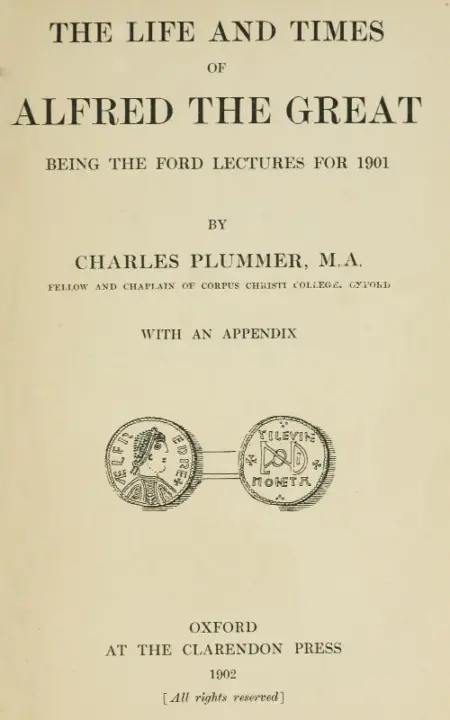
THE CLASSIC COLLECTION · 1902
"The Life and Times of Alfred the Great" by Charles Plummer is a historical account written in the early 20th century. This work presents a detailed examination of the life and legacy of King Alfred the Great, highlighting his contributions as a military leader, administrator, and promoter of education in a time of Viking invasions. Plummer’s account aims to clarify misconceptions about Alfred's character and actions while presenting a comprehensive view of his historical context. At the start of the text, the author introduces the lectures and expresses gratitude to historical figures who influenced his work. Plummer outlines his goal to address the existing confusions and oversimplifications surrounding King Alfred by critically surveying the sources available. He emphasizes the challenges historians face when interpreting the limited and often incomplete historical records about Alfred and remarks on the importance of a careful and nuanced understanding of this pivotal figure in English history. Through a methodical approach, Plummer sets the stage for a deep dive into Alfred's campaigns, governance, cultural contributions, and lasting impact on England.
Introduction adapted from the source catalogue; source summaries may be automatically generated.
Free to read · English · 77,156 words · No account needed
MAKE TIME FOR A GOOD BOOK
On by default. Untick to stop anonymous reading totals. Each page counts after 10 seconds in view. How this works.
Anonymous counting is on unless you have switched it off.
Germania, name given by Welsh writers to Norway, 40, 41; Bede’s and Alfred’s uses of the term, 40 n., 160.
Glastonbury, Somerset, St. Neot said to have been a monk at, 56; Alfred gives fragment of the True Cross to, 58 n.
Glewissig, South Welsh kingdom, including the district between lower Usk
and Towy, 44;
king of, see Howel.
Gloucester, Mercian Witenagemót held at, 13;
St. Oswald’s body translated to, 35.
Gregory the Great, Pope, soul of Trajan granted to prayers of, 209;
his Moralia used by Alfred, 191;
his Dialogues, 8, 143-4;
used by Alfred in the ‘Blostman,’ 143-4;
Bede’s style influenced by, 170 n.;
Anglo-Saxon translation of, 8, 141, 171;
two recensions of, 145-6, 169;
mentioned in Asser, 52, 141;
cited by Ælfric, 167;
ascribed to Werferth, 142, 169;
Alfred writes the preface to, 142-3;
relation of, to Bede translation, 169, 170;
his Pastoral Care, 8, 151-2;
cited in Asser, 52;
Alfred’s translation of, 8, 10, 152-5;
Preface to, 11, 20, 52, 136, 139, 140, 143, 193, 196, 199.
Grimbald, a monk of St. Bertin’s, 137;
brought to England by Alfred, 17, 137;
said to have been escorted to England by Asser, 18, 139;
chronology of his life, 137-8;
letter of Fulk of Rheims respecting, 138-9;
made abbot of the New Minster, 139;
dies, 139;
helps Alfred with the Pastoral Care, 137, 143 n.
Gualia, Wales, use of term, 37 n.
Guerier, St., alleged visit of Alfred to shrine of, in Cornwall, 26, 29.
Guthfrith, wiking chief, receives a grant of West Friesland, 120 n.
Guthrum, Danish king of East Anglia, invasion of, 57-9;
his submission and baptism, 42, 46, 68, 71, 103;
death of, 109, 110.
Gwent, South Welsh kingdom, including parts of Monmouthshire and Herefordshire, kings of, see Brochmail, Fernmail, Mouric.
Hadrian I, Pope, crowns Louis the Pious as king of Aquitaine, 74.
Hæsten, Danish chief, his military movements, and treacherous
negotiations, 113, 115.
Halfdene, Danish chief, 104.
Hampshire, men of, rally to Alfred, 102.
Harold Hardrada, king of Norway, called king of Germania, 41.
Heahmund, bishop of Sherborne, killed at Marton, 92.
Helised ap Teudyr, king of Brecheiniog, submits to Alfred, 42, 44.
Hemeid, king of Dyfed, commends himself to Alfred, 20, 42;
persecutes St. Davids, 42;
dies, 43.
Henry de Ferrers, owns Ashdown Manor in Domesday, 94.
Henry II, king of England, character of, by Stubbs, 2;
comparison of, with Alfred, 200;
English administrative system due to, 210.
Henry VI, king of England, applies to the Pope for Alfred’s
canonisation, 199 n.
Henry of Huntingdon, his mistakes, 7;
relation of, to Chron., 60, 61;
his treatise De Contemptu Mundi, 178 n.
Henry VIII, king of England, ecclesiastical policy of, 211.
Hereford, bishop of, see Athelstan.
Hereward, his defence of the isle of Ely, 59 n.
Hierosolyma, see Jerusalem.
Howel, son of Rhys, king of Glewissig, dies at Rome in 885, 19, 44;
his crime, 19, 44;
submits to Alfred, 42.
Hubert, St., forged pedigree of, 57.
Huntingdonshire, translation of St. Neot’s relics to, 29.
Iglea, identifications of, 102 n.
India, Alfred sends alms to, 65, 66, 99, 134; first recorded instance of relations between England and, 134.
Ingulf, abbot of Croyland, Chronicle of, a forgery, but contains genuine traditions, 66, 99.
Your reading position is saved on this browser. Take it to another device with a library code. Reading pages adapt to text, rather than matching a printed edition.
BEHIND THE BOOK
This eBook is for the use of anyone anywhere in the United States and most other parts of the world at no cost and with almost no restrictions whatsoever. You may copy it, give it away or re-use it under the terms of the Project Gutenberg License included with this eBook or online at www.gutenberg.org. If you are not located in the United States, you will have to check the laws of the country where you are located before using this eBook. Read the source licence.
The original source file, including credits and licence, is retained by this library. Request an original-format copy at no charge. Please include the book title and Project Gutenberg identifier #56557.
KEEP YOUR CURIOSITY GOING
Cécile Tormay

Moritz Busch
John L. Ransom
Frances Wright
Cécile Tormay

Mabel Potter Daggett