THE CLASSIC COLLECTION✦An outlaw’s diary: the CommuneCLASSIC FREE BOOKS
An outlaw’s diary: the Commune
Cécile Tormay
THE CLASSIC COLLECTION · 1872
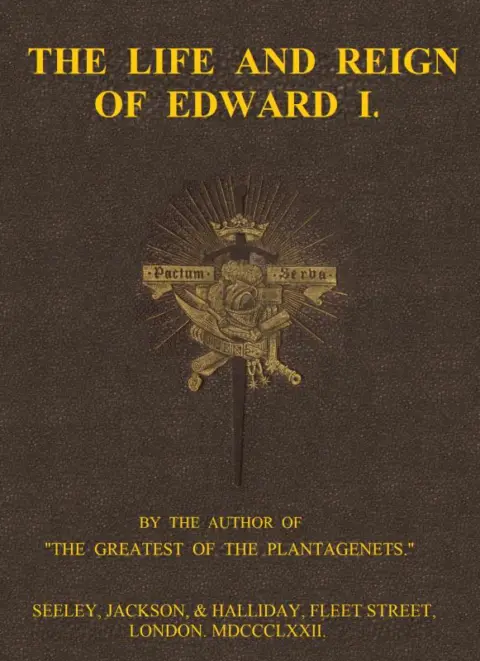
"The Life and Reign of Edward I." by Robert Benton Seeley is a historical account written in the late 19th century. The work focuses on the life and governance of Edward I of England, tracing his personal and political development against the backdrop of significant events during his reign. The author aims to present a comprehensive picture of Edward's character, emphasizing his contributions to English law and society. The opening of the text provides insight into Edward's early life, beginning with his birth in 1239 and the joys surrounding it in England's capital. It highlights the historical context of his time, particularly the transition from Norman rule to a sense of English identity. The narrative illustrates the affectionate relationship Edward had with his father, Henry III, while also hinting at the challenges he would face as a ruler. The opening sets the stage for exploring Edward's maturation into a principled monarch who sought to improve the state of England through effective governance, ultimately laying the groundwork for future discussions on his reign's impact on legal and social frameworks.
Introduction adapted from the source catalogue; source summaries may be automatically generated.
Free to read · English · 110,512 words · No account needed
MAKE TIME FOR A GOOD BOOK
On by default. Untick to stop anonymous reading totals. Each page counts after 10 seconds in view. How this works.
Anonymous counting is on unless you have switched it off.
Next, that, upon Baliol’s submission, the bishop came to the king at Elgin, and prayed forgiveness; and took an oath on the consecrated host, on the gospels, and upon the black rood of Scotland, that he would be faithful and true to the king, and would never counsel anything to his hurt or damage. And that, at the parliament held at Berwick, he took the oath of fealty for the third time. Yet when the king was gone to Flanders, the bishop abetted Wallace, and came forth into the field against the king.
Again, when the rebellion seemed to decline, the bishop once more submitted himself to the king, at Irvine, in July, 1297. Yet, in less than a month afterwards, he had again confederated himself with Wallace and the rebels, encouraging them as heretofore.
Next, the king having returned from Flanders, the bishop came before him at Holme Cultram, and prayed the king’s grace and mercy, and did then, for the fourth time, take the oath of fealty upon the host, gospels, rood, etc., etc. Yet, while this oath was yet fresh, the bishop assembled all his strength, and marched against the king’s army.
Again, the rebellion being suppressed, the bishop came before the king at Cambuskenneth, and prayed grace and mercy, and forswore himself a fifth time, upon the host, gospels, etc., etc. And at the parliament at St. Andrew’s, he took the same oath a sixth time. And yet, after all this, within eight days after the murder of Comyn, he gave Bruce plenary absolution—thus showing his approval of the sacrilege and the murder. He also in every way promoted and encouraged the rebellion, in violation of the oath which he had, on six different occasions, taken.
Similar are the complaints made by the king of the perjuries of the bishop of St. Andrew’s, and the bishop of Elgin or Moray. To this general faithlessness on the part of the leaders in the rebellion, Wyntoun, in his “Cronykyl,” published in the next century, pleads guilty, saying of Wallace’s day—
“For in his time, I heard well say,
That fickle they were, all time, of fay” (faith).
But the disgust and exasperation which this perpetual perfidy would naturally excite in an honourable mind will be obvious to every one; and we have no doubt that it was this feeling which induced the inscription on the king’s tomb—Pactum serva—an inscription which doubtless was placed there by his own command.
Your reading position is saved on this browser. Take it to another device with a library code. Reading pages adapt to text, rather than matching a printed edition.
BEHIND THE BOOK
This eBook is for the use of anyone anywhere in the United States and most other parts of the world at no cost and with almost no restrictions whatsoever. You may copy it, give it away or re-use it under the terms of the Project Gutenberg License included with this eBook or online at www.gutenberg.org. If you are not located in the United States, you will have to check the laws of the country where you are located before using this eBook. Read the source licence.
The original source file, including credits and licence, is retained by this library. Request an original-format copy at no charge. Please include the book title and Project Gutenberg identifier #50866.
KEEP YOUR CURIOSITY GOING
Cécile Tormay

Moritz Busch
John L. Ransom
Frances Wright
Cécile Tormay

Mabel Potter Daggett