THE CLASSIC COLLECTION✦An outlaw’s diary: the CommuneCLASSIC FREE BOOKS
An outlaw’s diary: the Commune
Cécile Tormay
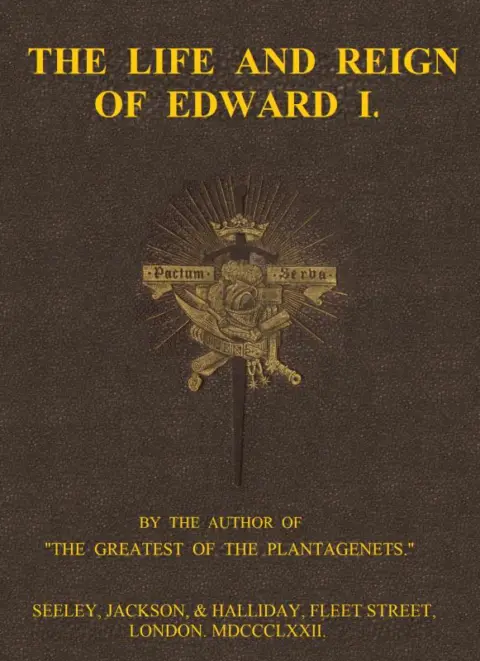
THE CLASSIC COLLECTION · 1872
"The Life and Reign of Edward I." by Robert Benton Seeley is a historical account written in the late 19th century. The work focuses on the life and governance of Edward I of England, tracing his personal and political development against the backdrop of significant events during his reign. The author aims to present a comprehensive picture of Edward's character, emphasizing his contributions to English law and society. The opening of the text provides insight into Edward's early life, beginning with his birth in 1239 and the joys surrounding it in England's capital. It highlights the historical context of his time, particularly the transition from Norman rule to a sense of English identity. The narrative illustrates the affectionate relationship Edward had with his father, Henry III, while also hinting at the challenges he would face as a ruler. The opening sets the stage for exploring Edward's maturation into a principled monarch who sought to improve the state of England through effective governance, ultimately laying the groundwork for future discussions on his reign's impact on legal and social frameworks.
Introduction adapted from the source catalogue; source summaries may be automatically generated.
Free to read · English · 110,512 words · No account needed
MAKE TIME FOR A GOOD BOOK
On by default. Untick to stop anonymous reading totals. Each page counts after 10 seconds in view. How this works.
Anonymous counting is on unless you have switched it off.
In a few days after this, the king issued Forma pacis Scotiæ—the Form of the peace of Scotland, in which he recounts—
“That the people of Scotland, after they were bound to us by oath of fealty, and by their written engagements, did by evil advice make war upon us, committing murders, robberies, burnings, etc., not only in Scotland, but in parts of England also; but that afterwards many of them returned and were received into our peace and favour; and now John Comyn of Badenoch, and others of his party, desire to be so received: now we, willing to do them special grace, have granted, and do hereby grant, that their lives and liberties shall be safe, and that they shall not be disinherited. And we also pardon the crimes aforesaid, and remit the anger we had against them, they being bound to pay the fines hereinafter mentioned.” Then follows a schedule of one, two, or three years’ fines, on the principal persons concerned in the rebellion.
And so, apparently, was Scotland a second time pacified and brought under regular government. Not a voice was now heard to disturb the general tranquillity. One execution only, as in the case of Wales, had been found necessary. One man in each of the two countries had gone beyond the bounds of legitimate warfare, and had by special crimes called down upon himself a special punishment. But towards Scotland itself, as towards Wales, the conduct of Edward, both in 1296 and in 1305, was generous, wise, and thoroughly noble. Still, these excellences could not protect him from treachery, perjury, and a third rebellion. These closing troubles, however, of the king’s life must be reserved for our concluding chapter.
Footnotes:
[117] The Scottish historians, who wrote a century after, claim the victory in all three engagements; but Hemingford and Trivet, who wrote at the time, distinctly declare that Neville repulsed the Scotch, and recovered many of the prisoners. Hume and Tytler, as Scotchmen, give credit to their own chroniclers; and yet they are uncandid enough to profess to take their accounts from Hemingford and Trivet. But these latter writers, who are the only contemporary witnesses, plainly assert that the advantage, in the third engagement, rested with the English.
[118] Tytler’s History of Scotland, vol. i., p. 186.
[119] Hailes’ Annals, vol. i., p. 304.
[120] Tytler, vol. i., p. 191.
[121] Archæological Journal, No. 27.
[122] Tytler’s History of Scotland, vol. i., p. 191.
[123] Tytler, vol. i., p. 192.
[124] Tytler, vol. i., p. 196.
[125] Matthew of Westminster, 1304.
[126] Tytler, vol. i., p. 197.
[127] Matthew of Westminster, 1304.
[128] Langtoft.
[129] “Endroit de Will. de Walleys, le Roi entent, qu il soit receu a sa volute ’t a son ordainement.” (Palgrave.)
[130] Rymer’s “Placita,” p. 370.
[131] Langtoft says,—
Your reading position is saved on this browser. Take it to another device with a library code. Reading pages adapt to text, rather than matching a printed edition.
BEHIND THE BOOK
This eBook is for the use of anyone anywhere in the United States and most other parts of the world at no cost and with almost no restrictions whatsoever. You may copy it, give it away or re-use it under the terms of the Project Gutenberg License included with this eBook or online at www.gutenberg.org. If you are not located in the United States, you will have to check the laws of the country where you are located before using this eBook. Read the source licence.
The original source file, including credits and licence, is retained by this library. Request an original-format copy at no charge. Please include the book title and Project Gutenberg identifier #50866.
KEEP YOUR CURIOSITY GOING
Cécile Tormay

Moritz Busch
John L. Ransom
Frances Wright
Cécile Tormay

Mabel Potter Daggett