Field, Forest and Farm Things interesting to young nature-lovers, including some matters of moment to gardeners and fruit-growers
Jean-Henri Fabre
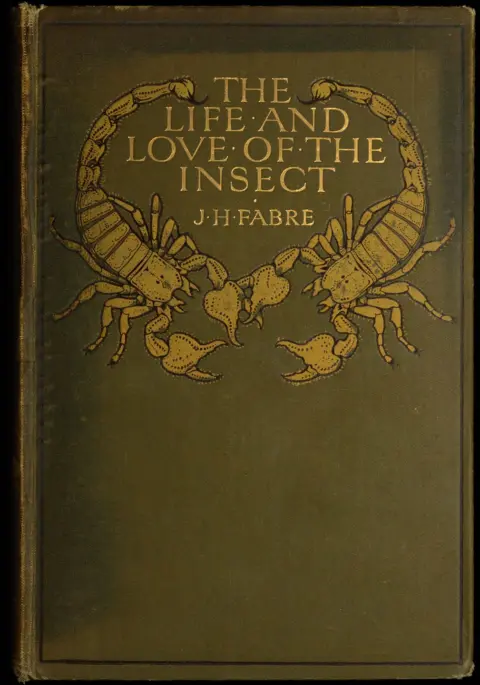
THE CLASSIC COLLECTION · 1911
"The Life and Love of the Insect" by Jean-Henri Fabre is a scientific publication written in the late 19th century. The book presents a series of detailed essays examining the lives and behaviors of various insects, with a specific focus on their mating rituals, nesting habits, and maternal instincts. Through his observations, Fabre showcases the complex and often surprising world of insects, highlighting themes of life, love, and survival in their natural habitats. At the start of the book, the translator's note provides context about Fabre's background and the significance of his work in entomology. The opening chapter delves into the behavior of the Sacred Beetle, illustrating its nesting process and the instinctual actions of the mother insect as she constructs a ball of dung for her offspring. Fabre describes the meticulous methods employed by the beetle in crafting the nest, emphasizing the balance between beauty and functionality in nature. His insightful reflections on the instinctual drives of insects set the tone for a deeper exploration of entomology as both a scientific and poetic pursuit.
Introduction adapted from the source catalogue; source summaries may be automatically generated.
Free to read · English · 68,659 words · No account needed
MAKE TIME FOR A GOOD BOOK
On by default. Untick to stop anonymous reading totals. Each page counts after 10 seconds in view. How this works.
Anonymous counting is on unless you have switched it off.
Where could I lodge you and how could I feed you? The best thing is to say good-bye, not without a certain regret on my part. One of these days, I will take you and scatter you in your territory, the rock-strewn slope where the sun is so hot. There you will find brothers and sisters who, hardly larger than yourselves, are already leading solitary lives, under their little stones, sometimes no bigger than a thumb-nail. There you will learn the hard struggle for life better than you would with me.
[1] “When you and I start housekeeping, alas, what shall we do? You in front and I behind, we’ll shove the tub along!”
[2] Jean Baptiste Victor Proudhon (1758–1838), author of De la
distinction des biens, Traité du domaine public, etc.—Translator’s
Note.
[3] A light opera, with music by Victor Masse and libretto by Jules Barbier and Michel Carré (1852).—Translator’s Note.
[4] “Ah, how sweet is far niente,
When round us throbs the busy world!”
[5] ·11 to ·15 inches.—Translator’s Note.
[6] Close upon 9½ feet.—Translator’s Note.
[7] 1·8 × 1·4 inches.—Translator’s Note.
[8] 1·4 × 1·1 inches.—Translator’s Note.
[9] ·4 × ·2 inches.—Translator’s Note.
[10] 3·9 inches.—Translator’s Note.
[11] ·39 inch.—Translator’s Note.
[12] Pierre André Latreille (1762–1833), one of the founders of entomological science.—Translator’s Note.
[13] Mémoires du Muséum d’histoire naturelle, vol. v., p. 249.—Author’s
Note.
[14] About eight inches.—Translator’s Note.
[15] An egg-shaped cake baked in Provence at Easter.—Translator’s Note.
[16] 3·93 inches.—Translator’s Note.
[17] Four to five inches.—Translator’s Note.
[18] ·039 inch.—Translator’s Note.
[19] Voyage autour de ma chambre (1795).—Translator’s Note.
[20] Sérignan, in Provence, is the author’s birth-place.—Translator’s
Note.
[21] ·78 inch.—Translator’s Note.
[22] ·78 inch.—Translator’s Note.
[23] About 61 cubic inches.—Translator’s Note.
[24] Over 39 inches.—Translator’s Note.
[25] 11 to 12 inches.—Translator’s Note.
[26] 7½ to 8 inches.—Translator’s Note.
[27] ·27 to ·31 × ·15 inch.—Translator’s Note.
[28] François Huber (1750–1831), the Swiss naturalist. He early became blind from excessive study and conducted his scientific work thereafter with the aid of his wife.—Translator’s Note.
[29] 1½ inches.—Translator’s Note.
[30] 4 inches.—Translator’s Note.
[31] The Vocontii inhabited the Viennaise, between the Allobroges on the north, the Caturiges and the estates of King Cottius on the east, the Cavares on the west, and the Memini and Vulgientes on the south. Vasio (Vocontia), now Vaison, was their capital.—Translator’s Note.
[32] From Massalia, the ancient name of Marseilles, of which Phocæa, in Asia Minor, was the mother city.—Translator’s Note.
[33] Nemansus, the Latin name of Nîmes.—Translator’s Note.
[34] ·2 inch.—Translator’s Note.
[35] 3 to 3½ inches.—Translator’s Note.
[36] ·35 inch.—Translator’s Note.
[37] ·15 inch.—Translator’s Note.
[38] ·35 increased to ·55 inch.—Translator’s Note.
Your reading position is saved on this browser. Take it to another device with a library code. Reading pages adapt to text, rather than matching a printed edition.
Jean-Henri Fabre
Jean-Henri Fabre
Jean-Henri Fabre
Jean-Henri Fabre
BEHIND THE BOOK
This eBook is for the use of anyone anywhere in the United States and most other parts of the world at no cost and with almost no restrictions whatsoever. You may copy it, give it away or re-use it under the terms of the Project Gutenberg License included with this eBook or online at www.gutenberg.org. If you are not located in the United States, you will have to check the laws of the country where you are located before using this eBook. Read the source licence.
The original source file, including credits and licence, is retained by this library. Request an original-format copy at no charge. Please include the book title and Project Gutenberg identifier #68974.
KEEP YOUR CURIOSITY GOING

John Muir

Asa Gray
Asa Gray

Florence Nightingale
Elizabeth Robins Pennell
Denison Olmsted