THE CLASSIC COLLECTION✦Letters on LiteratureCLASSIC FREE BOOKS
Letters on Literature
Andrew Lang
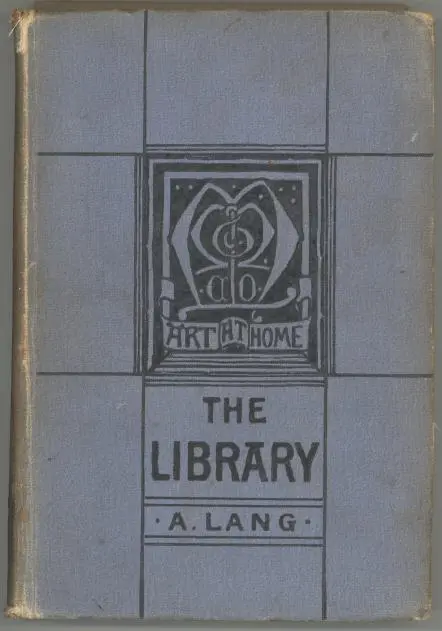
THE CLASSIC COLLECTION · 1881
"The Library" by Andrew Lang is a book published in the late 19th century as part of the "Art as Home" series. This charming guide explores the art of book-collecting for amateur bibliophiles, blending practical advice with passionate defense of the collector's craft. Lang examines book-hunting as both sport and obsession, offering wisdom on building collections, preserving treasured volumes, and understanding why books remain our most enduring friends. Through wit and warmth, he captures the joys, sorrows, and "gentle-madness" that define the bibliophile's world.
Introduction adapted from the source catalogue; source summaries may be automatically generated.
Free to read · English · 37,997 words · No account needed
MAKE TIME FOR A GOOD BOOK
On by default. Untick to stop anonymous reading totals. Each page counts after 10 seconds in view. How this works.
Anonymous counting is on unless you have switched it off.
Flaxman and Blake had few imitators. But a host of clever designers, such as Cipriani, Angelica Kauffmann, Westall, Uwins, Smirke, Burney, Corbould, Dodd, and others, vied with the popular Stothard in “embellishing” the endless “Poets,” “novelists,” and “essayists” of our forefathers. Some of these, and most of the recognised artists of the period, lent their aid to that boldly-planned but unhappily-executed “Shakespeare” of Boydell,—“black and ghastly gallery of murky Opies, glum Northcotes, straddling Fuselis,” as Thackeray calls it. They are certainly not enlivening—those cumbrous “atlas” folios of 1803–5, and they helped to ruin the worthy alderman. Even courtly Sir Joshua is clearly ill at ease among the pushing Hamiltons and Mortimers; and, were it not for the whimsical discovery that Westall’s “Ghost of Cæsar” strangely resembles Mr. Gladstone, there would be no resting-place for the modern student of these dismal masterpieces. The truth is, Reynolds excepted, there were no contemporary painters strong enough for the task, and the honours of the enterprise belong almost exclusively to Smirke’s “Seven Ages” and one or two plates from the lighter comedies. The great “Bible” of Macklin, a rival and even more incongruous publication, upon which some of the same designers were employed, has fallen into completer oblivion. A rather better fate attended another book of this class, which, although belonging to a later period, may be briefly referred to here. The “Milton” of John Martin has distinct individuality, and some of the needful qualities of imagination. Nevertheless, posterity has practically decided that scenic grandeur and sombre effects alone are not a sufficient pictorial equipment for the varied story of “Paradise Lost.”
It is to Boydell of the Shakespeare gallery that we owe the “Liber Veritatis” of Claude, engraved by Richard Earlom; and indirectly, since rivalry of Claude prompted the attempt, the famous “Liber Studiorum” of Turner. Neither of these, however—which, like the “Rivers of France” and the “Picturesque Views in England and Wales” of the latter artist, are collections of engravings rather than illustrated books—belongs to the present purpose. But Turner’s name may fitly serve to introduce those once familiar “Annuals” and “Keepsakes,” that, beginning in 1823 with Ackermann’s “Forget-me-Not,” enjoyed a popularity of more than thirty years. Their general characteristics have been pleasantly satirised in Thackeray’s account of the elegant miscellany of Bacon the publisher, to which Mr. Arthur Pendennis contributed his pretty poem of “The Church Porch.” His editress, it will be remembered, was the Lady Violet Lebas, and his colleagues the Honourable Percy Popjoy, Lord Dodo, and the gifted Bedwin Sands, whose “Eastern Ghazuls” lent so special a distinction to the volume in watered-silk binding. The talented authors, it is true, were in most cases under the disadvantage of having to write to the plates of the talented artists, a practice which even now is not extinct, though it is scarcely considered favourable to literary merit. And the real “Annuals” were no exception to the rule. As a matter of fact, their general literary merit was not obtrusive, although, of course, they sometimes contained work which afterwards became famous. They are now so completely forgotten and out of date, that one scarcely expects to find that Wordsworth, Coleridge, Macaulay, and Southey, were among the occasional contributors. Lamb’s beautiful “Album verses” appeared in the “Bijou,” Scott’s “Bonnie Dundee” in the “Christmas Box,” and Tennyson’s “St. Agnes’ Eve” in the “Keepsake.” But the plates were, after all, the leading attraction. These, prepared for the most part under the superintendence of the younger Heath, and executed on the steel which by this time had supplanted the old “coppers,” were supplied by, or were “after,” almost every contemporary artist of note. Stothard, now growing old and past his prime, Turner, Etty, Stanfield, Leslie, Roberts, Danby, Maclise, Lawrence, Cattermole, and numbers of others, found profitable labour in this fashionable field until 1856, when the last of the “Annuals” disappeared, driven from the market by the rapid development of wood engraving. About a million, it is roughly estimated, was squandered in producing them.
Your reading position is saved on this browser. Take it to another device with a library code. Reading pages adapt to text, rather than matching a printed edition.
Andrew Lang
Andrew Lang
Andrew Lang
Andrew Lang
BEHIND THE BOOK
This eBook is for the use of anyone anywhere in the United States and most other parts of the world at no cost and with almost no restrictions whatsoever. You may copy it, give it away or re-use it under the terms of the Project Gutenberg License included with this eBook or online at www.gutenberg.org. If you are not located in the United States, you will have to check the laws of the country where you are located before using this eBook. Read the source licence.
The original source file, including credits and licence, is retained by this library. Request an original-format copy at no charge. Please include the book title and Project Gutenberg identifier #2018.
KEEP YOUR CURIOSITY GOING

David Patterson (Spirit) Hatch

David Patterson (Spirit) Hatch

David Patterson (Spirit) Hatch

Ralph Waldo Emerson

Maurice Baring

Oscar Wilde & James McNeill Whistler