THE CLASSIC COLLECTION✦Letters on LiteratureCLASSIC FREE BOOKS
Letters on Literature
Andrew Lang
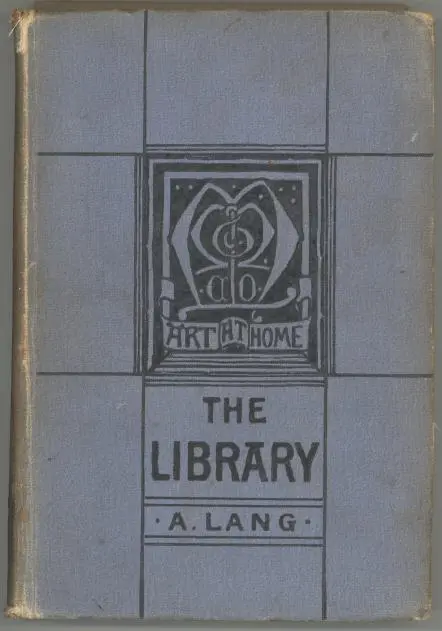
THE CLASSIC COLLECTION · 1881
"The Library" by Andrew Lang is a book published in the late 19th century as part of the "Art as Home" series. This charming guide explores the art of book-collecting for amateur bibliophiles, blending practical advice with passionate defense of the collector's craft. Lang examines book-hunting as both sport and obsession, offering wisdom on building collections, preserving treasured volumes, and understanding why books remain our most enduring friends. Through wit and warmth, he captures the joys, sorrows, and "gentle-madness" that define the bibliophile's world.
Introduction adapted from the source catalogue; source summaries may be automatically generated.
Free to read · English · 37,997 words · No account needed
MAKE TIME FOR A GOOD BOOK
On by default. Untick to stop anonymous reading totals. Each page counts after 10 seconds in view. How this works.
Anonymous counting is on unless you have switched it off.
Curious and singular books are the next in our classification. The category is too large. The books that be “curious” (not in the booksellers’ sense of “prurient” and “disgusting,”) are innumerable. All suppressed and condemned books, from “Les Fleurs du Mal” to Vanini’s “Amphitheatrum,” or the English translation of Bruno’s “Spaccia della Bestia Trionfante,” are more or less rare, and more or less curious. Wild books, like William Postel’s “Three Marvellous Triumphs of Women,” are “curious.” Freakish books, like macaronic poetry, written in a medley of languages, are curious. Books from private presses are singular. The old English poets and satirists turned out many a book curious to the last degree, and priced at a fantastic value. Such are “Jordan’s Jewels of Ingenuity,” “Micro-cynicon, six Snarling Satyres” (1599), and the “Treatize made of a Galaunt,” printed by Wynkyn de Worde, and found pasted into the fly-leaf, on the oak-board binding of an imperfect volume of Pynson’s “Statutes.” All our early English poems and miscellanies are curious; and, as relics of delightful singers, are most charming possessions. Such are the “Songes and Sonnettes of Surrey” (1557), the “Paradyce of daynty Deuices” (1576), the “Small Handful of Fragrant Flowers,” and “The Handful of Dainty Delights, gathered out of the lovely Garden of Sacred Scripture, fit for any worshipful Gentlewoman to smell unto,” (1584). “The Teares of Ireland” (1642), are said, though one would not expect it, to be “extremely rare,” and, therefore, precious. But there is no end to the list of such desirable rarities. If we add to them all books coveted as early editions, and, therefore, as relics of great writers, Bunyan, Shakespeare, Milton, Sterne, Walton, and the rest, we might easily fill a book with remarks on this topic alone. The collection of such editions is the most respectable, the most useful, and, alas, the most expensive of the amateur’s pursuits. It is curious enough that the early editions of Swift, Scott, and Byron, are little sought for, if not wholly neglected; while early copies of Shelley, Tennyson, and Keats, have a great price set on their heads. The quartoes of Shakespeare, like first editions of Racine, are out of the reach of any but very opulent purchasers, or unusually lucky, fortunate book-hunters. Before leaving the topic of books which derive their value from the taste and fantasy of collectors, it must be remarked that, in this matter, the fashion of the world changes. Dr. Dibdin lamented, seventy years ago, the waning respect paid to certain editions of the classics. He would find that things have become worse now, and modern German editions, on execrable paper, have supplanted his old favourites. Fifty years ago, M. Brunet expressed his contempt for the designs of Boucher; now they are at the top of the fashion. The study of old booksellers’ catalogues is full of instruction as to the changes of caprice. The collection of Dr. Rawlinson was sold in 1756. “The Vision of Pierce Plowman” (1561), and the “Creede of Pierce Plowman” (1553), brought between them no more than three shillings and sixpence. Eleven shillings were paid for the “Boke of Chivalrie” by Caxton. The “Boke of St. Albans,” by Wynkyn de Worde, cost £ 1: 1s., and this was the highest sum paid for any one of two hundred rare pieces of early English literature. In 1764, a copy of the “Hypnerotomachia” was sold for two shillings, “A Pettie Pallace of Pettie his Pleasures,” (ah, what a thought for the amateur!) went for three shillings, while “Palmerin of England” (1602), attained no more than the paltry sum of fourteen shillings. When Osborne sold the Harley collection, the scarcest old English books fetched but three or four shillings. If the wandering Jew had been a collector in the last century he might have turned a pretty profit by selling his old English books in this age of ours. In old French, too, Ahasuerus would have done a good stroke of business, for the prices brought by old Villons, Romances of the Rose, “Les Marguerites de Marguerite,” and so forth, at the M’Carthy sale, were truly pitiable. A hundred years hence the original editions of Thackeray, or of Miss Greenaway’s Christmas books, or “Modern Painters,” may be the ruling passion, and Aldines and Elzevirs, black letter and French vignettes may all be despised. A book which is commonplace in our century is curious in the next, and disregarded in that which follows. Old books of a heretical character were treasures once, rare unholy possessions. Now we have seen so many heretics that the world is indifferent to the audacities of Bruno, and the veiled impieties of Vanini.
Your reading position is saved on this browser. Take it to another device with a library code. Reading pages adapt to text, rather than matching a printed edition.
Andrew Lang
Andrew Lang
Andrew Lang
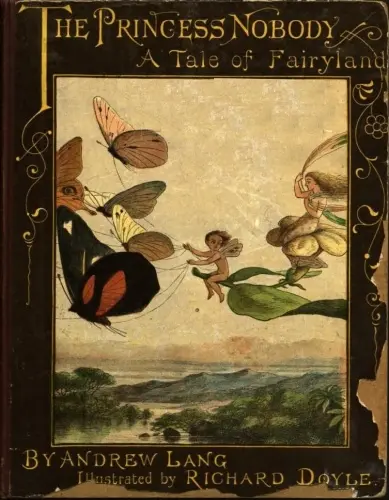
Andrew Lang
BEHIND THE BOOK
This eBook is for the use of anyone anywhere in the United States and most other parts of the world at no cost and with almost no restrictions whatsoever. You may copy it, give it away or re-use it under the terms of the Project Gutenberg License included with this eBook or online at www.gutenberg.org. If you are not located in the United States, you will have to check the laws of the country where you are located before using this eBook. Read the source licence.
The original source file, including credits and licence, is retained by this library. Request an original-format copy at no charge. Please include the book title and Project Gutenberg identifier #2018.
KEEP YOUR CURIOSITY GOING

David Patterson (Spirit) Hatch

David Patterson (Spirit) Hatch

David Patterson (Spirit) Hatch

Ralph Waldo Emerson

Maurice Baring
Oscar Wilde & James McNeill Whistler