THE CLASSIC COLLECTION✦Letters on LiteratureCLASSIC FREE BOOKS
Letters on Literature
Andrew Lang
THE CLASSIC COLLECTION · 1881
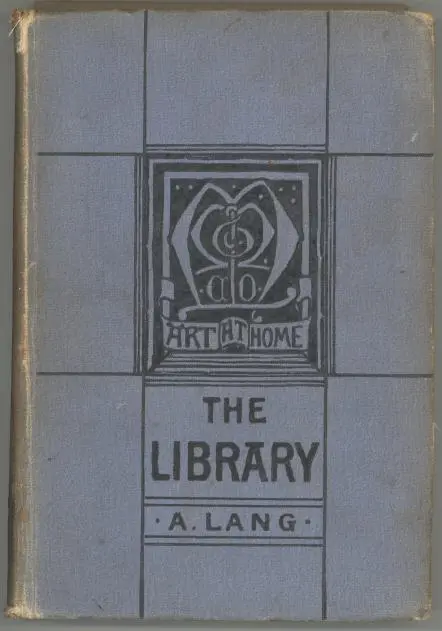
"The Library" by Andrew Lang is a book published in the late 19th century as part of the "Art as Home" series. This charming guide explores the art of book-collecting for amateur bibliophiles, blending practical advice with passionate defense of the collector's craft. Lang examines book-hunting as both sport and obsession, offering wisdom on building collections, preserving treasured volumes, and understanding why books remain our most enduring friends. Through wit and warmth, he captures the joys, sorrows, and "gentle-madness" that define the bibliophile's world.
Introduction adapted from the source catalogue; source summaries may be automatically generated.
Free to read · English · 37,997 words · No account needed
MAKE TIME FOR A GOOD BOOK
On by default. Untick to stop anonymous reading totals. Each page counts after 10 seconds in view. How this works.
Anonymous counting is on unless you have switched it off.
A scene like this has really very little to do with book-collecting. The beginner must labour hard to distinguish different kinds of printing; he must be able to recognise at a glance even fragments from the press of Caxton. His eye must be accustomed to all the tricks of the trade and others, so that he may tell a facsimile in a moment, or detect a forgery.
But now let us return to the distinctive marks of early printed books. The first is, says M. Rouveyre,—
1. The absence of a separate title-page. It was not till 1476–1480 that the titles of books were printed on separate pages. The next mark is—
2. The absence of capital letters at the beginnings of divisions. For example, in an Aldine Iliad, the fifth book begins thus—
Νθ αυ τὖδέιδῃ Διυμήδεῑ ἔ παλλὰς ἀθήνη δῶκε μένος καὶ θάρσος ἵν’ ἔκδηλος μετὰ πᾶσιν ἀργείοισι γένοιτο, ἰδέ κλέος ἐσθλὸν ἄροιτο.
It was intended that the open space, occupied by the small epsilon (ἔ), should be filled up with a coloured and gilded initial letter by the illuminator. Copies thus decorated are not very common, but the Aldine “Homer” of Francis I., rescued by M. Didot from a rubbish heap in an English cellar, had its due illuminations. In the earliest books the guide to the illuminator, the small printed letter, does not appear, and he often puts in the wrong initial.
3. Irregularity and rudeness of type is a “note” of the primitive printing press, which very early disappeared. Nothing in the history of printing is so remarkable as the beauty of almost its first efforts. Other notes are—
4. The absence of figures at the top of the pages, and of signatures at the foot. The thickness and solidity of the paper, the absence of the printer’s name, of the date, and of the name of the town where the press stood, and the abundance of crabbed abbreviations, are all marks, more or less trustworthy, of the antiquity of books. It must not be supposed that all books published, let us say before 1500, are rare, or deserve the notice of the collector. More than 18,000 works, it has been calculated, left the press before the end of the fifteenth century. All of these cannot possibly be of interest, and many of them that are “rare,” are rare precisely because they are uninteresting. They have not been preserved because they were thought not worth preserving. This is a great cause of rarity; but we must not hastily conclude that because a book found no favour in its own age, therefore it has no claim on our attention. A London bookseller tells me that he bought the “remainder” of Keats’s “Endymion” for fourpence a copy! The first edition of “Endymion” is now rare and valued. In trying to mend the binding of an old “Odyssey” lately, I extracted from the vellum covers parts of two copies of a very scarce and curious French dictionary of slang, “Le Jargon, ou Langage de l’Argot Reformé.” This treatise may have been valueless, almost, when it appeared, but now it is serviceable to the philologist, and to all who care to try to interpret the slang ballades of the poet Villon. An old pamphlet, an old satire, may hold the key to some historical problem, or throw light on the past of manners and customs. Still, of the earliest printed books, collectors prefer such rare and beautiful ones as the oldest printed Bibles: German, English,—as Taverner’s and the Bishop’s,—or Hebrew and Greek, or the first editions of the ancient classics, which may contain the readings of MSS. now lost or destroyed. Talking of early Bibles, let us admire the luck and prudence of a certain Mr. Sandford. He always longed for the first Hebrew Bible, but would offer no fancy price, being convinced that the book would one day fall in his way. His foreboding was fulfilled, and he picked up his treasure for ten shillings in a shop in the Strand. The taste for incunabula, or very early printed books, slumbered in the latter half of the sixteenth, and all the seventeenth century. It revived with the third jubilee of printing in 1740, and since then has refined itself, and only craves books very early, very important, or works from the press of Caxton, the St. Albans Schoolmaster, or other famous old artists. Enough has been said to show the beginner, always enthusiastic, that all old books are not precious. For further information, the “Biography and Typography of William Caxton,” by Mr. Blades (Trübner, London, 1877), may be consulted with profit.
Your reading position is saved on this browser. Take it to another device with a library code. Reading pages adapt to text, rather than matching a printed edition.
Andrew Lang
Andrew Lang
Andrew Lang
Andrew Lang
BEHIND THE BOOK
This eBook is for the use of anyone anywhere in the United States and most other parts of the world at no cost and with almost no restrictions whatsoever. You may copy it, give it away or re-use it under the terms of the Project Gutenberg License included with this eBook or online at www.gutenberg.org. If you are not located in the United States, you will have to check the laws of the country where you are located before using this eBook. Read the source licence.
The original source file, including credits and licence, is retained by this library. Request an original-format copy at no charge. Please include the book title and Project Gutenberg identifier #2018.
KEEP YOUR CURIOSITY GOING

David Patterson (Spirit) Hatch

David Patterson (Spirit) Hatch

David Patterson (Spirit) Hatch

Ralph Waldo Emerson

Maurice Baring

Oscar Wilde & James McNeill Whistler