THE CLASSIC COLLECTION✦The letters of Queen Victoria, vol. 2, 1844-1853CLASSIC FREE BOOKS
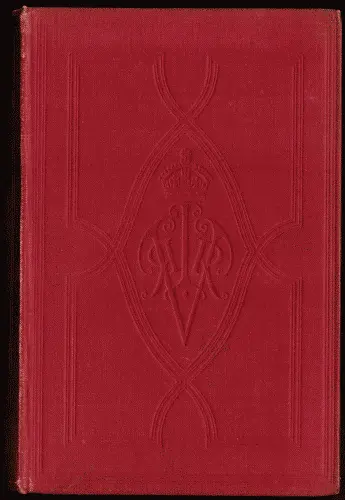
The letters of Queen Victoria, vol. 2, 1844-1853
Queen of Great Britain Victoria
THE CLASSIC COLLECTION · 1907
"The Letters of Queen Victoria: A Selection from Her Majesty's Correspondence" edited by Arthur Christopher Benson and Viscount Esher is a collection of historical letters written during the mid-19th century. This volume focuses on Queen Victoria's correspondence between the years 1854 and 1861, providing insight into her thoughts and emotions during significant events in British history, including the Crimean War and the political landscape of the time. The letters reveal the Queen's perspectives on her family, her government, and the geopolitical challenges facing Britain. At the start of the collection, the reader is presented with a correspondence that discusses the rising tensions leading to the Crimean War. Queen Victoria expresses concern over the press's attacks on her husband, Prince Albert, and reflects on the complexities of diplomacy with European powers. The opening letters highlight her sentiments regarding the state of affairs in the East, her thoughts on the necessity of military action, and her wish for peace amidst the looming conflict. This initial glimpse into her correspondence sets the tone for a blend of personal reflections and the weight of royal duty, as the Queen navigates her role during a period of turmoil and change.
Introduction adapted from the source catalogue; source summaries may be automatically generated.
Free to read · English · 230,702 words · No account needed
MAKE TIME FOR A GOOD BOOK
On by default. Untick to stop anonymous reading totals. Each page counts after 10 seconds in view. How this works.
Anonymous counting is on unless you have switched it off.
About half-past one we heard a knock at the door and my wardrobe maid brought in a telegram saying the King was given up, and a note from the Prince Regent saying he was going up immediately. We got up in the greatest hurry and dressed--I hardly know how; I put on just what I found, and had not time to do my hair or anything. After we had hurried on our clothes we went downstairs and out--for there was no time to get a carriage or a footman or anything--it was a splendid night, but twelve degrees of cold (Reaumur). I thought I was in a dream finding myself alone in the street with Fritz at two o'clock at night. We went to the Prince Regent's, and then with them in their carriages to the railway station--we four all alone in the train. We arrived at Sans Souci and went directly into the room where the King lay--the stillness of death was in the room--only the light of the fire and of a dim lamp. We approached the bed and stood there at the foot of it, not daring to look at one another or to say a word. The Queen was sitting in an armchair at the head of the bed, her arm underneath the King's head, and her head on the same pillow on which he lay; with her other hand she continually wiped the perspiration from his forehead. You might have heard a pin drop; no sound was heard but the crackling of the fire and the death-rattle, that dreadful sound which goes to one's heart, and which tells plainly that life is ebbing. This rattling in the throat lasted about an hour longer, and then the King lay motionless. The doctors bent their heads low to hear whether he still breathed--and we stood, not even daring to sit down, watching the death-struggle; every now and then the King breathed very fast and loud, but never unclosed his eyes; he was very red in the face, and the cold perspiration pouring from his forehead. I never spent such an awful time! And to see the poor Queen sitting there quite rent my heart--three, four, five, six, seven struck, and we were still standing there--one member of the family came in after the other and remained motionless in the room, sobs only breaking the silence. Oh! it is dreadful to see a person die! All the thoughts and feelings that crowded on my mind in those hours I cannot describe, more than in my whole past lifetime. The light of the morning dawned, and the lamps were taken away--oh, how sad for the first morning in the year! We all went into the next room, for I assure you, anxiety, watching, standing, and crying had worn us out. The Princess fell asleep on a chair, I on a sofa, and the rest walked up and down the room asking one another, How long will it last? Towards the middle of the day, Marianne and I went into the room alone, as we wished to stay there; we came up and kissed the Queen's hand and knelt down and kissed the King's; it was quite warm still. We stood about and waited till five o'clock and then had some dinner, and I felt so sick and faint and unwell, that Fritz sent me here to bed. At one o'clock this morning I got up and dressed, and heard that the King had not many minutes more to live, but by the time I had got the carriage I heard all was over. I drove to Sans Souci and saw the King and Queen. May God bless and preserve them, and may theirs be a long and happy and blessed reign. Then I went into the room where the King lay, and I could hardly bring myself to go away again. There was so much of comfort in looking at that quiet, peaceful form, at rest at last after all he had suffered--gone home at last from this world of suffering--so peaceful and quiet he looked, like a sleeping child. Every moment I expected to see him move or breathe--his mouth and eyes closed, and such a sweet and happy expression--both his hands were on the coverlid. I kissed them both for the last time; they were quite cold then. Fritz and I stood looking at him for some time. I could hardly bring myself to believe that this was really death, that which I had so often shuddered at and felt afraid of; there was nothing there dreadful or appalling, only a heavenly calm and peace. I felt it did me so much good, and was such a comfort. "Death, where is thy sting? Grave, where is thy victory?" He was a just and good man, and had a heart overflowing with love and kindness, and he has gone to his rest after a long trial which he bore with so much patience. I am not afraid of death now, and when I feel inclined to be so, I shall think of that solemn and comforting sight, and that death is only a change for the better. We went home and to bed and this morning went there at ten. I sat some time with the poor Queen, who is so calm and resigned and touching in her grief. She does not cry, but she looks heartbroken. She said to me: "I am not longer of any use in this world. I have no longer any vocation, any duties to perform. I only lived for him." Then she was so kind to me, kinder than she has ever been yet, and said I was like her own child and a comfort to her. I saw the corpse again this morning; he is unaltered, only changed in colour, and the hands are stiffened.
Your reading position is saved on this browser. Take it to another device with a library code. Reading pages adapt to text, rather than matching a printed edition.
Queen of Great Britain Victoria
Queen of Great Britain Victoria
BEHIND THE BOOK
This eBook is for the use of anyone anywhere in the United States and most other parts of the world at no cost and with almost no restrictions whatsoever. You may copy it, give it away or re-use it under the terms of the Project Gutenberg License included with this eBook or online at www.gutenberg.org. If you are not located in the United States, you will have to check the laws of the country where you are located before using this eBook. Read the source licence.
The original source file, including credits and licence, is retained by this library. Request an original-format copy at no charge. Please include the book title and Project Gutenberg identifier #28649.
KEEP YOUR CURIOSITY GOING

David Patterson (Spirit) Hatch

David Patterson (Spirit) Hatch

David Patterson (Spirit) Hatch
Cécile Tormay

Moritz Busch
John L. Ransom