THE CLASSIC COLLECTION✦The letters of Queen Victoria, vol. 2, 1844-1853CLASSIC FREE BOOKS
The letters of Queen Victoria, vol. 2, 1844-1853
Queen of Great Britain Victoria
THE CLASSIC COLLECTION · 1907
"The Letters of Queen Victoria: A Selection from Her Majesty's Correspondence" edited by Arthur Christopher Benson and Viscount Esher is a collection of historical letters written during the mid-19th century. This volume focuses on Queen Victoria's correspondence between the years 1854 and 1861, providing insight into her thoughts and emotions during significant events in British history, including the Crimean War and the political landscape of the time. The letters reveal the Queen's perspectives on her family, her government, and the geopolitical challenges facing Britain. At the start of the collection, the reader is presented with a correspondence that discusses the rising tensions leading to the Crimean War. Queen Victoria expresses concern over the press's attacks on her husband, Prince Albert, and reflects on the complexities of diplomacy with European powers. The opening letters highlight her sentiments regarding the state of affairs in the East, her thoughts on the necessity of military action, and her wish for peace amidst the looming conflict. This initial glimpse into her correspondence sets the tone for a blend of personal reflections and the weight of royal duty, as the Queen navigates her role during a period of turmoil and change.
Introduction adapted from the source catalogue; source summaries may be automatically generated.
Free to read · English · 230,702 words · No account needed
MAKE TIME FOR A GOOD BOOK
On by default. Untick to stop anonymous reading totals. Each page counts after 10 seconds in view. How this works.
Anonymous counting is on unless you have switched it off.
[Footnote 30: The conversations of Sir Hamilton Seymour and the Emperor Nicholas in the year 1853 had now been given to the world. The Czar, believing the time ripe for the dismemberment of Turkey, had expressed himself openly to the British Ambassador, and the conversations were all reported to the British Ministry. On the 2nd of March 1854, an obviously inspired article in the Journal de St. Petersbourg professed to contradict the statements of Lord John Russell in the House of Commons reflecting on the bad faith of the Russian Government, and accordingly, in their own vindication, the English Cabinet now published the conversations above referred to.]
[Pageheading: THE SULTAN]
[Pageheading: THE BRITISH FORCES]
The Duke of Cambridge to Queen Victoria.
CONSTANTINOPLE, 13th May 1854.
MY DEAR COUSIN,--I have not as yet announced to you my safe arrival here, as I was anxious first to see the Sultan and the general state of things before giving you a report of what was really going on....
I found a great proportion of the Infantry arrived, a portion of the Artillery, but as yet no Cavalry. Lord Raglan is well and in good spirits, Lord Stratford de Redcliffe ill in bed with a bad fit of the gout--most miserable to see in every respect. The Sultan[31] received me at once on the day of arrival, and made his return visit to me yesterday. I confess I was not much impressed with either his appearance or general ability. He is, to say the truth, a wretched creature, prematurely aged, and having nothing whatever to say for himself. A few commonplace civilities was all the conversation which passed between us. I said everything I could think of to make a conversation, among other things messages of civility from yourself; but though he appeared pleased and expressed his satisfaction at our being here, I could not get him to enter into anything, and I was not sorry on both occasions when our interview was at an end. As to his Ministers, and in fact the whole population and country, with the exception of Redschid Pasha,[32] they are all a most wretched and miserable set of people, and far, far worse than anything I could possibly have imagined or supposed. In fact, the "sick man" is excessively sick indeed, dying as fast as possible; and the sooner diplomacy disposes of him the better, for no earthly power can save him, that is very evident. This is the opinion of every person out here of both armies, French and English, and you may rest assured it is the truth. The great thing is that we are here and no other Power can now step in, but diplomacy must settle what is to happen, for as to the Turks remaining in Europe that is out of the question, and the very fact of our being here now has given them their death-blow. I hope, my dear cousin, you will forgive me for being very candid on this point, but I really do not think that anybody in England had any idea of the real state of affairs here. The sooner therefore that they are put in possession of the truth unvarnished the better. The great and imperative necessity is that the four Powers of Europe should strike together, otherwise things will become much worse than they are even at present. Everybody is very civil and obliging to me, the Sultan has put me into one of his best Palaces, very nicely fitted up, and is anxious to do everything I wish. I find it inconvenient, as the troops are on the other side of the Bosphorus, and I therefore intend going over there to reside if possible. Marshal St Arnaud is here and Prince Napoleon, but no French troops. I have seen the latter once; he was very civil indeed to me, but I do not think he has made at all a good impression here, his manner being offensive and harsh. I do not think the Army like him at all. I am afraid the French Ambassador is giving much trouble. Neither St Arnaud nor the Prince like him at all, and I believe they have written to demand his recall, which would be a very good thing, as he cannot hit it off with anybody. As to our movements, I know nothing of them as yet, nor do I think that much has as yet been settled, but I fear we shall not be fit to move for some time; the difficulty of transport is very great, our Artillery only partly arrived, and no Cavalry. We require more troops, more particularly of the latter arm, in which the Russians are very strong. We ought to have at least 10,000 men more, and the sooner they are sent out the better. Even that number is not enough, for the French talk of 100,000 men, and we should be in a most dreadful minority unless we had 40,000 to 50,000. I am afraid all this will alarm people in England, but it is the truth.... I remain, my dear Cousin, your most dutiful Cousin,
Your reading position is saved on this browser. Take it to another device with a library code. Reading pages adapt to text, rather than matching a printed edition.
Queen of Great Britain Victoria
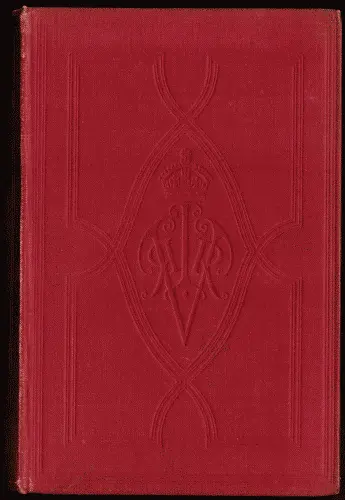
Queen of Great Britain Victoria
BEHIND THE BOOK
This eBook is for the use of anyone anywhere in the United States and most other parts of the world at no cost and with almost no restrictions whatsoever. You may copy it, give it away or re-use it under the terms of the Project Gutenberg License included with this eBook or online at www.gutenberg.org. If you are not located in the United States, you will have to check the laws of the country where you are located before using this eBook. Read the source licence.
The original source file, including credits and licence, is retained by this library. Request an original-format copy at no charge. Please include the book title and Project Gutenberg identifier #28649.
KEEP YOUR CURIOSITY GOING

David Patterson (Spirit) Hatch

David Patterson (Spirit) Hatch

David Patterson (Spirit) Hatch
Cécile Tormay

Moritz Busch
John L. Ransom