THE CLASSIC COLLECTION✦The letters of Queen Victoria, vol. 3, 1854-1861CLASSIC FREE BOOKS
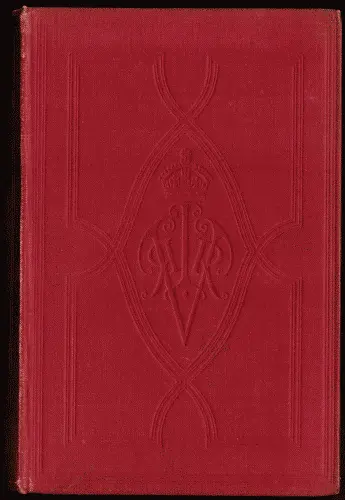
The letters of Queen Victoria, vol. 3, 1854-1861
Queen of Great Britain Victoria
THE CLASSIC COLLECTION · 1907
"The Letters of Queen Victoria: A Selection from her Majesty's Correspondence" edited by Arthur Christopher Benson and Viscount Esher is a historical account compiled in the early 20th century. This collection encompasses select correspondence from Queen Victoria between the years 1837 and 1861, providing insight into her thoughts, feelings, and the events she experienced during her reign. The opening of the work introduces the reader to Queen Victoria’s personal reflections and royal duties at the onset of the year 1844. She writes to her uncle, the King of the Belgians, about various familial and political matters, revealing her sentiments about family life, her children, and significant political events such as a parliamentary crisis and diplomatic relations with France. The letters not only depict her emotional world but also serve as a window into the political landscape of the time, highlighting Queen Victoria's role as a monarch involved in the intricacies of governance and international relations.
Introduction adapted from the source catalogue; source summaries may be automatically generated.
Free to read · English · 192,778 words · No account needed
MAKE TIME FOR A GOOD BOOK
On by default. Untick to stop anonymous reading totals. Each page counts after 10 seconds in view. How this works.
Anonymous counting is on unless you have switched it off.
Lord Stanley expressed great surprise. The impression had been that the Government had not been in earnest in their opposition to Mr L. King's Motion; in the minority had voted only twenty-seven members of the Government side, the rest had been of his Party. He asked if the whole Cabinet had resigned, or whether there had been dissension in the Cabinet upon it? The Queen replied that the resignation had been unanimously agreed upon in the Cabinet, and that Lord Lansdowne, who had only come up from Bowood this morning, had given his entire approval to it. Lord Stanley then asked whether anybody else had been consulted or applied to, to which the Queen replied that she had written to him a few minutes after Lord John's resignation, and had communicated with no one else. Lord Stanley then said that he hoped the Queen's acceptance had only been a conditional one; that he felt very much honoured by the Queen's confidence; that he hoped he might be able to tender advice which might contribute to the Queen's comfort, and might relieve the present embarrassment.
In order to be able to do so he must enter most freely and openly into his own position and that of his Party. It was quite true that they formed the most numerous in Parliament after the supporters of what he hoped he might still call the present Government, but that there were no men contained in it who combined great ability with experience in public business. There was one certainly of great ability and talent--Mr Disraeli--but who had never held office before, and perhaps Mr Herries, who possessed great experience, but who did not command great authority in the House of Commons; that he should have great difficulties in presenting to the Queen a Government fit to be accepted, unless he could join with some of the late Sir R. Peel's followers; that he considered, for instance, the appointment of a good person for Foreign Affairs indispensable, and there was scarcely any one fit for it except Lord Palmerston and Lord Aberdeen. Lord Aberdeen had told him that he had no peculiar views upon Free Trade, and that he did not pretend to understand the question, but that he had felt it his duty to stand by Sir R. Peel; this might now be different, but it ought first to be ascertained whether a combination of those who agreed in principle, and had only been kept asunder hitherto by personal considerations, could not be formed; that Sir James Graham had in his last speech declared it as his opinion that the ranks of those who agreed ought to be closed; when such a combination had taken place, those of Sir R. Peel's followers who could not agree to it might not be unwilling to join him (Lord Stanley). As to his principles, he would frankly state that he thought that the landed interest was much depressed by the low state of prices; that an import duty on corn would be absolutely necessary, which, however, would be low, and only a revenue duty; such a duty, he thought, the country would be prepared for; and if they were allowed to state their honest opinion, he felt sure the greatest part of the present Government would be heartily glad of. He would require Duties upon sugar for revenue, but he could not conceal that if the revenue after a diminution in the direct taxation, which he would propose, should considerably fall off, he might be driven to raise the Import duties on other articles. He thought the present House of Commons could hardly be expected to reverse its decision upon the financial and commercial policy of the country, and that accordingly a Dissolution of Parliament would become necessary. Such a Dissolution, however, could not be undertaken at this moment for the sake of public business. The Mutiny Bill had not been voted nor the Supplies, and it would require more than eight weeks before the new Parliament could be assembled, and consequently the Crown would be left without Army or money. A Dissolution could accordingly not take place before Easter. He felt, however, that if he were to take office now, he would between this and Easter be exposed to such harassing attacks that he should not be able to withstand them; moreover, it would subject the members of his Government to two elections in two months. He hoped therefore that the Queen would try to obtain a Government by a coalition of the Whigs and Peelites, but that this failing, if the Queen should send again for him, and it was clear no other Government could be formed, he would feel it his duty as a loyal subject to risk everything, except his principles and his honour, to carry on the Government; and he hoped that in such a case the Queen would look leniently on the composition of the Cabinet which he could offer, and that the country would, from the consideration of the circumstances, give it a fair trial. He begged, however, that he might not be called upon to take office except as a dernier ressort, a necessity.
Your reading position is saved on this browser. Take it to another device with a library code. Reading pages adapt to text, rather than matching a printed edition.
Queen of Great Britain Victoria
Queen of Great Britain Victoria
BEHIND THE BOOK
This eBook is for the use of anyone anywhere in the United States and most other parts of the world at no cost and with almost no restrictions whatsoever. You may copy it, give it away or re-use it under the terms of the Project Gutenberg License included with this eBook or online at www.gutenberg.org. If you are not located in the United States, you will have to check the laws of the country where you are located before using this eBook. Read the source licence.
The original source file, including credits and licence, is retained by this library. Request an original-format copy at no charge. Please include the book title and Project Gutenberg identifier #24780.
KEEP YOUR CURIOSITY GOING

David Patterson (Spirit) Hatch

David Patterson (Spirit) Hatch

David Patterson (Spirit) Hatch
Cécile Tormay

Moritz Busch
John L. Ransom