THE CLASSIC COLLECTION✦The letters of Queen Victoria, vol. 3, 1854-1861CLASSIC FREE BOOKS
The letters of Queen Victoria, vol. 3, 1854-1861
Queen of Great Britain Victoria
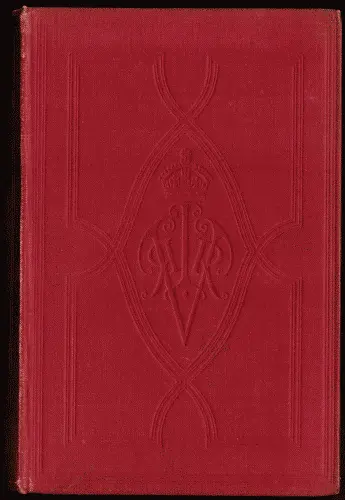
THE CLASSIC COLLECTION · 1907
"The Letters of Queen Victoria: A Selection from Her Majesty's Correspondence" is a historical collection edited by Arthur Christopher Benson and Viscount Esher, published in the early 20th century. This work compiles significant correspondence from Queen Victoria during her reign, focusing particularly on the years from her accession to the throne in 1837 until 1861, showcasing her personal and political insights. The book seeks to illuminate the Queen's character and her responses to the circumstances of her time, as well as her relationships with influential political figures and family members. At the start of this volume, a preface provides readers with an overview of the extensive documentation preserved by Queen Victoria. It explains the meticulous arrangement of her correspondence, which includes letters from political ministers, royal relatives, and personal acquaintances. The opening portion details the context of her upbringing, the formation of her character, and her initial experiences as a young monarch. The correspondence offers a glimpse into her early life, influencing her views on duty, relationships, and governance, setting the stage for a deeper exploration of her life as Queen and the unfolding historical events of her reign.
Introduction adapted from the source catalogue; source summaries may be automatically generated.
Free to read · English · 215,579 words · No account needed
MAKE TIME FOR A GOOD BOOK
On by default. Untick to stop anonymous reading totals. Each page counts after 10 seconds in view. How this works.
Anonymous counting is on unless you have switched it off.
I am reading away famously. I like Mrs. Hutchinson's Life of her husband[13] only comme cela; she is so dreadfully violent. She and Clarendon are so totally opposite, that it is quite absurd, and I only believe the juste milieu....
Your speech interested me very much; it is very fine indeed; you wrote
it yourself, did you not?
Belgium is indeed the happiest country in the world, and it is all, all owing to your great care and kindness. "Nous étions des enfans perdus," General Goblet[14] said to me at Claremont, "quand le Roi est venu nous sauver." And so it is....
Pray, dear Uncle, say everything most kind from me to Ernest and Albert, and believe me, always, your affectionate Niece,
Pray, dear Uncle, is the report of the King of Naples' marriage to the Archduchess Theresa true? I hear the king has behaved uncommonly well at Naples during the cholera panic. I enclose the measure of my finger.
[Footnote 13: The regicide, Colonel Hutchinson's, fame rests more on his wife's commemoration of him than on his own exploits. She was the daughter of Sir Allen Apsley, Lieutenant of the Tower of London, and highly educated. Between 1664 and 1671 she wrote the biography of her husband, first published in 1806. "The figure of Colonel Hutchinson," says J. R. Green, "stands out from his wife's canvas with the grace and tenderness of a portrait by Van Dyck."]
[Footnote 14: The Belgian General, Albert Joseph Goblet. Count
d'Alviella.]
[Pageheading: DEATH OF CHARLES X]
The King of the Belgians to the Princess Victoria.
LAEKEN, 18th November 1836.
... Poor Charles X. is dead, it is said of the cholera. I regret him; few people were ever kinder to me than the good old man. He was blinded by certain absolute ideas, but a good man, and deserving to be loved. History will state that Louis XVIII. was a most liberal monarch, reigning with great mildness and justice to his end, but that his brother, from his despotic and harsh disposition, upset all the other had done, and lost the throne. Louis XVIII. was a clever, hard-hearted man, shackled by no principle, very proud and false. Charles X. an honest man, a kind friend, an honourable master, sincere in his opinions, and inclined to do everything that is right. That teaches us what we ought to believe in history as it is compiled according to ostensible events and results known to the generality of people. Memoirs are much more instructive, if written honestly and not purposely fabricated, as it happens too often nowadays, particularly at Paris.... I shall not fail to read the books you so kindly recommend. I join you a small copy of our very liberal Constitution, hitherto conscientiously executed--no easy matter. You may communicate it to your Mother; it is the best answer to an infamous Radical or Tory-Radical paper, the Constitutional, which seems determined to run down the Coburg family. I don't understand the meaning of it; the only happiness poor Charlotte knew was during her short wedded existence, and there was but one voice on that subject, that we offered a bright prospect to the nation. Since that period I have (though been abused, and vilified merely for drawing an income which was the consequence of a Treaty ratified by both Houses of Parliament, and that without one dissenting voice, a thing not very likely to happen again) done everything to see England prosperous and powerful. I have spared her, in 1831, much trouble and expense, as without my coming here very serious complications, war and all the expensive operations connected with it, must have taken place. I give the whole of my income, without the reservation of a farthing, to the country; I preserve unity on the Continent, have frequently prevented mischief at Paris, and to thank me for all that, I get the most scurrilous abuse, in which the good people from constant practice so much excel.... The conclusion of all this--and that by people whose very existence in political life may be but of a few years' standing--is scurrilous abuse of the Coburg family. I should like to know what harm the Coburg family has done to England? But enough of this. Your principle is very good; one must not mind what newspapers say. Their power is a fiction of the worst description, and their efforts marked by the worst faith and the greatest untruths. If all the Editors of the papers in the countries where the liberty of the press exists were to be assembled, we should have a crew to which you would not confide a dog that you would value, still less your honour and reputation....
Your reading position is saved on this browser. Take it to another device with a library code. Reading pages adapt to text, rather than matching a printed edition.
Queen of Great Britain Victoria
Queen of Great Britain Victoria
BEHIND THE BOOK
This eBook is for the use of anyone anywhere in the United States and most other parts of the world at no cost and with almost no restrictions whatsoever. You may copy it, give it away or re-use it under the terms of the Project Gutenberg License included with this eBook or online at www.gutenberg.org. If you are not located in the United States, you will have to check the laws of the country where you are located before using this eBook. Read the source licence.
The original source file, including credits and licence, is retained by this library. Request an original-format copy at no charge. Please include the book title and Project Gutenberg identifier #20023.
KEEP YOUR CURIOSITY GOING

David Patterson (Spirit) Hatch

David Patterson (Spirit) Hatch

David Patterson (Spirit) Hatch
Cécile Tormay

Moritz Busch
John L. Ransom