THE CLASSIC COLLECTION✦The letters of Queen Victoria, vol. 3, 1854-1861CLASSIC FREE BOOKS
The letters of Queen Victoria, vol. 3, 1854-1861
Queen of Great Britain Victoria
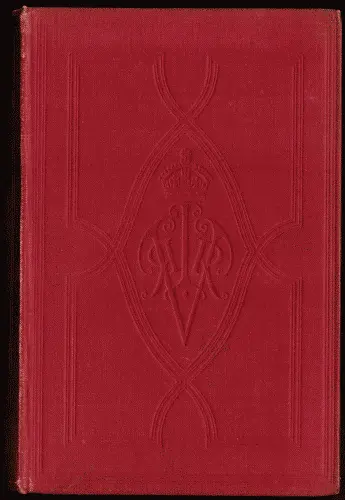
THE CLASSIC COLLECTION · 1907
"The Letters of Queen Victoria: A Selection from Her Majesty's Correspondence" is a historical collection edited by Arthur Christopher Benson and Viscount Esher, published in the early 20th century. This work compiles significant correspondence from Queen Victoria during her reign, focusing particularly on the years from her accession to the throne in 1837 until 1861, showcasing her personal and political insights. The book seeks to illuminate the Queen's character and her responses to the circumstances of her time, as well as her relationships with influential political figures and family members. At the start of this volume, a preface provides readers with an overview of the extensive documentation preserved by Queen Victoria. It explains the meticulous arrangement of her correspondence, which includes letters from political ministers, royal relatives, and personal acquaintances. The opening portion details the context of her upbringing, the formation of her character, and her initial experiences as a young monarch. The correspondence offers a glimpse into her early life, influencing her views on duty, relationships, and governance, setting the stage for a deeper exploration of her life as Queen and the unfolding historical events of her reign.
Introduction adapted from the source catalogue; source summaries may be automatically generated.
Free to read · English · 215,579 words · No account needed
MAKE TIME FOR A GOOD BOOK
On by default. Untick to stop anonymous reading totals. Each page counts after 10 seconds in view. How this works.
Anonymous counting is on unless you have switched it off.
[Memorandum enclosed from Sir Robert Peel to Prince Albert, about the political condition of Birmingham, which the Prince was intending to visit.]
The Mayor is a hosier--of extreme political opinions--in fact, a
Chartist.
The contest for the office of Mayor was between him and a man of Radical opinions, but Chartism prevailed.
The Mayor has taken a violent part, before his Mayoralty, against Church Rates, and in reference to the state of Ireland.
The Conservative party took no part whatever in the Municipal
Elections, and would not vote.
They would, if invited or permitted by the Mayor and Town Council, cordially co-operate with men of opposite opinions in any mark of respect to the Prince.
No probability of any tumult or of any demonstration but one of respect personally towards the Prince, if his visit be clearly and manifestly unconnected with politics.
An immense concourse of people must be expected, not only from Birmingham, but Wolverhampton, Walsall, and all the neighbouring towns, and previous police arrangements must be very carefully made.
There may be a proposal of a collation and of an Address, to be
received in the Town Hall.
Should not the Lord Lieutenant (Lord Warwick) have notice?
Is the Mayor to accompany the Prince in the same carriage?[91]
The Mayor has no carriage.
No communication should be made to any party in Birmingham, except to the municipal authorities, notwithstanding their political bias and extreme opinions.
The late Mayor, Mr James, though a Radical, would have summoned the leading men of different parties.
Doubts as to whether the present Mayor would, or whether he would not, place the whole arrangement in the hands of the party with which he is connected.
This risk must be incurred, as communications to other parties would
not be advisable.
[Footnote 91: This was the course adopted.]
[Pageheading: THE DUC DE BORDEAUX]
The Earl of Aberdeen to Queen Victoria.
FOREIGN OFFICE, 1st December 1843.
Lord Aberdeen presents his humble duty to your Majesty. He has not yet received any communication from the Duc de Lévis, notwithstanding he had been led to expect it, from a notice repeatedly conveyed to him to that effect. It seems probable that in consequence of what the Duc de Lévis may have heard, as well as from the course pursued by the friends of the Duc de Bordeaux, Lord Aberdeen may not now see him at all. Should this be the case, Lord Aberdeen is rather inclined to regret it; as although he would formerly have seen him with some reluctance, he would now be glad to have an opportunity of expressing his sentiments very plainly respecting the proceedings of the Prince and his adherents in this country.
Your reading position is saved on this browser. Take it to another device with a library code. Reading pages adapt to text, rather than matching a printed edition.
Queen of Great Britain Victoria
Queen of Great Britain Victoria
BEHIND THE BOOK
This eBook is for the use of anyone anywhere in the United States and most other parts of the world at no cost and with almost no restrictions whatsoever. You may copy it, give it away or re-use it under the terms of the Project Gutenberg License included with this eBook or online at www.gutenberg.org. If you are not located in the United States, you will have to check the laws of the country where you are located before using this eBook. Read the source licence.
The original source file, including credits and licence, is retained by this library. Request an original-format copy at no charge. Please include the book title and Project Gutenberg identifier #20023.
KEEP YOUR CURIOSITY GOING

David Patterson (Spirit) Hatch

David Patterson (Spirit) Hatch

David Patterson (Spirit) Hatch
Cécile Tormay

Moritz Busch
John L. Ransom