THE CLASSIC COLLECTION✦The letters of Queen Victoria, vol. 3, 1854-1861CLASSIC FREE BOOKS
The letters of Queen Victoria, vol. 3, 1854-1861
Queen of Great Britain Victoria
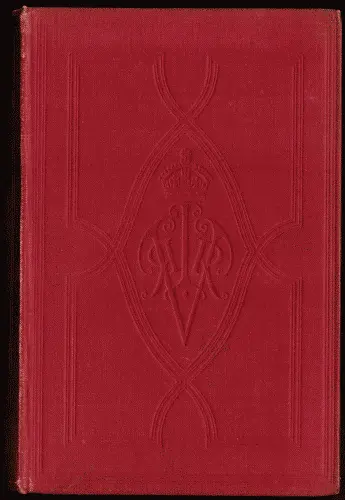
THE CLASSIC COLLECTION · 1907
"The Letters of Queen Victoria: A Selection from Her Majesty's Correspondence" is a historical collection edited by Arthur Christopher Benson and Viscount Esher, published in the early 20th century. This work compiles significant correspondence from Queen Victoria during her reign, focusing particularly on the years from her accession to the throne in 1837 until 1861, showcasing her personal and political insights. The book seeks to illuminate the Queen's character and her responses to the circumstances of her time, as well as her relationships with influential political figures and family members. At the start of this volume, a preface provides readers with an overview of the extensive documentation preserved by Queen Victoria. It explains the meticulous arrangement of her correspondence, which includes letters from political ministers, royal relatives, and personal acquaintances. The opening portion details the context of her upbringing, the formation of her character, and her initial experiences as a young monarch. The correspondence offers a glimpse into her early life, influencing her views on duty, relationships, and governance, setting the stage for a deeper exploration of her life as Queen and the unfolding historical events of her reign.
Introduction adapted from the source catalogue; source summaries may be automatically generated.
Free to read · English · 215,579 words · No account needed
MAKE TIME FOR A GOOD BOOK
On by default. Untick to stop anonymous reading totals. Each page counts after 10 seconds in view. How this works.
Anonymous counting is on unless you have switched it off.
The rest of her life, after King William's death, was passed to a great extent under invalid conditions, though she was only forty-four at the time of her niece's accession. She travelled a good deal in search of health, and lived a quiet life in England, surrounded by a small but devoted circle of friends and relations. Her personal popularity with the nation became very great, not only for the simple kindliness of her life, but for her splendid munificence; it is said that her public subscriptions often exceeded £20,000 a year. She died in December 1849. Queen Victoria was very much attached to her gentle, simple-minded, and tender-hearted aunt, and treated her with the utmost consideration and an almost daughterly affection.
[Pageheading: BARONESS LEHZEN]
Another person who had a large share in forming the Queen's character was Louise Lehzen, the daughter of a Hanoverian clergyman, who came to England as governess to Princess Feodore of Leiningen, Queen Victoria's half-sister, shortly before the Queen's birth. In 1824 she became governess to the Princess Victoria. In 1827 George IV. conferred upon her the rank of a Hanoverian Baroness. When the Duchess of Northumberland, in 1830, was appointed the Princess's official governess, she remained as lady in attendance. The Princess was devoted to her, but "greatly in awe of her." She remained at Court after the accession till 1842, without holding an official position, and then returned to Germany, where she died in 1870.
[Pageheading: BARON STOCKMAR]
Baron Stockmar was another of the interesting personalities who came into very close contact with the Queen in her early years. He was forty-nine at the time of the accession, but he had come to England more than twenty years before as private physician to Prince Leopold. He endeared himself to the Princess Charlotte, who died holding his hand. He afterwards became Prince Leopold's private secretary, and took a prominent part as the Prince's representative in the successive negotiations with regard to his candidature for the thrones of Greece and Belgium. Upon the accession of Queen Victoria, Stockmar joined the Court in a private capacity, and for fifteen months he held an unofficial position as her chief adviser. There was a general feeling of dislike in the minds of the English public to the German influences that were supposed to be brought to bear on the Queen; and Lord Melbourne found it necessary to make a public and categorical denial of the statement that Stockmar was acting as the Queen's private secretary. But the statement, if not technically, was virtually true. Stockmar lived at Court, had interviews with the Queen and her Ministers, and though he industriously endeavoured to efface himself, yet there is no doubt that he was consulted on most important questions. In 1838, he had been entrusted by King Leopold, with the Queen's knowledge and consent, with a mission of great delicacy: he was asked to accompany Prince Albert on a tour in Italy, with the idea of completing his education, and in order to satisfy himself that the Prince would be a worthy Consort for the Queen. This task he discharged admirably, and became the most confidential and trusted of all the Prince's friends. There are many letters of Stockmar's to the Prince extant, which prove that Stockmar never shrank from speaking the plainest truth to the Prince on matters of duty and faults of temperament, without any courtier-like attempt to blink criticism that might have been unpalatable. The Prince had the generosity and humility to value this trait of Stockmar's very highly, to such an extent that Stockmar's influence possessed if anything too great a preponderance. Stockmar had jealously nursed two profound political ideals--the unity of Germany under Prussia, and the establishment of close relations between Germany and England. He induced Prince Albert, heavily burdened as he was with work, to devote almost too much time and thought to the former of these aims. Stockmar was a profound student of social and constitutional questions. He had made a close study of English political institutions; but though he grasped the constitutional theory of the English Throne, and saw that the first necessity for the Sovereign was to hold a position independent of party, he never clearly understood that the Monarch should keep as far as possible clear of political details. Stockmar's view of the position was that the Sovereign should be practically Premier as well; and much of the jealousy that was felt, on various occasions, at the position which Prince Albert assumed with regard to political situations, is referable to Stockmar's influence.
Your reading position is saved on this browser. Take it to another device with a library code. Reading pages adapt to text, rather than matching a printed edition.
Queen of Great Britain Victoria
Queen of Great Britain Victoria
BEHIND THE BOOK
This eBook is for the use of anyone anywhere in the United States and most other parts of the world at no cost and with almost no restrictions whatsoever. You may copy it, give it away or re-use it under the terms of the Project Gutenberg License included with this eBook or online at www.gutenberg.org. If you are not located in the United States, you will have to check the laws of the country where you are located before using this eBook. Read the source licence.
The original source file, including credits and licence, is retained by this library. Request an original-format copy at no charge. Please include the book title and Project Gutenberg identifier #20023.
KEEP YOUR CURIOSITY GOING

David Patterson (Spirit) Hatch

David Patterson (Spirit) Hatch

David Patterson (Spirit) Hatch
Cécile Tormay

Moritz Busch
John L. Ransom