THE CLASSIC COLLECTION✦The letters of Queen Victoria, vol. 3, 1854-1861CLASSIC FREE BOOKS
The letters of Queen Victoria, vol. 3, 1854-1861
Queen of Great Britain Victoria
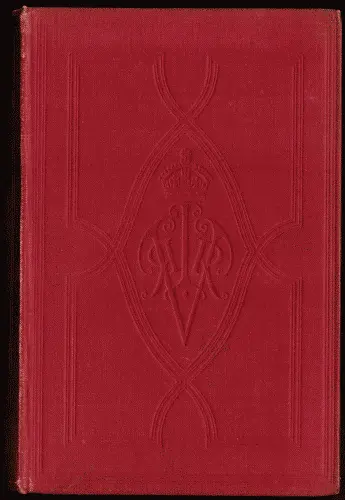
THE CLASSIC COLLECTION · 1907
"The Letters of Queen Victoria: A Selection from Her Majesty's Correspondence" is a historical collection edited by Arthur Christopher Benson and Viscount Esher, published in the early 20th century. This work compiles significant correspondence from Queen Victoria during her reign, focusing particularly on the years from her accession to the throne in 1837 until 1861, showcasing her personal and political insights. The book seeks to illuminate the Queen's character and her responses to the circumstances of her time, as well as her relationships with influential political figures and family members. At the start of this volume, a preface provides readers with an overview of the extensive documentation preserved by Queen Victoria. It explains the meticulous arrangement of her correspondence, which includes letters from political ministers, royal relatives, and personal acquaintances. The opening portion details the context of her upbringing, the formation of her character, and her initial experiences as a young monarch. The correspondence offers a glimpse into her early life, influencing her views on duty, relationships, and governance, setting the stage for a deeper exploration of her life as Queen and the unfolding historical events of her reign.
Introduction adapted from the source catalogue; source summaries may be automatically generated.
Free to read · English · 215,579 words · No account needed
MAKE TIME FOR A GOOD BOOK
On by default. Untick to stop anonymous reading totals. Each page counts after 10 seconds in view. How this works.
Anonymous counting is on unless you have switched it off.
The other fact took place the day after you had left. From the late events at Brussels, it had become desirable that I should see Sir Robert Peel. From Belgium we travelled over to Home politics. I expressed my delight at seeing the Queen so happy, and added a hope that more and more she would seek and find her real happiness in her domestic relations only. He evidently caught at this, and assured me that he should at all times be too happy to have a share in anything which might be thought conducive to the welfare of Her Majesty. That no consideration of personal inconvenience would ever prevent him from indulging the Queen in all her wishes relating to matters of a private nature, and that the only return for his sincere endeavours to please Her Majesty he looked to, was honesty in public affairs. Becoming then suddenly emphatic, he continued, "But on this I must insist, and I do assure you, that that moment I was to learn that the Queen takes advice upon public matters in another place, I shall throw up; for such a thing I conceive the country could not stand, and I would not remain an hour, whatever the consequences of my resignation may be."
Fully sensible that he was talking at me, I received the charge with the calmness of a good conscience, and our time being exhausted I prepared for retreat. But he did not allow me to do so, before he had found means to come a second time to the topic uppermost in his own mind, and he repeated, it appeared to me with increased force of tone, his determination to throw up, fearless of all consequences, that moment he found himself and the country dishonestly dealt by.
I think I have now reported to you correctly the two occurrences which of late have added so much to my antecedent suspicions and fears. Permit me to join to this a few general considerations which, from the nature of the recited incidents alone, and without the slightest intervention of any other cause, must have presented themselves to my mind. The first is, that I derive from the events related quite ground enough for concluding that the danger I dread is great and imminent, and that, if ill luck is to have its will, no human power can prevent an explosion for a day, or even for an hour. The second is the contemplation--what state will the Queen be placed in by such a catastrophe? That in my position, portraying to myself all the consequences of such a possibility, I look chiefly to the Queen, needs hardly, I trust, an excuse.... Can you hope that the Queen's character will ever recover from a shock received by a collision with Peel, upon such a cause? Pray illustrate to yourself this particular question by taking a purely political and general survey of the time and period we live in at this moment. In doing so must you not admit that all England is agreed that the Tories must have another trial, and that there is a decided desire in the nation that it should be a fair one? Would you have it said that Sir Robert Peel failed in his trial, merely because the Queen alone was not fair to him, and that principally you had aided her in the game of dishonesty? And can you hope that this game can be played with security, even for a short time only, when a person has means of looking into your cards whom you yourself have described to me some years ago as a most passionate, giddy, imprudent and dangerous woman? I am sure beforehand that your loyalty and devotion has nothing to oppose to the force of my exposition. There are, however, some other and minor reasons which ought likewise to be considered before you come to the determination of trusting entirely to possibilities and chance. For the results of your deliberation you will have to come to will in their working and effects go beyond yourself, and must affect two other persons. These will have a right to expect that your decision will not be taken regardless of that position, which accidental circumstances have assigned to them, in an affair the fate of which is placed entirely within your discretion. This is an additional argument why you should deliberate very conscientiously. A mistake of yours in this respect might by itself produce fresh difficulties and have a complicating and perplexing retro effect upon the existing ones; because both, seeing that they must be sufferers in the end, may begin to look only to their own safety, and become inclined to refuse that passive obedience which till now constitutes the vehicle of your hazardous enterprize.
Your reading position is saved on this browser. Take it to another device with a library code. Reading pages adapt to text, rather than matching a printed edition.
Queen of Great Britain Victoria
Queen of Great Britain Victoria
BEHIND THE BOOK
This eBook is for the use of anyone anywhere in the United States and most other parts of the world at no cost and with almost no restrictions whatsoever. You may copy it, give it away or re-use it under the terms of the Project Gutenberg License included with this eBook or online at www.gutenberg.org. If you are not located in the United States, you will have to check the laws of the country where you are located before using this eBook. Read the source licence.
The original source file, including credits and licence, is retained by this library. Request an original-format copy at no charge. Please include the book title and Project Gutenberg identifier #20023.
KEEP YOUR CURIOSITY GOING

David Patterson (Spirit) Hatch

David Patterson (Spirit) Hatch

David Patterson (Spirit) Hatch
Cécile Tormay

Moritz Busch
John L. Ransom