THE CLASSIC COLLECTION✦The letters of Queen Victoria, vol. 3, 1854-1861CLASSIC FREE BOOKS
The letters of Queen Victoria, vol. 3, 1854-1861
Queen of Great Britain Victoria
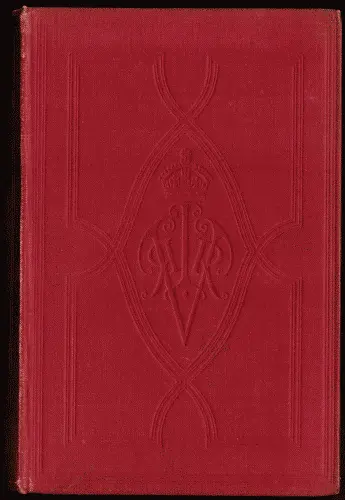
THE CLASSIC COLLECTION · 1907
"The Letters of Queen Victoria: A Selection from Her Majesty's Correspondence" is a historical collection edited by Arthur Christopher Benson and Viscount Esher, published in the early 20th century. This work compiles significant correspondence from Queen Victoria during her reign, focusing particularly on the years from her accession to the throne in 1837 until 1861, showcasing her personal and political insights. The book seeks to illuminate the Queen's character and her responses to the circumstances of her time, as well as her relationships with influential political figures and family members. At the start of this volume, a preface provides readers with an overview of the extensive documentation preserved by Queen Victoria. It explains the meticulous arrangement of her correspondence, which includes letters from political ministers, royal relatives, and personal acquaintances. The opening portion details the context of her upbringing, the formation of her character, and her initial experiences as a young monarch. The correspondence offers a glimpse into her early life, influencing her views on duty, relationships, and governance, setting the stage for a deeper exploration of her life as Queen and the unfolding historical events of her reign.
Introduction adapted from the source catalogue; source summaries may be automatically generated.
Free to read · English · 215,579 words · No account needed
MAKE TIME FOR A GOOD BOOK
On by default. Untick to stop anonymous reading totals. Each page counts after 10 seconds in view. How this works.
Anonymous counting is on unless you have switched it off.
... The first interview with Sir Robert Peel has gone off well, and only lasted twenty minutes; and he sends the Queen to-morrow, in writing, the proposed arrangements, and will only come down on Wednesday morning. He first wished to come to-morrow, but on the Queen's saying that he need not to do that, but might send it and only come down Wednesday, he thought the Queen might prefer having it to consider a little, which she said she certainly should, though she meant no want of confidence. The Queen, in the first instance, stated that she concluded he was prepared for her sending for him, and then stated exactly what Lord Melbourne wrote, viz., the resignation having taken place in consequence of the Addresses--the Queen's great regret at parting with her present Ministers--the confidence she had in them, and her only acceding in consequence of the Addresses in Parliament, and then that consequently she looked to him (Sir Robert Peel) as possessing the confidence of both Houses of Parliament to form an Administration. He made many protestations of his sorrow, at what must give pain to the Queen (as she said to him it did), but of course said he accepted the task. The Duke of Wellington's health too uncertain, and himself too prone to sleep coming over him--as Peel expressed it--to admit of his taking an office in which he would have much to do, but to be in the Cabinet, which the Queen expressed her wish he should. He named Lord De Grey[76] as Lord Lieutenant of Ireland, and Lord Eliot[77] as Secretary for Ireland, who, he said, were both moderate people. The Queen said she gave up to him the officers of State and those of her Household who were in Parliament, and he then asked if Lord Liverpool would be agreeable as Lord Steward (the Queen said he would), and if she would object to Lord Jersey as Master of the Horse (she said she would not), as she believed he understood it perfectly. He said he was so anxious to do everything which could be agreeable to the Queen, that he wished her to name whom she should like as Lord Chamberlain; she said he might suggest some one, but as he would not, and pressed the Queen to name whoever she pleased, she said she should like the Duke of Rutland, and he said he would certainly name it to him. The Queen said that Lord Melbourne had always been very particular to name no one who might be disagreeable to her in the Household, and Sir R. Peel said he felt this, and should be most anxious to do what could be agreeable to me and for my comfort, and that he would even sacrifice any advantage to this. The Queen mentioned the three Ladies' resignation, and her wish not to fill up the three Ladies' places immediately. She mentioned Lady Byron,[78] to which he agreed immediately, and then said, as I had alluded to those communications, he hoped that he had been understood respecting the other appointments (meaning the Ladies), that provided I chose some who had a leaning towards the politics of the Administration, I might take any I liked, and that he quite understood that I should notify it to them. The Queen said this was her rule, and that she wished to choose moderate people who should not have scruples to resign in case another Administration should come in, as changing was disagreeable to her. Here it ended, and so far well. He was very anxious the Queen should understand how anxious he was to do everything which was agreeable to the Queen. The Queen wishes to know if Lord Melbourne thinks she should name the Duchess of Buccleuch Mistress of the Robes, on Wednesday, and if she shall ask Sir Robert to sound the Duchess, or some one else, and then write to appoint her? She thinks of proposing Lady de la Warr and Lady Abercorn by and by as the two Ladies, but these she will sound herself through other people, or Lady Canning, or Lady Rosslyn, in case these others should not take it. She should say she meant to sound those, and no more. What the Queen felt when she parted from her dear, kind friend, Lord Melbourne, is better imagined than described; she was dreadfully affected for some time after, but is calm now. It is very, very sad; and she cannot quite believe it yet. The Prince felt it very, very much too, and really the Queen cannot say how kind and affectionate he is to her, and how anxious to do everything to lighten this heavy trial; he was quite affected at this sad parting. We do, and shall, miss you so dreadfully; Lord Melbourne will easily understand what a change it is, after these four years when she had the happiness of having Lord Melbourne always about her. But it will not be so long till we meet again. Happier and brighter times will come again. We anxiously hope Lord Melbourne is well, and got up well and safe. The Queen trusts he will take care of his valuable health, now more than ever.
Your reading position is saved on this browser. Take it to another device with a library code. Reading pages adapt to text, rather than matching a printed edition.
Queen of Great Britain Victoria
Queen of Great Britain Victoria
BEHIND THE BOOK
This eBook is for the use of anyone anywhere in the United States and most other parts of the world at no cost and with almost no restrictions whatsoever. You may copy it, give it away or re-use it under the terms of the Project Gutenberg License included with this eBook or online at www.gutenberg.org. If you are not located in the United States, you will have to check the laws of the country where you are located before using this eBook. Read the source licence.
The original source file, including credits and licence, is retained by this library. Request an original-format copy at no charge. Please include the book title and Project Gutenberg identifier #20023.
KEEP YOUR CURIOSITY GOING

David Patterson (Spirit) Hatch

David Patterson (Spirit) Hatch

David Patterson (Spirit) Hatch
Cécile Tormay

Moritz Busch
John L. Ransom