THE CLASSIC COLLECTION✦Hawthorne (English Men of Letters Series)CLASSIC FREE BOOKS
Hawthorne (English Men of Letters Series)
Henry James
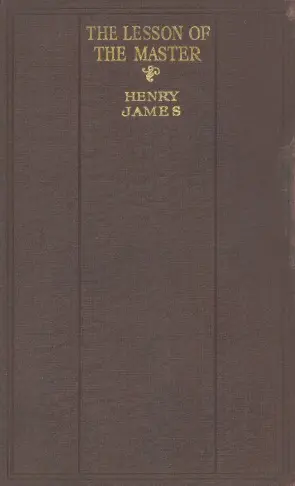
THE CLASSIC COLLECTION · 1892
"The Lesson of the Master" by Henry James is a novel written in the late 19th century. The book explores themes of artistic ambition, social dynamics, and the complexities of relationships through the eyes of the young writer Paul Overt, as he navigates his first encounter with established literary figures, particularly the esteemed author Henry St. George. At the start of the novel, Paul is introduced as a young and aspiring writer visiting a lavish country estate. He is captivated by the surroundings, the high-profile guests, and especially the presence of St. George, whom he admires greatly. Throughout the opening scenes, we see Paul's nervousness and social awkwardness as he grapples with his feelings of inadequacy in the presence of literary giants. He observes the interactions among the party, including those of Mrs. St. George, who appears to be a complicated figure influencing her husband's career. As Paul becomes more entrenched in the social dynamics at play, particularly regarding Miss Fancourt, the General’s daughter, the opening sets the stage for a deeper exploration of literary ambition and personal relationships, foreshadowing the emotional and ethical dilemmas Paul will soon face.
Introduction adapted from the source catalogue; source summaries may be automatically generated.
Free to read · English · 25,646 words · No account needed
MAKE TIME FOR A GOOD BOOK
On by default. Untick to stop anonymous reading totals. Each page counts after 10 seconds in view. How this works.
Anonymous counting is on unless you have switched it off.
There was a freshness of intention in the words that carried them off; nevertheless our young man was sorry for Henry St. George, as he was sorry at any time for any person publicly invited to be responsive and delightful. He would have been so touched to believe that a man he deeply admired should care a straw for him that he wouldn’t play with such a presumption if it were possibly vain. In a single glance of the eye of the pardonable Master he read—having the sort of divination that belonged to his talent—that this personage had ever a store of friendly patience, which was part of his rich outfit, but was versed in no printed page of a rising scribbler. There was even a relief, a simplification, in that: liking him so much already for what he had done, how could one have liked him any more for a perception which must at the best have been vague? Paul Overt got up, trying to show his compassion, but at the same instant he found himself encompassed by St. George’s happy personal art—a manner of which it was the essence to conjure away false positions. It all took place in a moment. Paul was conscious that he knew him now, conscious of his handshake and of the very quality of his hand; of his face, seen nearer and consequently seen better, of a general fraternising assurance, and in particular of the circumstance that St. George didn’t dislike him (as yet at least) for being imposed by a charming but too gushing girl, attractive enough without such danglers. No irritation at any rate was reflected in the voice with which he questioned Miss Fancourt as to some project of a walk—a general walk of the company round the park. He had soon said something to Paul about a talk—“We must have a tremendous lot of talk; there are so many things, aren’t there?”—but our friend could see this idea wouldn’t in the present case take very immediate effect. All the same he was extremely happy, even after the matter of the walk had been settled—the three presently passed back to the other part of the gallery, where it was discussed with several members of the party; even when, after they had all gone out together, he found himself for half an hour conjoined with Mrs. St. George. Her husband had taken the advance with Miss Fancourt, and this pair were quite out of sight. It was the prettiest of rambles for a summer afternoon—a grassy circuit, of immense extent, skirting the limit of the park within. The park was completely surrounded by its old mottled but perfect red wall, which, all the way on their left, constituted in itself an object of interest. Mrs. St. George mentioned to him the surprising number of acres thus enclosed, together with numerous other facts relating to the property and the family, and the family’s other properties: she couldn’t too strongly urge on him the importance of seeing their other houses. She ran over the names of these and rang the changes on them with the facility of practice, making them appear an almost endless list. She had received Paul Overt very amiably on his breaking ground with her by the mention of his joy in having just made her husband’s acquaintance, and struck him as so alert and so accommodating a little woman that he was rather ashamed of his mot about her to Miss Fancourt; though he reflected that a hundred other people, on a hundred occasions, would have been sure to make it. He got on with Ms. St. George, in short, better than he expected; but this didn’t prevent her suddenly becoming aware that she was faint with fatigue and must take her way back to the house by the shortest cut. She professed that she hadn’t the strength of a kitten and was a miserable wreck; a character he had been too preoccupied to discern in her while he wondered in what sense she could be held to have been the making of her husband. He had arrived at a glimmering of the answer when she announced that she must leave him, though this perception was of course provisional. While he was in the very act of placing himself at her disposal for the return the situation underwent a change; Lord Masham had suddenly turned up, coming back to them, overtaking them, emerging from the shrubbery—Overt could scarcely have said how he appeared—and Mrs. St. George had protested that she wanted to be left alone and not to break up the party. A moment later she was walking off with Lord Masham. Our friend fell back and joined Lady Watermouth, to whom he presently mentioned that Mrs. St. George had been obliged to renounce the attempt to go further.
Your reading position is saved on this browser. Take it to another device with a library code. Reading pages adapt to text, rather than matching a printed edition.
Henry James
Henry James
Henry James

Henry James
BEHIND THE BOOK
This eBook is for the use of anyone anywhere in the United States and most other parts of the world at no cost and with almost no restrictions whatsoever. You may copy it, give it away or re-use it under the terms of the Project Gutenberg License included with this eBook or online at www.gutenberg.org. If you are not located in the United States, you will have to check the laws of the country where you are located before using this eBook. Read the source licence.
The original source file, including credits and licence, is retained by this library. Request an original-format copy at no charge. Please include the book title and Project Gutenberg identifier #898.
KEEP YOUR CURIOSITY GOING
Coulson Kernahan

Maurice Baring
Frances Wright
Cécile Tormay

Frederic Jesup Stimson

W. H. P. (William Henry Pope) Jarvis