THE CLASSIC COLLECTION✦The WesternersCLASSIC FREE BOOKS
The Westerners
Stewart Edward White
THE CLASSIC COLLECTION · 1916
"The Leopard Woman" by Stewart Edward White is a novel written in the early 20th century, likely during the 1910s. The book follows the journeys of Kingozi, a white hunter and ivory trader, as he traverses the wilds of Equatorial Africa, closely observing the dynamics of his safari crew, which includes local porters and specialized guides. The opening chapters set the stage for themes of adventure, survival, and the complexities of African expeditions, all while hinting at an intriguing encounter with a character known as the Leopard Woman. At the start of the story, we meet Kingozi and his safari nearing the end of a long march across a vast, arid landscape. Describing the expansive terrain, the narrative introduces the rhythm of the expedition against the backdrop of a uniquely wild setting. As the safari comes across a herd of game animals, Kingozi successfully hunts a wildebeeste, showcasing his skills and the camaraderie with his native guide, Simba. The tranquil atmosphere shifts as they encounter the remnants of another expedition led by the Leopard Woman, who is characterized as a striking figure challenging stereotypes of women in her time. This foreshadows a complex interaction that promises to evolve as their paths cross, setting the tone for the unfolding drama in the heart of Africa.
Introduction adapted from the source catalogue; source summaries may be automatically generated.
Free to read · English · 68,936 words · No account needed
MAKE TIME FOR A GOOD BOOK
On by default. Untick to stop anonymous reading totals. Each page counts after 10 seconds in view. How this works.
Anonymous counting is on unless you have switched it off.
She recited all this dramatically, using her hands much in gesticulation, her eyes flashing. In proportion as she became animated Kingozi withdrew into his customary stolid calm.
"Quite so," he commented, "spirit of adventure, and all that sort of thing. Where did you get this lot?"
"What?"
He waved his hand.
"Your men."
She considered him a barely appreciable instant.
"Why--the usual way--from the coast."
"They are strange to me--I do not recognize their tribes," Kingozi replied blandly. "So you are pushing out into the Unknown. How far do you consider going?"
"Until it pleases me to stop."
Kingozi produced his pipe.
"If you do not mind?" he requested. He deliberately filled and lighted it. After a few strong puffs he resumed:
"The country, you say, is unknown to you."
"Of course."
"I imagined you told me this afternoon that you knew of this water. I
must have been mistaken."
He blew a cloud, gazing straight ahead of him in obviously assumed innocence. She examined him with a narrow, sidelong glance.
"No," she said at last, "you were not mistaken. I did tell you so."
"Well?" Kingozi turned to her.
"I was very angry, so I lied," she replied naively. "Women always lie
when they get very angry."
"Or tell the truth--uncomfortably," grinned Kingozi.
"Brava!" she applauded. "He does know something about women!" With one of her sudden smooth movements she again raised herself on her elbow. "How much?" she challenged.
"Enough," he replied enigmatically.
They both laughed.
Across the accustomed night noises came a long rumbling snarl ending sharply with a snoring gasp. It was succeeded by another on a different key. The two took up a kind of antiphony, one against the other, now rising in volume, now dying down to a low grumble, again suddenly bursting like an explosion.
"The lions have found that rhino," remarked Kingozi indifferently.
For a moment or so they listened to the distant thunders.
"I have not sufficiently thanked you even yet for this afternoon," she said. "You saved my life--you know that."
"Happened to be there; and let off a rifle."
"I know shooting. It was a wonderful shot at that distance and in those
circumstances."
"Chancy shot. Had good luck," replied Kingozi shortly.
Undeterred by his tone, she persisted.
"But you are said by many to be the best shot in Africa."
He glanced at her.
"Indeed! I think that a mistake. For whom do you take me?"
"You are Culbertson," she told him. She pronounced the name slowly,
syllable by syllable, as though English proper names were difficult to
her.
He laughed.
"Whoever he may be. I am known as Kingozi hereabouts."
"You are not Cul-bert-son?"
Your reading position is saved on this browser. Take it to another device with a library code. Reading pages adapt to text, rather than matching a printed edition.
Stewart Edward White
Stewart Edward White
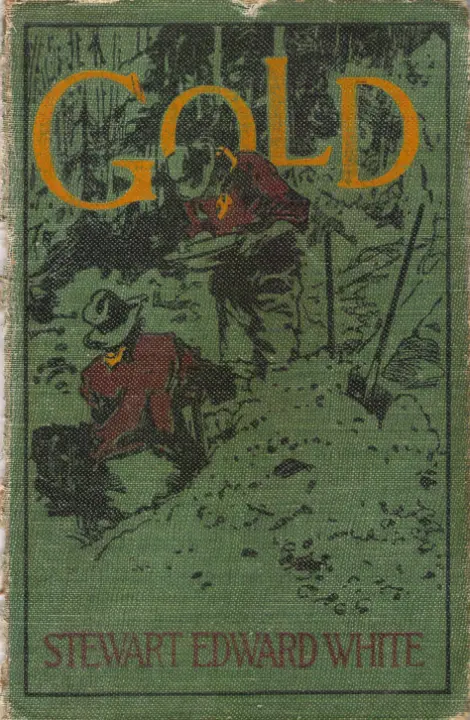
Stewart Edward White
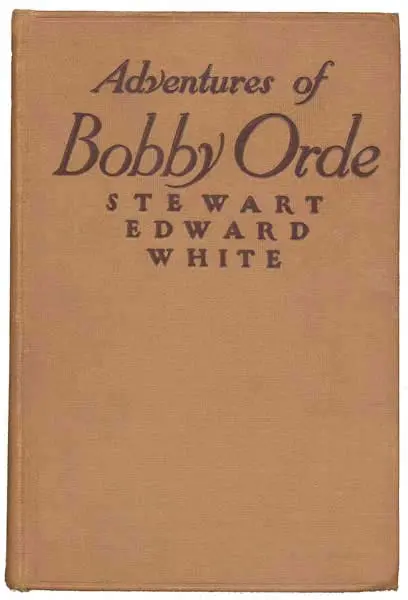
Stewart Edward White
BEHIND THE BOOK
This eBook is for the use of anyone anywhere in the United States and most other parts of the world at no cost and with almost no restrictions whatsoever. You may copy it, give it away or re-use it under the terms of the Project Gutenberg License included with this eBook or online at www.gutenberg.org. If you are not located in the United States, you will have to check the laws of the country where you are located before using this eBook. Read the source licence.
The original source file, including credits and licence, is retained by this library. Request an original-format copy at no charge. Please include the book title and Project Gutenberg identifier #9401.
KEEP YOUR CURIOSITY GOING
Coulson Kernahan

Maurice Baring
Frances Wright
Cécile Tormay

Frederic Jesup Stimson

W. H. P. (William Henry Pope) Jarvis