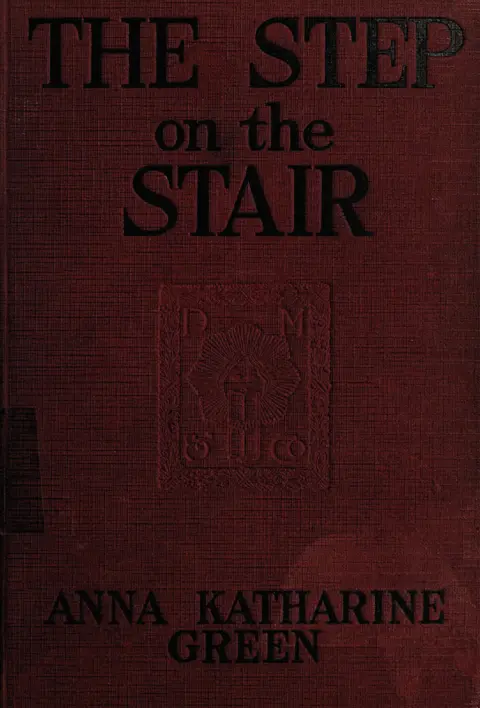
The step on the stair
Anna Katharine Green
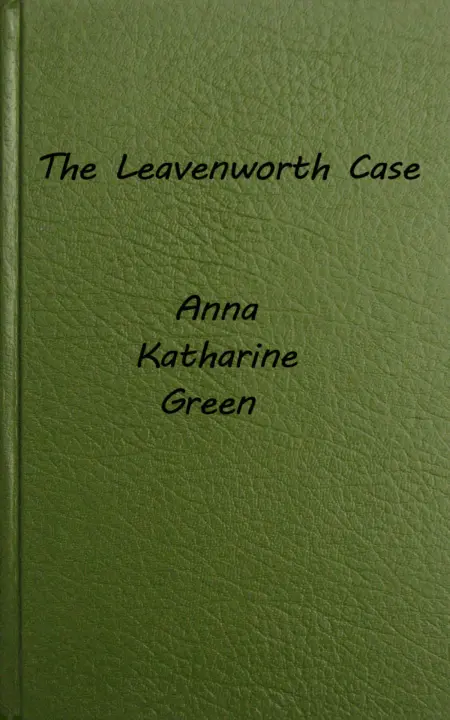
THE CLASSIC COLLECTION · 1878
"The Leavenworth Case" by Anna Katharine Green is a detective novel published in 1878. When wealthy merchant Horatio Leavenworth is found shot dead in his Manhattan mansion's library, detective Ebenezer Gryce and lawyer Everett Raymond investigate a locked-room mystery. No one could have escaped before the body was discovered. Leavenworth's two orphaned nieces, a maid, and a mysterious gentleman all become suspects in this groundbreaking American detective story that influenced Agatha Christie and helped establish conventions still used in mystery fiction today.
Introduction adapted from the source catalogue; source summaries may be automatically generated.
Free to read · English · 111,957 words · No account needed
MAKE TIME FOR A GOOD BOOK
On by default. Untick to stop anonymous reading totals. Each page counts after 10 seconds in view. How this works.
Anonymous counting is on unless you have switched it off.
“It was the night before Mr. Leavenworth’s murder. I had gone to bed feeling especially contented with myself and the world at large; for, though my life is anything but a happy one,” and he heaved a short sigh, “some pleasant words had been said to me that day, and I was revelling in the happiness they conferred, when suddenly a chill struck my heart, and the darkness which a moment before had appeared to me as the abode of peace thrilled to the sound of a supernatural cry, and I heard my name, ‘Trueman, Trueman, Trueman,’ repeated three times in a voice I did not recognize, and starting from my pillow beheld at my bedside a woman. Her face was strange to me,” he solemnly proceeded, “but I can give you each and every detail of it, as, bending above me, she stared into my eyes with a growing terror that seemed to implore help, though her lips were quiet, and only the memory of that cry echoed in my ears.”
“Describe the face,” I interposed.
“It was a round, fair, lady’s face. Very lovely in contour, but devoid of coloring; not beautiful, but winning from its childlike look of trust. The hair, banded upon the low, broad forehead, was brown; the eyes, which were very far apart, gray; the mouth, which was its most charming feature, delicate of make and very expressive. There was a dimple in the chin, but none in the cheeks. It was a face to be remembered.”
“Go on,” said I.
“Meeting the gaze of those imploring eyes, I started up. Instantly the face and all vanished, and I became conscious, as we sometimes do in dreams, of a certain movement in the hall below, and the next instant the gliding figure of a man of imposing size entered the library. I remember experiencing a certain thrill at this, half terror, half curiosity, though I seemed to know, as if by intuition, what he was going to do. Strange to say, I now seemed to change my personality, and to be no longer a third party watching these proceedings, but Mr. Leavenworth himself, sitting at his library table and feeling his doom crawling upon him without capacity for speech or power of movement to avert it. Though my back was towards the man, I could feel his stealthy form traverse the passage, enter the room beyond, pass to that stand where the pistol was, try the drawer, find it locked, turn the key, procure the pistol, weigh it in an accustomed hand, and advance again. I could feel each footstep he took as though his feet were in truth upon my heart, and I remember staring at the table before me as if I expected every moment to see it run with my own blood. I can see now how the letters I had been writing danced upon the paper before me, appearing to my eyes to take the phantom shapes of persons and things long ago forgotten; crowding my last moments with regrets and dead shames, wild longings, and unspeakable agonies, through all of which that face, the face of my former dream, mingled, pale, sweet, and searching, while closer and closer behind me crept that noiseless foot till I could feel the glaring of the assassin’s eyes across the narrow threshold separating me from death and hear the click of his teeth as he set his lips for the final act. Ah!” and the secretary’s livid face showed the touch of awful horror, “what words can describe such an experience as that? In one moment, all the agonies of hell in the heart and brain, the next a blank through which I seemed to see afar, and as if suddenly removed from all this, a crouching figure looking at its work with starting eyes and pallid back-drawn lips; and seeing, recognize no face that I had ever known, but one so handsome, so remarkable, so unique in its formation and character, that it would be as easy for me to mistake the countenance of my father as the look and figure of the man revealed to me in my dream.”
Your reading position is saved on this browser. Take it to another device with a library code. Reading pages adapt to text, rather than matching a printed edition.
Anna Katharine Green

Anna Katharine Green
Anna Katharine Green
Anna Katharine Green
BEHIND THE BOOK
This eBook is for the use of anyone anywhere in the United States and most other parts of the world at no cost and with almost no restrictions whatsoever. You may copy it, give it away or re-use it under the terms of the Project Gutenberg License included with this eBook or online at www.gutenberg.org. If you are not located in the United States, you will have to check the laws of the country where you are located before using this eBook. Read the source licence.
The original source file, including credits and licence, is retained by this library. Request an original-format copy at no charge. Please include the book title and Project Gutenberg identifier #4047.
KEEP YOUR CURIOSITY GOING
Coulson Kernahan

Maurice Baring
Frances Wright
Cécile Tormay

Frederic Jesup Stimson

W. H. P. (William Henry Pope) Jarvis