THE CLASSIC COLLECTION✦Marsena, and Other Stories of the WartimeCLASSIC FREE BOOKS
Marsena, and Other Stories of the Wartime
Harold Frederic
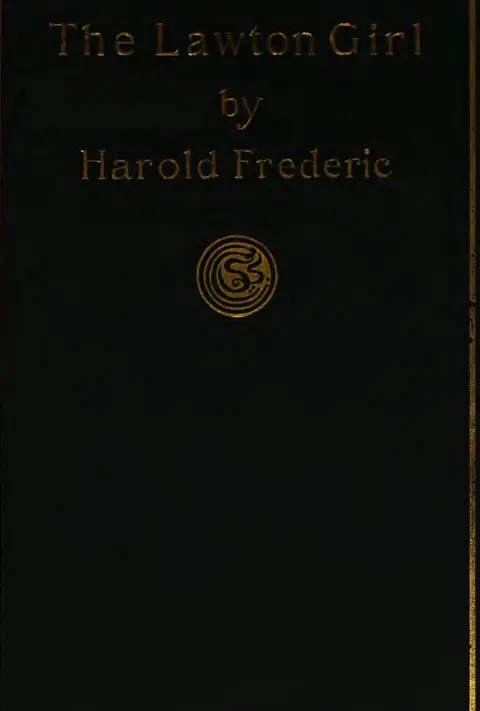
THE CLASSIC COLLECTION · 1890
"The Lawton Girl" by Harold Frederic is a novel written in the late 19th century. The story revolves around Jessica Lawton, a young woman returning to her hometown of Thessaly after a period of self-imposed exile, bringing with her the burdens of a troubled past. As Jessica navigates her way back into a community rife with judgment and prejudice, she finds herself entangled with significant figures like the wealthy Mr. Boyce and her former teacher, Reuben Tracy. At the start of the novel, we are introduced to Jessica Lawton's tumultuous return to Thessaly, a place that once felt grand but now seems small and alienating. Her father, Ben Lawton, struggles with his responsibilities and the weight of their family's past, while Jessica wrestles with her emotions upon encountering the townspeople and reconciling her former life with her present. As she seeks to redefine herself in a society that remembers her as the "prodigal daughter," the opening chapters set the tone for a complex examination of family, societal expectations, and personal redemption. The interactions of the characters hint at themes of love, societal judgment, and the struggle to reinvent oneself against the backdrop of a community steeped in gossip and scrutiny.
Introduction adapted from the source catalogue; source summaries may be automatically generated.
Free to read · English · 116,036 words · No account needed
MAKE TIME FOR A GOOD BOOK
On by default. Untick to stop anonymous reading totals. Each page counts after 10 seconds in view. How this works.
Anonymous counting is on unless you have switched it off.
Ben’s relations with business, or with industry generally, were of the most remote and casual sort, but he had a lively objective interest in the topic.
“Why, it’s the worst thing that ever happened,” he said, with conviction. “There’s seven hundred men thrown out already” (the figure was really two hundred and twelve), “and more than a thousand more got to git unless they’ll work for starvation wages.”
“It seems very hard,” the girl made reply. The idea came to her that very possibly this would put an extra strain upon the facilities and financial strength of the Resting House.
“Hard!” her father exclaimed, stretching his hands over the stove-top; “them rich people are harder than Pharaoh’s heart. What do them Minsters care about poor folks, whether they starve or freeze to death, or anything?”
“Oh, it is the Minsters, you say!” Jessica looked up now, with a new interest. “Sure enough, they own the furnaces. How could they have done such a thing, with winter right ahead of us?”
“It’s all to make more money,” put in Lucinda. “Them that don’t need it’ll do anything to get it. What do they care? That Kate Minster of yours, for instance, she’ll wear her sealskin and eat pie just the same. What does it matter to her?”
“No; she has a good heart. I know she has,” said Jessica. “She wouldn’t willingly do harm to any one. But perhaps she has nothing to do with managing such things. Yes, that must be it.”
“I guess Schuyler Tenney and Hod Boyce about run the thing, from what I hear,” commented the father. “Tenney’s been bossing around since summer begun, and Boyce is the lawyer, so they say.”
Ben suddenly stopped, and looked first at Jessica, then at Lucinda. Catching the latter’s eye, he made furtive motions to her to leave the room; but she either did not or would not understand them, and continued stolidly at her work.
“That Kate you spoke about,” he went on stum-blingly, nodding hints at Lucinda to go away as he spoke, “she’s the tall girl, with the black eyes and her chin up in the air, ain’t she?”
“Yes,” the two sisters answered, speaking together.
“Well, as I was saying about Hod Boyce,” Ben said, and then stopped in evident embarrassment. Finally he added, confusedly avoiding Jessica’s glance, “‘Cindy, won’t you jest step outside for a minute? I want to tell your sister something--something you don’t know about.”
“She knows about Horace Boyce, father,” said Jessica, flushing, but speaking calmly. “There is no need of her going.”
Your reading position is saved on this browser. Take it to another device with a library code. Reading pages adapt to text, rather than matching a printed edition.
Harold Frederic
Harold Frederic
Harold Frederic
Harold Frederic
BEHIND THE BOOK
This eBook is for the use of anyone anywhere in the United States and most other parts of the world at no cost and with almost no restrictions whatsoever. You may copy it, give it away or re-use it under the terms of the Project Gutenberg License included with this eBook or online at www.gutenberg.org. If you are not located in the United States, you will have to check the laws of the country where you are located before using this eBook. Read the source licence.
The original source file, including credits and licence, is retained by this library. Request an original-format copy at no charge. Please include the book title and Project Gutenberg identifier #55339.
KEEP YOUR CURIOSITY GOING
Coulson Kernahan

Maurice Baring
Frances Wright
Cécile Tormay

Frederic Jesup Stimson

W. H. P. (William Henry Pope) Jarvis