
The Writing of News A Handbook with Chapters on Newspaper Correspondence and Copy Reading
Charles G. (Charles Griffith) Ross
THE CLASSIC COLLECTION · 1864
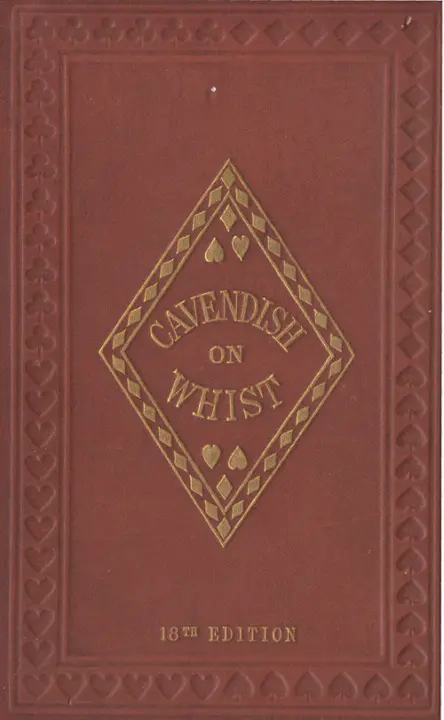
"The Laws and Principles of Whist Stated and Explained" by Cavendish is a comprehensive treatise on the card game Whist, written in the late 19th century. This work aims to address common deficiencies in existing texts about Whist by providing not just the rules, but also valuable principles behind the gameplay, including strategic illustrations through complete hands. It serves both novices and seasoned players seeking to improve their understanding of the game. The opening of the book features an illustrated frontispiece and dedicates itself to the historical context of Whist, followed by a preface explaining the author's intentions. The author notes that existing materials often present principles as arbitrary conventions without adequate justification, which this work seeks to remedy. The preface encourages readers to familiarize themselves with the fundamental rules of play before delving into the principles outlined in the book, effectively setting the stage for a detailed exploration of Whist’s mechanics and strategic concepts.
Introduction adapted from the source catalogue; source summaries may be automatically generated.
Free to read · English · 56,826 words · No account needed
MAKE TIME FOR A GOOD BOOK
On by default. Untick to stop anonymous reading totals. Each page counts after 10 seconds in view. How this works.
Anonymous counting is on unless you have switched it off.
REMARK (Trick 7).--This is strong illustration of a case for departing from rule. Y can count two more trumps, and three more spades in A's hand (see A's leads, Tricks 3 and 6, and p. 116). It is clear that A can have at most two hearts; consequently, if Y leads his tierce major in hearts, he must lose the game, as the opponents have two by honours. But, if Y can give his partner the lead, and Z has four more clubs, or the winning club, and A makes the mistake of trumping it, YZ may make every trick, and win the game.
Y would be right to play as he does even if A had led from only four spades. With a strong trump hand declared against, and a long weak suit, it is doubtful whether A should not have led the deuce of spades at Trick 3 (see Appendix A); but the hand is given as it was played.
TRICKS 9 to 13.--Z continues to lead clubs (see his hand below), and whether A passes or trumps,
YZ score four by cards.
(Y's hand is given above.)
A'S HAND. | B'S HAND. | Z'S HAND. Knv, 9, 5, 3, 2 ♠|Kg, Qn, 10, 8, 7 ♠|Ace, 6 ♠ 8, 7 ♡|Knv, 6, 5 ♡|9, 4, 3 ♡ Kg ♣|9, 4, 3 ♣|A, Qn, Knv, 10, 6, 5, 2 ♣ Ace, Qn, 9, 6, 4 ♢|Knv, 2 ♢|5 ♢
See Leading from weakest suit, p. 141.
REMARK.--By the first discard Z shows his strong suit to be spades. In an ordinary hand, Z might afterwards throw a diamond. But here, Y must be strong in diamonds, in order to save the game; and it is important for Z to keep the power of leading that suit more than once.
REMARK.--B covers the honour, because the lead was from weakness. B plays badly; he should have passed the knave. For, A has shown four more trumps, and only one other trick is required. Hence, if A has ace or king of spades, the game is won to a moral certainty; if not, no good is got by covering.
TRICKS 11 to 13.--A, with the lead, remains with the last trump and king, knave of diamonds. He (Trick 11) leads the trump; but, whatever he plays,
YZ win the odd trick.
(Z's hand is given above.)
A'S HAND. | Y'S HAND. | B'S HAND. Kg ♠|Knv, 8, 5 ♠|Qn, 9 ♠ Kg, 4 ♡|Ace, 5, 2 ♡|Knv, 10, 9, 8, 7 ♡ Kg, 10, 9, 8, 7, 6, 2 ♣|Qn, 4, 3 ♣|Ace, Knv ♣ Kg, Knv, 9 ♢|Ace, Qn, 10, 2 ♢|7, 6, 4, 3 ♢
A plays well throughout, but he cannot prevent the result. His lead of the trump at Trick 3 to show his strength, and to tell his partner to make one trick certain if he has the chance, is unlucky, as it puts the adversaries on the only tack for saving the game.
See Treating long suits like short ones, pp. 142, 143.
Your reading position is saved on this browser. Take it to another device with a library code. Reading pages adapt to text, rather than matching a printed edition.
BEHIND THE BOOK
This eBook is for the use of anyone anywhere in the United States and most other parts of the world at no cost and with almost no restrictions whatsoever. You may copy it, give it away or re-use it under the terms of the Project Gutenberg License included with this eBook or online at www.gutenberg.org. If you are not located in the United States, you will have to check the laws of the country where you are located before using this eBook. Read the source licence.
The original source file, including credits and licence, is retained by this library. Request an original-format copy at no charge. Please include the book title and Project Gutenberg identifier #51039.
KEEP YOUR CURIOSITY GOING
Charles G. (Charles Griffith) Ross
Hannah Webster Foster

Emily Lawless
Edwin Hamlin Carr

Charles De Lano Hine
Andrew Ure