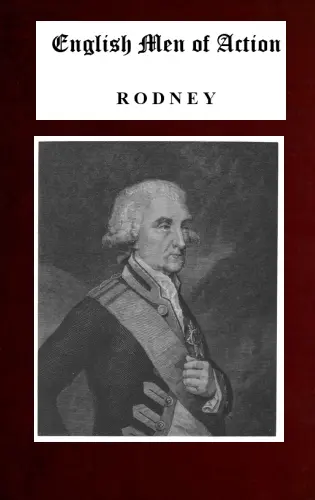
Rodney
David Hannay
THE CLASSIC COLLECTION · 1898
"The Later Renaissance" by David Hannay is a historical account written in the late 19th century. The book surveys the literary developments in Spain during the later Renaissance period, focusing particularly on the characteristics of Spanish literature, its influences, and its divisions, including its unique blend of indigenous and imitative poetry. Through its exploration of significant literary figures and movements, it seeks to demonstrate how this national literature embodied the complexities of Spanish cultural identity. The opening of the book establishes a framework for understanding Spanish literature within the context of the Renaissance. It emphasizes the unity of Spanish literature during the Golden Age, drawing attention to the contributions from the fifteenth century and the various influences that shaped its evolution. Hannay notes the significant interplay between native and foreign elements, particularly the influence of Italian literature, while emphasizing how Spanish writers expressed their distinct national character through poetry, prose, and drama. The text sets the stage for detailed examinations of specific genres and authors, including discussions on the learned poets and the richness of Spanish verse.
Introduction adapted from the source catalogue; source summaries may be automatically generated.
Free to read · English · 105,106 words · No account needed
MAKE TIME FOR A GOOD BOOK
On by default. Untick to stop anonymous reading totals. Each page counts after 10 seconds in view. How this works.
Anonymous counting is on unless you have switched it off.
[SN: Contemporaries and followers of Lope.]
This predominance of the Luca fa presto of literature may have been a misfortune, though when the conditions are remembered, and the innate indifference of the Spaniard to artistic finish is allowed for, an inevitable one. We must accept it and its consequences. One of them is this, that after Lope de Vega there could be no room for historical development on the Spanish stage. Calderon was a different man writing the same drama. There is no such difference between these two as between Shakespeare and Ben Jonson; and nowhere in Spanish dramatic literature is there anything answering to the contrast between the Elizabethan and the Restoration stages. The division often made between the school of Lope and the school of Calderon is very arbitrary. It is largely a matter of date. The earlier men are classed with the first, and the later with the second. To find a distinction between them it is necessary to insist on mere matters of detail, or on such purely personal differences of genius and character as must always be found where there is life among a large body of men. The rule of a literary as of a political despot may cramp as well as support. It is possible that if they had not been overshadowed by the Marvel of Nature his contemporaries might have developed with more freedom. None of them may seem to have suffered more from the consecration of hasty writing than Gabriel Tellez (1570?-1648), known in literature as the Maestro Tirso de Molina, a churchman, who died as head of a religious house at Soria. Tirso de Molina may be said to live on the universal stage of the world as the first creator of Don Juan.[31] One of his plays, The Vengeance of Tamar, contains a scene of very high tragic power--that in which the outraged sister waits veiled outside the tent prepared by Absalom for the slaughter of his brother. She has a long double-edged dialogue with the offender, full of warnings of doom intelligible to the audience, but misunderstood by him, and when he has gone to his fate her soliloquy is a fine example of the legitimate dramatic use of the chorus. There is a certain quiet in this scene, a reserve, and an appeal not to the mere passion for seeing something going on, but to the emotions of pity and terror, which is rare indeed on the amusing, but too often noisy and shallow, Spanish stage. Calderon, using the freedom of a Spanish dramatist, conveyed the whole act into his Hairs of Absalom. One is inclined to think that the playwright who first rough-hewed the universally true character of Don Juan might, if he had felt called upon to finish as well as to imagine and sketch, have also given us the finished type of the debauchee whom the pursuit of his own pleasure has made a violator and brute, all the more odious because there is on him an outward show of gallantry and high-breeding. Tirso’s Marta la Piadosa--‘The Pious Martha’--has been most absurdly compared to Tartuffe. It is the story of a lively young lady who affects a passion for good works and a vow of charity in order to escape a disagreeable marriage, and is in other respects the usual comedia de capa y espada. Yet there is a power of characterisation in it, a liveliness and a genial humanity, which need little to be the most accomplished comedy. But it misses of what it might have reached, and we may say that it failed because his audience, and the taste of his time, called upon Tirso for nothing better than hasty work. In Guillen de Castro (1569-1631), again, the friend of Lope at Valencia, we find the same contrast between a vigorous original force of imagination, with great powers of presentment, and a sudden drop into what no doubt pleased the “musketeers,” but is now only worth looking at because it did. His Youth of the Cid, which up to a certain point supplied Corneille with more than a model, falls to puerile miracle and ends incoherently. Juan Ruiz de Alarcon reached very high comedy. His Verdad Sospechosa--‘The Doubted Truth’--has had a great progeny on the stage of the world. All the romancing liars--they who lie not for sordid ends but by imagination, and from a love of shining, or getting out of the immediate difficulty--who follow one another on all theatres, may claim descent from his hero. But Alarcon was not popular, and he also could be hasty. The list of names might easily be swollen in a country which counted its known dramatic writers at certain periods by sixties and seventies, but nothing would be gained for the understanding of the school by the repetition.[32]
Your reading position is saved on this browser. Take it to another device with a library code. Reading pages adapt to text, rather than matching a printed edition.
David Hannay
David Hannay
BEHIND THE BOOK
This eBook is for the use of anyone anywhere in the United States and most other parts of the world at no cost and with almost no restrictions whatsoever. You may copy it, give it away or re-use it under the terms of the Project Gutenberg License included with this eBook or online at www.gutenberg.org. If you are not located in the United States, you will have to check the laws of the country where you are located before using this eBook. Read the source licence.
The original source file, including credits and licence, is retained by this library. Request an original-format copy at no charge. Please include the book title and Project Gutenberg identifier #52802.
KEEP YOUR CURIOSITY GOING
Cécile Tormay

Moritz Busch
John L. Ransom
Frances Wright
Cécile Tormay

Mabel Potter Daggett