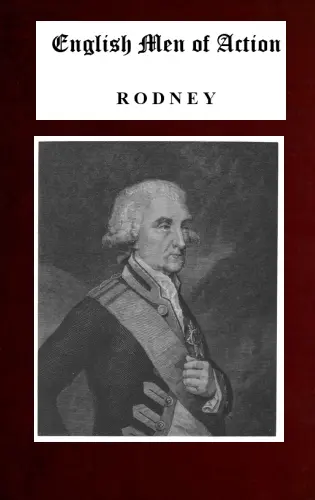
Rodney
David Hannay
THE CLASSIC COLLECTION · 1898
"The Later Renaissance" by David Hannay is a historical account written in the late 19th century. The book surveys the literary developments in Spain during the later Renaissance period, focusing particularly on the characteristics of Spanish literature, its influences, and its divisions, including its unique blend of indigenous and imitative poetry. Through its exploration of significant literary figures and movements, it seeks to demonstrate how this national literature embodied the complexities of Spanish cultural identity. The opening of the book establishes a framework for understanding Spanish literature within the context of the Renaissance. It emphasizes the unity of Spanish literature during the Golden Age, drawing attention to the contributions from the fifteenth century and the various influences that shaped its evolution. Hannay notes the significant interplay between native and foreign elements, particularly the influence of Italian literature, while emphasizing how Spanish writers expressed their distinct national character through poetry, prose, and drama. The text sets the stage for detailed examinations of specific genres and authors, including discussions on the learned poets and the richness of Spanish verse.
Introduction adapted from the source catalogue; source summaries may be automatically generated.
Free to read · English · 105,106 words · No account needed
MAKE TIME FOR A GOOD BOOK
On by default. Untick to stop anonymous reading totals. Each page counts after 10 seconds in view. How this works.
Anonymous counting is on unless you have switched it off.
The early sixteenth century in Spain was not barren in prose-writers, mostly didactic, and also for the most part imitators of the Italians. Francisco de Villalobos, of whom little is known except that he was doctor to Ferdinand the Catholic and the Emperor Charles V., and Fernan Perez de Oliva of Córdova (1492-1530), are the best remembered of the class. But the Problems of the first, and the treatise on the Dignity of Man of the second, are mainly notable as examples of the growing wish to write Castilian for serious purposes.[2]
[SN: The Spanish tongue.]
But a more interesting proof of the care the Spaniards were giving to their language is to be found in the Diálogo de la Lengua[3]--Talk about our Language, as it may be freely but not inaccurately translated. [SN: The Diálogo de la Lengua.] This little book appears to have been written about, and perhaps a little after, 1530, but was not printed till Mayans included it in his Origenes de la Lengua Castillana in the last century. There is strong internal evidence to show that it was the work of one Juan de Váldes, a Spaniard belonging to the colony settled in Naples, a Castilian by birth, and a member of the doubtfully orthodox society collected round Vittoria Colonna. Juan de Váldes himself is included in the short list of Spanish Protestants, and his heterodoxy accounts for the length of time during which his work remained in manuscript. He smelt of the fagot, as the French phrase has it. All who possess even a slight acquaintance with the literary habits of the sixteenth and seventeenth centuries are aware that we must not draw from the fact that work remained in manuscript the deduction that it was little known. The Diálogo de la Lengua was never quite forgotten. It is in itself somewhat disappointing, being altogether narrower in scope and less ambitious in aim than Joachim du Bellay’s Défense et Illustration de la Langue française, published in 1549. Much of it is devoted to nice points in the use of words, while the scholarly, perhaps also the patriotic, leanings of Váldes led him to assume the untenable position that the few Greek colonies on the Mediterranean coast of Spain had spread the use of their language all over the country before it was displaced by the Latin. But though the Diálogo is not, like the Défense, a great literary manifesto, and though its learning is at times fantastic, it has some intrinsic interest, and no small value as a piece of evidence. That exceedingly difficult literary form the dialogue is very fairly mastered. The four speakers--two Spaniards and two Italians--who take part in the conversation have a distinct dramatic reality, and the tone of talk, familiar, occasionally even witty in form, but serious in substance, is well maintained. The scheme is that three of a party of four gentlemen who are spending a day at a villa on the Bay of Naples join in a friendly conspiracy to draw the fourth, whose name, by the way, is Váldes, into expounding to them, before they take horse to return to the city, how a cultivated man ought to speak and write Castilian. The doctrine of Váldes differs significantly from the lesson enforced by Joachim du Bellay. He does not call upon his countrymen to go forth to the conquest of the haughty Greeks and Romans. On the contrary, it is his contention that although the vocabulary requires refining, and the grammar needs to be better fixed, the language is already as fit for every purpose of literature as the Italian, or even as the classic tongues. With the pride of a genuine Spaniard he seeks his examples in the refranes, the proverbs and proverbial phrases. He makes free use of the collection formed in the fifteenth century by the Marquess of Santillana, who gathered the traditional sayings “from the old women sitting round the hearth.” Váldes may be held to have given evidence in support of his own belief in the maturity of the language. The Castilian of the Diálogo has very little in it that is antiquated, and where it differs from the modern tongue it is in being more terse and manly. His literary doctrine, which is rather indicated than expounded, would have commended itself to our Queen Anne men. To be simple and direct, to avoid affectation, to prefer at all times the natural and straightforward way of saying what you have to say--that is the advice of Juan de Váldes. Withal, he has no squeamish dislike of the common, when, as in the case of his beloved proverbs, it is also pure Spanish. The principles of Váldes might have been fatal to a stately and embroidered eloquence (of which Castilian has in any case no great store), but they would preserve a literature from the affected folly of Góngorism on the one hand, and from the grey uniformity of general terms, which was the danger incident to the classic literature of the eighteenth century.
Your reading position is saved on this browser. Take it to another device with a library code. Reading pages adapt to text, rather than matching a printed edition.
David Hannay
David Hannay
BEHIND THE BOOK
This eBook is for the use of anyone anywhere in the United States and most other parts of the world at no cost and with almost no restrictions whatsoever. You may copy it, give it away or re-use it under the terms of the Project Gutenberg License included with this eBook or online at www.gutenberg.org. If you are not located in the United States, you will have to check the laws of the country where you are located before using this eBook. Read the source licence.
The original source file, including credits and licence, is retained by this library. Request an original-format copy at no charge. Please include the book title and Project Gutenberg identifier #52802.
KEEP YOUR CURIOSITY GOING
Cécile Tormay

Moritz Busch
John L. Ransom
Frances Wright
Cécile Tormay

Mabel Potter Daggett