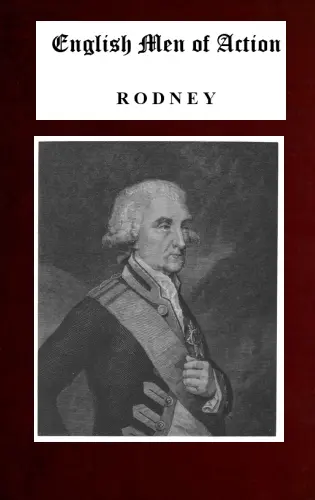
Rodney
David Hannay
THE CLASSIC COLLECTION · 1898
"The Later Renaissance" by David Hannay is a historical account written in the late 19th century. The book surveys the literary developments in Spain during the later Renaissance period, focusing particularly on the characteristics of Spanish literature, its influences, and its divisions, including its unique blend of indigenous and imitative poetry. Through its exploration of significant literary figures and movements, it seeks to demonstrate how this national literature embodied the complexities of Spanish cultural identity. The opening of the book establishes a framework for understanding Spanish literature within the context of the Renaissance. It emphasizes the unity of Spanish literature during the Golden Age, drawing attention to the contributions from the fifteenth century and the various influences that shaped its evolution. Hannay notes the significant interplay between native and foreign elements, particularly the influence of Italian literature, while emphasizing how Spanish writers expressed their distinct national character through poetry, prose, and drama. The text sets the stage for detailed examinations of specific genres and authors, including discussions on the learned poets and the richness of Spanish verse.
Introduction adapted from the source catalogue; source summaries may be automatically generated.
Free to read · English · 105,106 words · No account needed
MAKE TIME FOR A GOOD BOOK
On by default. Untick to stop anonymous reading totals. Each page counts after 10 seconds in view. How this works.
Anonymous counting is on unless you have switched it off.
In this Cancionero there are two elements, destined to very different fates. Hernan del Castillo included eighteen romances in his collection, and they reappeared in subsequent editions. The importance of this word in Spanish literature seems to call for some definition of its scope. The word “romance” bore originally in Spanish exactly the same meaning as in other tongues descended from the Latin. It was the vernacular, and to write en romance was to write Castilian, Galician, or Catalan. “Ni romance ni romano”--neither Romance nor Roman--is a phrase bearing more or less the meaning of our “neither rhyme nor reason.” But little by little, by use and wont, it came about the end of the sixteenth century to be applied exclusively to the form of verse dearest and most native to the Spaniard, the already mentioned trochaic eight-syllable assonant metre. As the ancient ballads are mainly, though not exclusively, written in this form, they are called romances. Yet to write romances does not necessarily mean to write ballads, but only to write in that metre, whether in the dialogue of a play or in long narrative poems, or for any other purpose.
The assonant metre, as is well known, is not peculiar to Spain. It may well have been imported into Castile from France by those churchmen to whom the country owes so much of its architecture, what learning it had, and its civilisation when it began to revive from the merely martial barbarism produced by the Moorish conquest. But if the Spaniard did indeed take the assonant metre from his French teachers, he soon subjected it to that process which all forms of verse are apt to undergo in his hands. He released it from shackles, and gave it a freedom amounting to licence. The romance is a loose-flowing rhythm, in which the rhyme is made by the last accented vowel. Sometimes the same vowel is used line after line until it is exhausted. More commonly the assonant comes in alternate lines. As a rule there is no division into stanzas, but the verse runs on till the speech is ended, or the tale is told. To this there are, however, exceptions, and the romance is divided into redondillas--that is, roundels or staves of four lines, assonanced either alternately, or the first with the fourth and the second with the third, or into quintillas of five lines, with an assonant in three. The recalcitrance of the Spaniard to all limitations in verse-making has caused him to give a very wide range indeed to the assonant. The vowel u is allowed to rhyme with o, and i with e, though they have a very different sound and force. The Spaniard, again, allows a diphthong to be assonant to a vowel, although he pronounces both the vowels in his diphthongs. It will be seen that such verse as this can be written with extreme facility. Indeed it is a byword in Spain that nothing is easier than to write romances--badly. The difficulty, in fact, is to avoid writing them in prose; and it is no small one, when the ear of a people finds a rhyme in so faint a similarity of sound, and in a language in which the accent is at once so pronounced and as little varied. It is not, I trust, superfluous to add that in Castilian, which we call Spanish, there is a marked accent in the last syllable of words ending in a consonant, on the penult of words ending in a vowel, while a limited number of words are esdrujulo--that is, accented on the antepenult. The addition of a syllable to form the plural, or of the adverbial termination mente, does not alter the place of the accent. These rules, though nowise severe, are not rigidly followed. Not infrequently the assonant rhyme falls into the full or consonant rhyme, while the liesse or stave formed on one vowel, and its equivalents, is broken by a line corresponding to nothing. Even the rule requiring the use of eight syllables is applied with restrictions,--an accented syllable at the end counts as two, while two unaccented syllables rank only as one. It must be acknowledged that this metre is unsatisfactory to an ear attuned to the melody of English poetry. In our language it renders hardly a tinkle. When we have become accustomed to it in Castilian--and until we do it tantalises with a sense of something wanting--its highest virtue seems to be that it keeps the voice of the speaker in a chanted recitative. It is more akin to numbered prose than to verse.
Your reading position is saved on this browser. Take it to another device with a library code. Reading pages adapt to text, rather than matching a printed edition.
David Hannay
David Hannay
BEHIND THE BOOK
This eBook is for the use of anyone anywhere in the United States and most other parts of the world at no cost and with almost no restrictions whatsoever. You may copy it, give it away or re-use it under the terms of the Project Gutenberg License included with this eBook or online at www.gutenberg.org. If you are not located in the United States, you will have to check the laws of the country where you are located before using this eBook. Read the source licence.
The original source file, including credits and licence, is retained by this library. Request an original-format copy at no charge. Please include the book title and Project Gutenberg identifier #52802.
KEEP YOUR CURIOSITY GOING
Cécile Tormay

Moritz Busch
John L. Ransom
Frances Wright
Cécile Tormay

Mabel Potter Daggett