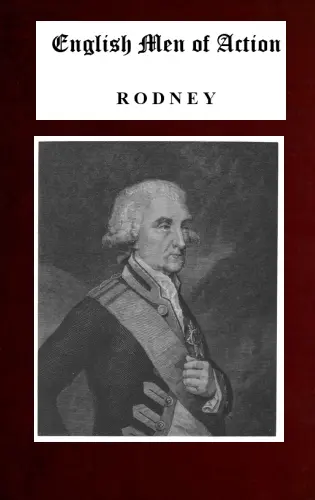
Rodney
David Hannay
THE CLASSIC COLLECTION · 1898
"The Later Renaissance" by David Hannay is a historical account written in the late 19th century. The book surveys the literary developments in Spain during the later Renaissance period, focusing particularly on the characteristics of Spanish literature, its influences, and its divisions, including its unique blend of indigenous and imitative poetry. Through its exploration of significant literary figures and movements, it seeks to demonstrate how this national literature embodied the complexities of Spanish cultural identity. The opening of the book establishes a framework for understanding Spanish literature within the context of the Renaissance. It emphasizes the unity of Spanish literature during the Golden Age, drawing attention to the contributions from the fifteenth century and the various influences that shaped its evolution. Hannay notes the significant interplay between native and foreign elements, particularly the influence of Italian literature, while emphasizing how Spanish writers expressed their distinct national character through poetry, prose, and drama. The text sets the stage for detailed examinations of specific genres and authors, including discussions on the learned poets and the richness of Spanish verse.
Introduction adapted from the source catalogue; source summaries may be automatically generated.
Free to read · English · 105,106 words · No account needed
MAKE TIME FOR A GOOD BOOK
On by default. Untick to stop anonymous reading totals. Each page counts after 10 seconds in view. How this works.
Anonymous counting is on unless you have switched it off.
“The hawtye verse that Maro wrote
made Rome to wonder muche,
And mervayle none for why the style
and weightynes was such,
That all men judged Parnassus Mownt
had clefte herselfe in twayne,
And brought forth one that seemed to drop
from out Minervaes brayne.”
These verses, which are from Barnabe Googe’s Epitaph on Thomas Phayre, are not bad examples of a kind of metre which seems to come naturally to Englishmen, but their capacity for turning to doggerel is patent. They, with here and there a note which shows that if the writer had had the good fortune to be young after, and not before, The Shepherd’s Calendar, he might have contributed to the great body of exquisite Elizabethan songs, make the staple of the verse of the first half of the reign. These men are entitled to their own honour. They rough-harrowed the ground. George Turberville, who was born about 1530 and died about 1594; George Gascoigne, whose dates are 1535 or thereabouts to 1577; and Barnabe Googe, born in 1540, who died in 1594, tried many things; and if they did nothing else, they helped to extend the knowledge of the average Englishman, and to give practice to the language by their translations. The strongest of the three was Gascoigne, who, in addition to his attempt to write a verse satire--The Steel Glass--was the author of some pretty occasional poetry, of a translation of Ariosto’s Gli Suppositi, stories from Bandello, and a tragedy of Euripides, and who may be said to have begun the writing of critical essays in English by his brief note of Instruction for the construction of English verse, published as a preface to The Steel Glass.[61]
[SN: Spenser.]
The sincerity with which the best intellects in England were studying poetry, and looking for a poet, helps to explain the instant recognition of Spenser. At this moment the times called for the man, and he came. Edmund Spenser was born in London, probably in 1552, of a Lancashire branch of a very ancient and famous house. His family was poor, and he received his education at Pembroke Hall, Cambridge, as a sizar. He remained at Cambridge from 1569 to 1573, and it is believed that he then spent some time in the north of England with his family before coming to London to seek his fortune. It could be obtained in one way only--by the favour of friends who could secure him a place. That Spenser was resolved to make poetry the chief aim of his life is certain; but he could not live by it at a time when no form of literature, with the exception of the drama, brought certain payment, and even the drama gave but starvation wages. He had to rely on the willingness of powerful patrons to see him provided for because he was a poet. Spenser was not without friends who might have been useful. At Cambridge he had become known to Gabriel Harvey, who, as the older man, a good scholar, and perhaps also as a person of pragmatical self-confidence and indomitable pertinacity, exercised a certain limited influence over him. Harvey introduced Spenser to Leicester and Leicester’s kinsman, Sir Philip Sidney. His undoubted Puritanism was, it may be, in part learnt from the equally undoubted though very different Puritanism of the queen’s favourite. But Leicester did, and it may be could do, little for his client. The Shepherd’s Calendar was published in 1579, a year or two after Spenser came to London, but he had no share in “the rich fee which poets won’t divide.” There is no need to look far for the causes of his disappointment. Elizabeth had little money, and much to do with it, while her Lord Treasurer, Burghley, who had no love for Leicester, was the man to meet any pensioned poet with the ungracious attitude of Sully to Casaubon: “You are no use, sir, and you cost the king as much as two captains.” In 1580 Spenser accompanied Lord Grey to Ireland, where estates of confiscated land were to be won. From that time he was plunged into the horrible strife between the anarchy of Celtic Ireland and the repression of the queen’s officers, who fought for order with ferocious means. He obtained a grant of land in County Cork, married in 1594, and reached some measure of prosperity. A small but apparently ill-paid pension was granted him. The rebellion of 1598 shattered his fortunes altogether. His house at Kilcolman was burnt in the usual fashion of the brutal Irish wars, and it was said that one of his children perished with it. Spenser fled to England, and died on the 16th January 1599--“for lack of bread,” according to Ben Jonson, and undoubtedly in great poverty.
Your reading position is saved on this browser. Take it to another device with a library code. Reading pages adapt to text, rather than matching a printed edition.
David Hannay
David Hannay
BEHIND THE BOOK
This eBook is for the use of anyone anywhere in the United States and most other parts of the world at no cost and with almost no restrictions whatsoever. You may copy it, give it away or re-use it under the terms of the Project Gutenberg License included with this eBook or online at www.gutenberg.org. If you are not located in the United States, you will have to check the laws of the country where you are located before using this eBook. Read the source licence.
The original source file, including credits and licence, is retained by this library. Request an original-format copy at no charge. Please include the book title and Project Gutenberg identifier #52802.
KEEP YOUR CURIOSITY GOING
Cécile Tormay

Moritz Busch
John L. Ransom
Frances Wright
Cécile Tormay

Mabel Potter Daggett