The Sun of Saratoga: A Romance of Burgoyne’s Surrender
Joseph A. (Joseph Alexander) Altsheler
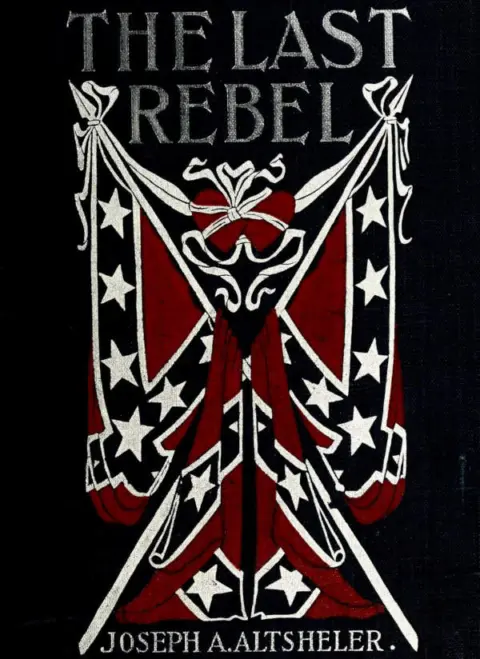
THE CLASSIC COLLECTION · 1898
"The Last Rebel" by Joseph A. Altsheler is a historical novel written in the late 19th century. The book is set during a time when the memory of the American Civil War still looms over the characters and the landscape, particularly focusing on the remnants of the Confederacy. The narrative centers around Arthur West, a New Yorker who finds himself lost in the mountains of Kentucky and unwittingly entangled in the life of Colonel John Greene Hetherill, a fervent old soldier clinging to the ideals of the Confederacy. This tale of adventure and survival delves into themes of loyalty, conflict, and the price of old ideals in a changing world. At the start of the novel, Arthur West is wandering through the wilderness after losing his hunting party. Despite the beauty of the autumn landscape, he feels increasingly isolated and hungry, longing for human companionship. After a series of misadventures, he encounters Colonel Hetherill, who, believing West to be a potential spy, takes him to Fort Defiance. Throughout the beginning, the tension between West’s Northern heritage and Hetherill’s Southern loyalty plays out, revealing the colonel's conflicted nature and providing a backdrop for West’s growing curiosity about the colonel’s daughter, Grace. As the plot unfolds, the reader is thrust into a world of old and new loyalties, culminating in a court-martial that promises to change the lives of all involved.
Introduction adapted from the source catalogue; source summaries may be automatically generated.
Free to read · English · 33,905 words · No account needed
MAKE TIME FOR A GOOD BOOK
On by default. Untick to stop anonymous reading totals. Each page counts after 10 seconds in view. How this works.
Anonymous counting is on unless you have switched it off.
"I think so, too," I said. "It would at least be interesting, if not
important."
The colonel frowned at my flippancy.
"You, sir," he said, addressing me, "who call yourself Arthur West, of New York City, with what truth we know not, are accused of entering the military lines of the Confederacy in civilian's attire for the purpose of spying upon our fortifications, armaments, and other military supplies, and of delivering such information as you might obtain to the enemy. Is not that true, sir?"
"The war is over, colonel," I said. "The Confederacy perished more than
thirty years ago."
"You speak falsely, sir," he said, with some fierceness. "The war is not over, and the Confederacy has not perished. See its flag over your head. I hold my commission from President Jefferson Davis himself, and certainly I have not laid down my arms."
I smiled a little, whistled a bar or two, and gazed at the ceiling. The colonel looked deeply annoyed at my carelessness.
"Be careful, Mr. West," he said. "You are not helping your case by your
conduct."
"Colonel," I said, "come to see me in New York, and I'll show you the
town."
"Enough of such levity," he cried. "Will you or will you not plead to
the charge?"
"Colonel," I said, "it is the 18th of November, 1896, and a very fine
afternoon."
"I have warned you once already that you are prejudicing your own
case," he cried.
"I deny the jurisdiction of the tribunal," I said.
"Your denial goes for nothing," he said. "Do not enter it upon the record, doctor. Will you say what brought you into these mountains?"
"As I have told you several times," I said, "I belong to a hunting-party, and was lost. I did not know I was near Fort Defiance, nor had I ever heard of such a place."
"Let that be entered upon the record, doctor," said the colonel.
"I have it all," said the doctor.
"Crothers," said the colonel, "put upon the table the sketch which I found the prisoner making this morning."
Crothers obeyed.
"What do you call that?" said the colonel to me.
"I would call that," I replied, "a pretty bad picture of Fort Defiance."
My tone was light, and, as usual, my levity seemed to displease the colonel very much. He warned me for the third time that I was injuring my chances, but I was not impressed.
"That sketch," said he, "shows the situation and fortifications of Fort Defiance. You were found drawing it surreptitiously. I ask you again, what have you to say about it?"
Your reading position is saved on this browser. Take it to another device with a library code. Reading pages adapt to text, rather than matching a printed edition.
Joseph A. (Joseph Alexander) Altsheler
Joseph A. (Joseph Alexander) Altsheler
Joseph A. (Joseph Alexander) Altsheler
Joseph A. (Joseph Alexander) Altsheler
BEHIND THE BOOK
This eBook is for the use of anyone anywhere in the United States and most other parts of the world at no cost and with almost no restrictions whatsoever. You may copy it, give it away or re-use it under the terms of the Project Gutenberg License included with this eBook or online at www.gutenberg.org. If you are not located in the United States, you will have to check the laws of the country where you are located before using this eBook. Read the source licence.
The original source file, including credits and licence, is retained by this library. Request an original-format copy at no charge. Please include the book title and Project Gutenberg identifier #58617.
KEEP YOUR CURIOSITY GOING
Cécile Tormay

Moritz Busch
Coulson Kernahan
John L. Ransom

Maurice Baring
Frances Wright