THE CLASSIC COLLECTION✦An outlaw’s diary: the CommuneCLASSIC FREE BOOKS
An outlaw’s diary: the Commune
Cécile Tormay
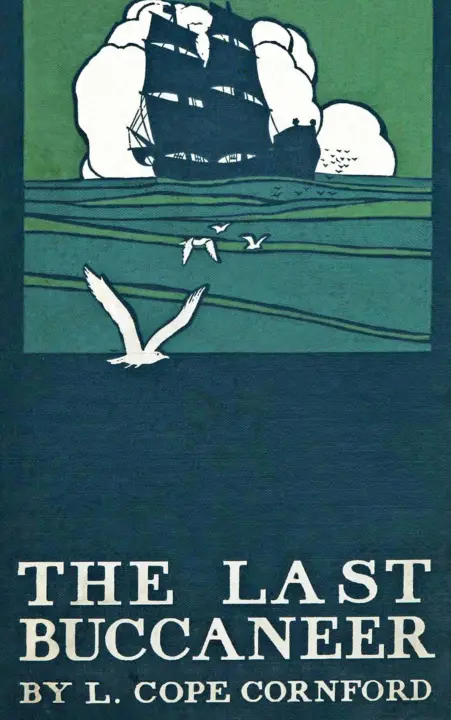
THE CLASSIC COLLECTION · 1902
"The Last Buccaneer: or, The Trustees of Mrs A" by L. Cope Cornford is a historical novel written in the early 20th century. Set against the backdrop of early 18th-century maritime adventures, the story revolves around the lives of several characters, including Brandon Pomfrett, a young clerk with dreams of adventure, and Captain Dawkins, a man with a mysterious past and seafaring prowess. The narrative explores themes of piracy, treasure hunting, and the moral dilemmas faced by those entangled in these pursuits. The opening of the novel introduces readers to Brandon Pomfrett, a clerk yearning for excitement beyond his mundane life in Bristol. As he meets Captain Dawkins, a burly mariner, the two are drawn into an adventure revolving around a long-lost treasure map ignited by a mysterious bottle. They soon find themselves embroiled in schemes that point toward buccaneering exploits, navigating the complex motivations of various characters, including the unscrupulous Mr. Gamaliel. The tone is infused with a sense of foreboding and intrigue, hinting at the consequences of their quests for fortune amid the treacherous currents of the sea and the darker elements of human ambition.
Introduction adapted from the source catalogue; source summaries may be automatically generated.
Free to read · English · 60,757 words · No account needed
MAKE TIME FOR A GOOD BOOK
On by default. Untick to stop anonymous reading totals. Each page counts after 10 seconds in view. How this works.
Anonymous counting is on unless you have switched it off.
“Yes,” continued Dawkins, “I was with Cap’n Henry Morgan at the taking of Panama. Ah, the cap’n had all the luck there was on that v’yage, by all accounts.”
“I’ve heard,” said Morgan Leroux, “that Captain Morgan was accused of embezzling the plunder.”
“I never see the end of the exp’dition,” Dawkins answered, shortly. “So I can’t say as to that, you see.” And Brandon nudged me.
“You don’t know, then, what became of the bar silver?” said Morgan. “The cache of bar silver, eh, Mr Dawkins?”
Dawkins stared at the speaker with an expression of amazement that changed to suspicion. His shaggy, rusty brows shut down over his little eyes, his nostrils dilated, he glanced swiftly to left and right, and back again to Morgan’s placid countenance. She was not even looking at him, but was gazing at the lighted candle that stood between them on the table. So they rested a minute or more, the little yellow flame of the candle swaying gently back and forth with the motion of the vessel, lighting Morgan’s high-coloured, straight-browed face of abstraction, and the hairy, lined, mahogany visage, with the little glinting eyes, opposite. Dawkins was labouring with his muddled intelligence, trying hard to think.
“Now, I wonder, just as a matter of curiosity, what made you ask that there question, shipmate,” said Mr Dawkins, with an elaborate show of indifference, evidently desiring to gain time. Mr Dawkins’s interval of reflection had perhaps suggested to him that Morgan’s question might be merely an innocent enquiry suggested by some old, vague story. There were plenty of wild yarns afloat concerning buried treasure and the like.
“Because,” Morgan replied, with a reckless audacity that made us jump, “that silver belongs to me.”
“Ho, it does, does it,” said Dawkins, after a little uneasy silence. “And how might that be, shipmate, make so humbly bold?” he added, with the ominous politeness we knew.
“Ah, well, you know the saying, Mr Dawkins, ‘the longest liver takes
all.’”
“Seems to me, shipmate,” said Dawkins, with laboured sweetness, “you’re a-talking in riddles. Now, I was never no hand at riddles.”
Without removing his eyes from Morgan, he was stealthily fingering one of the pistols he wore in his cross-belt of silk, after the manner of the pirates. The persuasion that he had been trepanned was working itself clear in his mind.
“No riddle at all, Mr Dawkins,” said Morgan, pleasantly. “Your old commander, Sir Henry Morgan, was my grandfather----”
Dawkins, in his amazement, dropped his hands upon the table and leaned
forward with fallen jaw.
Your reading position is saved on this browser. Take it to another device with a library code. Reading pages adapt to text, rather than matching a printed edition.
BEHIND THE BOOK
This eBook is for the use of anyone anywhere in the United States and most other parts of the world at no cost and with almost no restrictions whatsoever. You may copy it, give it away or re-use it under the terms of the Project Gutenberg License included with this eBook or online at www.gutenberg.org. If you are not located in the United States, you will have to check the laws of the country where you are located before using this eBook. Read the source licence.
The original source file, including credits and licence, is retained by this library. Request an original-format copy at no charge. Please include the book title and Project Gutenberg identifier #74835.
KEEP YOUR CURIOSITY GOING
Cécile Tormay

Moritz Busch
Coulson Kernahan
John L. Ransom

Maurice Baring
Frances Wright