THE CLASSIC COLLECTION✦An outlaw’s diary: the CommuneCLASSIC FREE BOOKS
An outlaw’s diary: the Commune
Cécile Tormay
THE CLASSIC COLLECTION · 1902
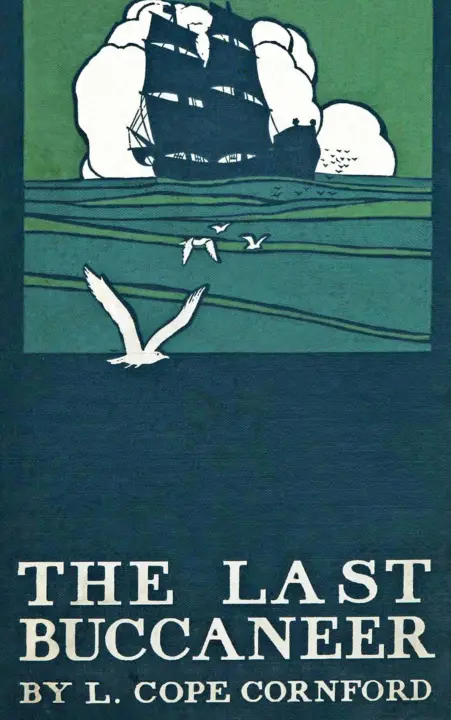
"The Last Buccaneer: or, The Trustees of Mrs A" by L. Cope Cornford is a historical novel written in the early 20th century. Set against the backdrop of early 18th-century maritime adventures, the story revolves around the lives of several characters, including Brandon Pomfrett, a young clerk with dreams of adventure, and Captain Dawkins, a man with a mysterious past and seafaring prowess. The narrative explores themes of piracy, treasure hunting, and the moral dilemmas faced by those entangled in these pursuits. The opening of the novel introduces readers to Brandon Pomfrett, a clerk yearning for excitement beyond his mundane life in Bristol. As he meets Captain Dawkins, a burly mariner, the two are drawn into an adventure revolving around a long-lost treasure map ignited by a mysterious bottle. They soon find themselves embroiled in schemes that point toward buccaneering exploits, navigating the complex motivations of various characters, including the unscrupulous Mr. Gamaliel. The tone is infused with a sense of foreboding and intrigue, hinting at the consequences of their quests for fortune amid the treacherous currents of the sea and the darker elements of human ambition.
Introduction adapted from the source catalogue; source summaries may be automatically generated.
Free to read · English · 60,757 words · No account needed
MAKE TIME FOR A GOOD BOOK
On by default. Untick to stop anonymous reading totals. Each page counts after 10 seconds in view. How this works.
Anonymous counting is on unless you have switched it off.
“A little sitting at the feet of Gamaliel is enough,” said he, when we were out in the foggy dark of the alley. “What a yarn, eh? Do you believe it? I’ve half a mind to. There’s something queer about Mr Dawkins; do you think he’s a pirate himself? I tell you what, come round to the back, and we’ll have another look at ’em without their knowing.”
Pomfrett was better acquainted with the byways of Bristol than I, who was born there. We plunged into the black alley that led behind the Burning Bush. It branched left and right, covert for the hunted of the press-gang. Into the tavern by the back door we crept, and into a side room to the right hand. A tall press and a scrutoire were dimly discernible; it was here, apparently, that Gamaliel sat at his accounts, with an eye upon his customers, for a breast-high partition separated the chamber from the front room we had just quitted. Red curtains were drawn between the ledge of the bulkhead and the ceiling, and we spied upon the pair through a rift in the drapery.
“No prey, no pay. Keep to the rules, you crimping swab.” Mr Dawkins filled the room with his bellowing.
“As you please, Jemmy,” returned Gamaliel’s reedy voice. “I know the rules as well as you, I reckon. You get no more, without you pay for what you got--nor you don’t get that, neither.”
“Now, I ask you fair and candid,” grumbled Dawkins, “have I got a guinea piece in the wide world? You know better than that, Hookey. Here! Hands off that bottle!”
Dawkins jumped to his feet, leaning forward upon the table, his open knife poised on his lifted palm, as Gamaliel caught up the bottle, replaced it swiftly in the cupboard, and turned the key.
“Put down that knife, Jemmy,” said Gamaliel, composedly. “No good ever come of quarrelling among shipmates. Come! Take another glass, and we’ll talk it over comfortable and polite, as gentlemen should.”
He poured out a tot of rum, and Mr Dawkins, with a very ugly look, sat
down again.
“I’ve no objections to a amicable conference, not I,” said Dawkins. “But stakes on the table, I say.”
“Why, of course,” said Gamaliel. “Put down your pretty ring, then, and I put down the bottle.”
“You don’t want much, do you?” said Dawkins. Nevertheless, he moistened his finger and pulled off his ring.
It shone and winked like a star upon the rough board, a great ruby set in brilliants. Gamaliel set the bottle beside it.
Your reading position is saved on this browser. Take it to another device with a library code. Reading pages adapt to text, rather than matching a printed edition.
BEHIND THE BOOK
This eBook is for the use of anyone anywhere in the United States and most other parts of the world at no cost and with almost no restrictions whatsoever. You may copy it, give it away or re-use it under the terms of the Project Gutenberg License included with this eBook or online at www.gutenberg.org. If you are not located in the United States, you will have to check the laws of the country where you are located before using this eBook. Read the source licence.
The original source file, including credits and licence, is retained by this library. Request an original-format copy at no charge. Please include the book title and Project Gutenberg identifier #74835.
KEEP YOUR CURIOSITY GOING
Cécile Tormay

Moritz Busch
Coulson Kernahan
John L. Ransom

Maurice Baring
Frances Wright