
The lost dirigible
Ralph Henry Barbour
THE CLASSIC COLLECTION · 1903
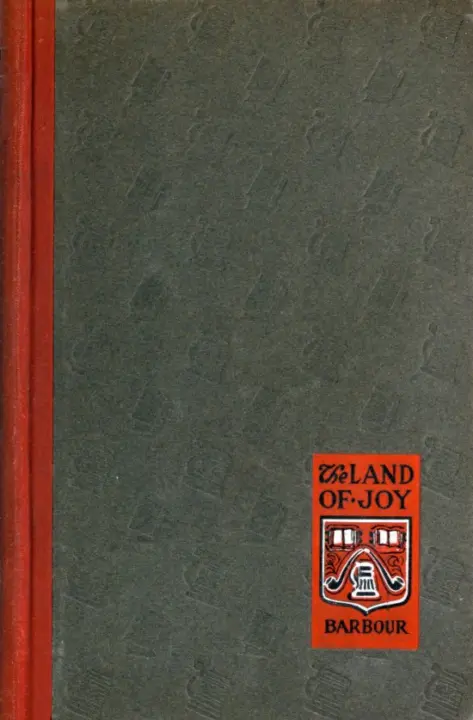
"The Land of Joy" by Ralph Henry Barbour is a novel written in the early 20th century. The story revolves around John North, a college student returning to Harvard for another academic year, and introduces his responsibilities as a mentor to Phillip Ryerson, a fresh and somewhat reckless newcomer from Virginia. The narrative sets the stage for themes of friendship, mentorship, and the challenges of college life as the characters navigate their relationships and the expectations placed upon them. The opening of the novel depicts John North's return from summer vacation to a sweltering Cambridge, where he reflects on his college experiences and the changes he has undergone. He eagerly anticipates the arrival of his friend Phillip, whom he is expected to look after, a task he initially finds burdensome. As John prepares his space and interacts with his surroundings, he expresses a mix of nostalgia and apprehension. The eventual arrival of Phillip introduces a dynamic that promises both humor and conflict, as John learns more about his new ward's background and temperament, setting the stage for their unfolding relationship against the vibrant backdrop of college life.
Introduction adapted from the source catalogue; source summaries may be automatically generated.
Free to read · English · 81,791 words · No account needed
MAKE TIME FOR A GOOD BOOK
On by default. Untick to stop anonymous reading totals. Each page counts after 10 seconds in view. How this works.
Anonymous counting is on unless you have switched it off.
“Not a thing,” he said aloud. “But you wait until next time and I’ll bring you some nuts.” The squirrel seemed to understand, for he squeaked disappointedly and turned tail. Footsteps crossed the grass and Phillip turned.
“I guess he’ll eat peanuts all right.”
A fellow of about Phillip’s age approached. He was a sunny-haired, blue-eyed youth, and Phillip thought he had never seen one cleaner or more wholesome. He smiled genially and held out three or four peanuts.
“Let’s try these on him,” he said. “Here, Sport!”
The squirrel looked doubtfully for an instant at the newcomer, and then his eyes fell on the delicacies and he scrambled down onto the grass and approached bravely.
“Some of them will eat out of your hand,” said the yellow-haired youth. “Come and get them if you want them.”
The squirrel hesitated a moment at arm’s length and then ran forward and seized the nut. Retiring to the foot of the tree, he ate it hurriedly, apparently fearful that the others would escape him if he lingered overlong at the first.
“Tame, aren’t they?” said Phillip.
“Yes. There are lots of them here in the Yard. There’s one chap――he has part of his tail chewed off, so I know him――came up to my window-ledge yesterday and just begged. So I got some peanuts for him. But he hasn’t been around yet to-day, though I saw him in a tree a minute ago. Come on, Sport; here’s another. I can’t wait here all day, you know.”
The invitation was readily accepted and, tossing the rest of the nuts onto the grass, the youth turned away. Phillip followed and the two walked along together, hurrying a little, since the bell had ceased its summons.
“I guess this isn’t your first year?” said the blue-eyed fellow
questioningly.
“It is, though,” answered Phillip.
“Really? I thought――――” He hesitated and then turned a laughing face to the other. “I guess I won’t say it.”
“Go ahead,” begged Phillip. “I can’t see how you could have taken me for an old stager.”
“Well, you looked so kind of don’t-give-a-hang, standing under the tree there, that I thought you were probably a soph. Hope you won’t take that as an insult.”
“No indeed; why should I? I rather wish I was a sophomore, I reckon.”
“Phew! That’s regular treason! Don’t you know that a freshman holds a soph. in the deepest contempt?”
“No, I didn’t know it. Why?”
“Oh――well, just because, I guess. It’s――it’s reciprocal. You have to; it’s part of the game.”
Your reading position is saved on this browser. Take it to another device with a library code. Reading pages adapt to text, rather than matching a printed edition.
Ralph Henry Barbour
Ralph Henry Barbour

Ralph Henry Barbour

Ralph Henry Barbour
BEHIND THE BOOK
This eBook is for the use of anyone anywhere in the United States and most other parts of the world at no cost and with almost no restrictions whatsoever. You may copy it, give it away or re-use it under the terms of the Project Gutenberg License included with this eBook or online at www.gutenberg.org. If you are not located in the United States, you will have to check the laws of the country where you are located before using this eBook. Read the source licence.
The original source file, including credits and licence, is retained by this library. Request an original-format copy at no charge. Please include the book title and Project Gutenberg identifier #57497.
KEEP YOUR CURIOSITY GOING
Cécile Tormay

Moritz Busch
Coulson Kernahan
John L. Ransom

Maurice Baring
Frances Wright