Canada, the Spellbinder
Lilian Whiting
THE CLASSIC COLLECTION · 1906
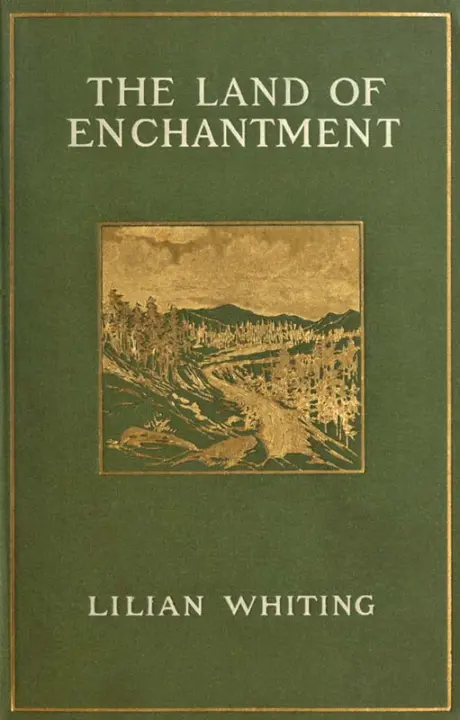
"The Land of Enchantment: From Pike's Peak to the Pacific" by Lilian Whiting is a descriptive travelogue written in the early 20th century. This work explores the breathtaking landscapes and cultural richness of the southwestern United States, particularly focusing on regions such as Colorado, New Mexico, Arizona, and Southern California. The author vividly portrays the beauty and grandeur of these areas, inviting readers to appreciate and consider them as significant travel destinations. The opening of the book sets the stage for a journey through these enchanting regions. Whiting asserts that many Americans overlook the scenic wonders within their own country, instead favoring European travels. She highlights the unique geological and natural phenomena of the Southwest, such as Pike's Peak, the Grand Canyon, and the Petrified Forest, emphasizing their scientific and aesthetic significance. The narrative encourages an adventurous spirit, inviting readers to experience the vivid sunsets, the rich flora and fauna, and the cultural allure of the diverse inhabitants that characterize this remarkable landscape.
Introduction adapted from the source catalogue; source summaries may be automatically generated.
Free to read · English · 84,291 words · No account needed
MAKE TIME FOR A GOOD BOOK
On by default. Untick to stop anonymous reading totals. Each page counts after 10 seconds in view. How this works.
Anonymous counting is on unless you have switched it off.
Irrigation is developed to its highest excellence in Northern Colorado and in the valley of the Arkansas River. These regions have been the longest under irrigated culture, and their value is increasing rapidly. Each year sees the agriculturist grow more conservative in his use of water, and the quantity thus saved has been applied to new lands. Thus, in an interesting and quite undreamed-of way, a problem that incited discord and dissension, that promised only to increase inevitably as larger territories of land and their correspondingly increased irrigation should be held, was brought to a peaceful solution. Continued litigation, and a great pressure to secure legislative restrictions of the use of water supply, and the constant irritation and turmoil involved in these disputes, were all, happily, laid to rest by the discovery of the farmers themselves that extravagance in the use of water was not conducive to their own prosperity. In the matter of flood waters the irrigation experts of the state are quite generally meeting the condition in their own way. Storage reservoirs are dotting the irrigation systems at frequent intervals, and in the dry months the supply piled up behind the cement dams is drawn off to furnish the final necessary moisture for the maturing of the crops.
Another possibility of irrigation that is receiving the attention of engineers is the utilization of the streams for power purposes. In many cases the power thus generated will be made to accomplish marvellous feats in the way of construction, as in the instance at Grand River, already described.
One of the special journeys in Colorado is that called a "trip around the circle," affording more than a thousand miles among the mountains within four days' time; but a permission for ten days is available, thus affording several detours by stage, which penetrate into the most sublime regions. The abysmal depth of five of the great cañons; many of the noted mountain passes; great mining camps, with their complicated machinery; cliff dwellings, vast plateaus, and stupendous peaks; Indian reservations; the icy crevasses a thousand feet in depth; the picturesque "Continental Divide," from which one looks down on a thousand mountain peaks, where the vast Cordilleras in their rugged grandeur are seen as a wide plain; the beautiful Sangre de Cristo ("Blood of Christ") range; the sharp outlines of the Spanish Peaks, rising twelve and thirteen thousand feet into the air; beautiful meadow lands where the blue and white columbine, the state flower of Colorado, blooms in profusion, and the tiger lily, the primrose, and the "shooting stars" blossom,--all these are enjoyed within the "circle" trip; and it also includes Leadville, the "city above the clouds," Durango, Ouray, Gunnison, and other interesting towns. It offers a near view of the Mount of the Holy Cross, which strange spectacle is made by the snow deposits in transverse, gigantic cañons,--the perpendicular one being fifteen hundred feet, while the transverse cross is seven hundred and fifty feet in length; of Lost Cañon, a novelty even in a land of cañons; and of the Rio de Las Animas Perditas, old Fort Lewis, the valley of Dolores River, a region of early Spanish discovery; of Black Cañon and Cimarron Cañon and Grand River Cañon, whose walls rise to the height of more than twenty-five hundred feet;--all these are but the merest outline and hint of the scenic wonders compassed within the circle trip. Up the cañons the train climbs; through narrow gorges with overhanging rocks, on and on, till a plateau is reached; then more cañons, more climbing, more peaks towering into the skies, and waterfalls chiming their music. As even an enthusiast in scenery cannot entirely subsist on stars, sunsets, and silences, the luxurious comforts of these trains enhance one's enjoyment. A dining-car is always on, and the excellence of the food and the moderate prices for all this perfect comfort and convenience are features the traveller appreciates. That dance of the Brocken which one fancies he sees in the fantastic sandstone formations on the mountain's side on the romantic route to Glenwood Springs is occasionally duplicated in other cañons, where these strange rocks resolve themselves, with the aid of the mysterious lights and shadows, into a dance of witches, and every shape springs to life. The train rushes on, and one leaves them dancing, confident that although these figures may be stationary by day, they dance at night. Another mountain slope of the sandstone shows a colossal figure of a prophet,--shrouded, hooded, suggesting that solemn, majestic figure of death in Daniel French's great work entitled "Death and the Sculptor." The precipitous walls of the cañon rise in many places to over a thousand feet in height. In their sides such a variety of designs and figures have been sculptured by erosion that the traveller half imagines himself in the realm of the gods of Hellas. These innumerable designs and figures incite not only the play of fancy, but they invite the study of the geologist, who finds here the primary rock formations exhibited in the most varied and striking manner. As the train winds deeper into the heart of the projecting rocks the crested crags loom up beyond the sight; below, the river rushes in foaming torrents and only a faint arch of the sky is seen. There are recesses never penetrated by the sun.
Your reading position is saved on this browser. Take it to another device with a library code. Reading pages adapt to text, rather than matching a printed edition.
BEHIND THE BOOK
This eBook is for the use of anyone anywhere in the United States and most other parts of the world at no cost and with almost no restrictions whatsoever. You may copy it, give it away or re-use it under the terms of the Project Gutenberg License included with this eBook or online at www.gutenberg.org. If you are not located in the United States, you will have to check the laws of the country where you are located before using this eBook. Read the source licence.
The original source file, including credits and licence, is retained by this library. Request an original-format copy at no charge. Please include the book title and Project Gutenberg identifier #55718.
KEEP YOUR CURIOSITY GOING
Wilfrid Scawen Blunt
Wilfrid Scawen Blunt

E. W. (Edgar Watson) Howe
Francis Greenleaf Allinson & Anne C. E. (Anne Crosby Emery) Allinson
Cyrenus Cole

John Martineau